

Markets Digest Soft July Jobs Report — Implications for Fed Rate Path
Friday, August 21, 2026
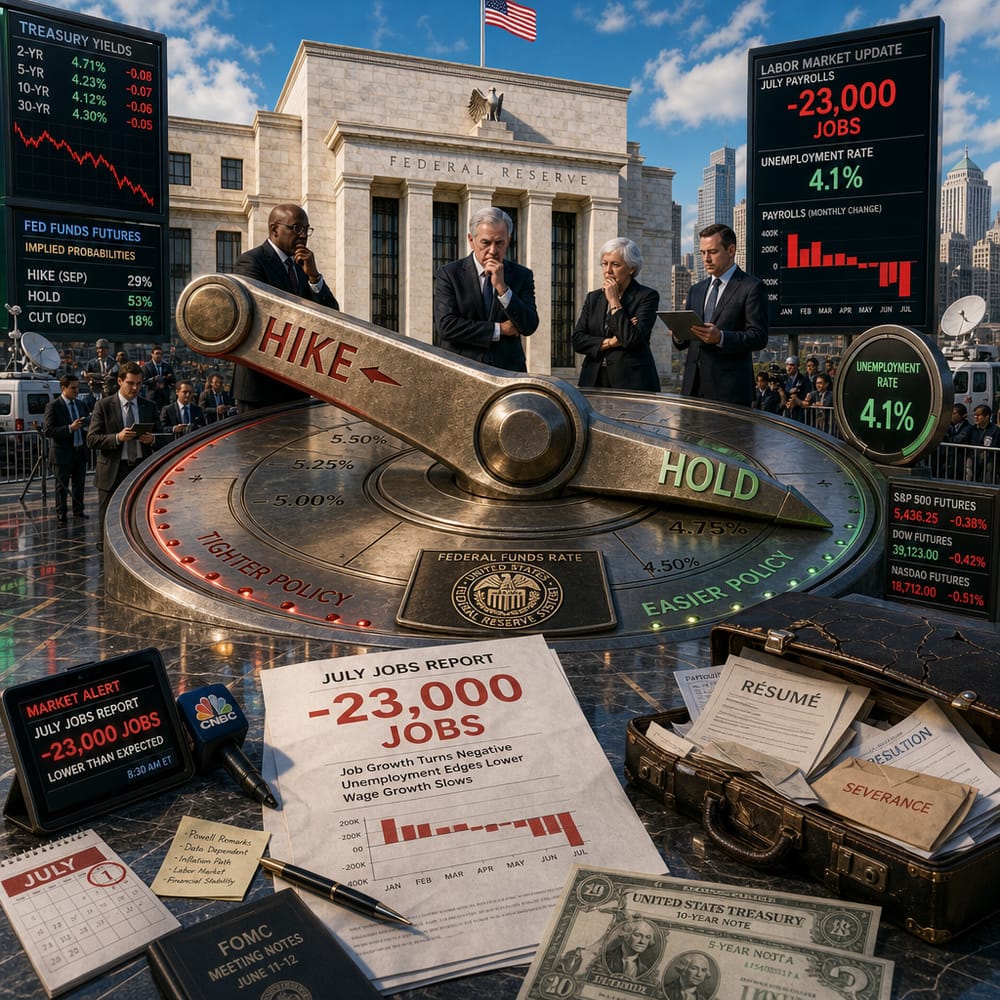
MARKETS DIGEST SOFT JULY JOBS REPORT — IMPLICATIONS FOR FED RATE PATH
The July jobs report has dropped, and it’s a plot twist nobody expected. In a shocking move, the U.S. economy lost 23,000 jobs, yet the unemployment rate somehow dipped to 4.1%. That's like announcing you’ve lost your keys but found a $20 bill in your pocket. But don’t let the seemingly positive unemployment rate fool you; this unexpected report could be the wrench in the Federal Reserve's well-oiled machine of interest rate hikes.
The Fed, in its quest to combat inflation, has been cranking up interest rates faster than you can say "economic stability." But now, with job losses on the board, they might be forced to take a more cautious approach. Picture the Fed as a cautious driver, foot hovering over the brake pedal, unsure whether to speed up or slow down on this bumpy economic road.
What does this surprise hire-and-fire shift mean for the Fed's interest rate game plan? Let’s be real; it’s like trying to solve a Rubik's cube blindfolded. On one hand, fewer jobs could suggest a cooling economy, possibly reducing inflation pressures. On the other hand, the lower unemployment rate might signal a labor market tight enough to keep upward pressure on wages, which could stoke inflation.
So, will the Fed slam on the brakes, or just ease off the gas a bit? Wall Street is holding its collective breath. Market reactions are already bubbling over like a pot of spaghetti left unchecked. Stocks have been rising as investors speculate that the Fed might have to tap the brakes on their rate hikes. It seems they’re betting on a more dovish Fed, believing that they’ll pause or at least slow down their aggressive rate hike trajectory.
But let’s not count our chickens before they hatch. This isn’t the first time markets have tried to outguess the Fed, and it won’t be the last. As always, the Fed will be peering closely at the data like an obsessive sleuth in a crime drama, trying to piece together whether inflation is truly on the run or just playing possum.
At the heart of the matter is the labor market, the epicenter of the Fed's economic earthquake watch. If the job losses indicate a broader economic slowdown, the Fed might ease up on rate hikes to prevent things from sliding into recession territory. Conversely, they can’t let their guard down on inflation, which is still lurking around like a party guest who’s overstayed their welcome.
Let’s meanwhile peek at Wall Street’s mood board. The markets are on a bit of a sugar high, with investors hoping the Fed's rate hikes might ease. Stock prices have nudged higher, buoyed by enthusiasm over a potentially softer rate stance. Even Bitcoin is catching a wave, nearing the $80,000 mark, and giving crypto stocks a reason to party like it’s 2021.
But don’t pop the champagne just yet. The Fed’s next moves are about as predictable as the final season of your favorite TV show—full of suspense, unexpected turns, and the occasional cliffhanger. As investors, we’re left to hang on Jerome Powell’s every word, trying to decipher whether the Fed's future policy will be hawkish, dovish, or perhaps some new exotic bird altogether.
And amidst this monetary chess game, there’s a broader economic picture to consider. With ongoing global uncertainties, trade complexities, and technological shifts like Anthropic's upcoming IPO adding layers of intrigue, the Fed’s job is anything but straightforward.
In conclusion, the July jobs report leaves us with more questions than answers. Will the Fed choose to slow the pace of rate hikes, or will they stick to their hawkish guns? Will the markets continue to ride the wave of optimism, or will reality bite back harder than expected? One thing's for sure: in the world of economics, change is the only constant. So, keep your eyes peeled and your portfolios nimble, because the next chapter in this economic saga is bound to be a page-turner.
This article is for informational purposes only and is not investment advice. Always do your own research or consult a licensed financial professional before making investment decisions.
© Copyright 2024. All Rights Reserved.
© Copyright 2024. All Rights Reserved.