

Market Tightening Equals 1% Fed Rate Hike
Tuesday, November 24, 2026
MARKET TIGHTENING EQUALS 1% FED RATE HIKE? HERE'S WHAT GOLDMAN SACHS THINKS
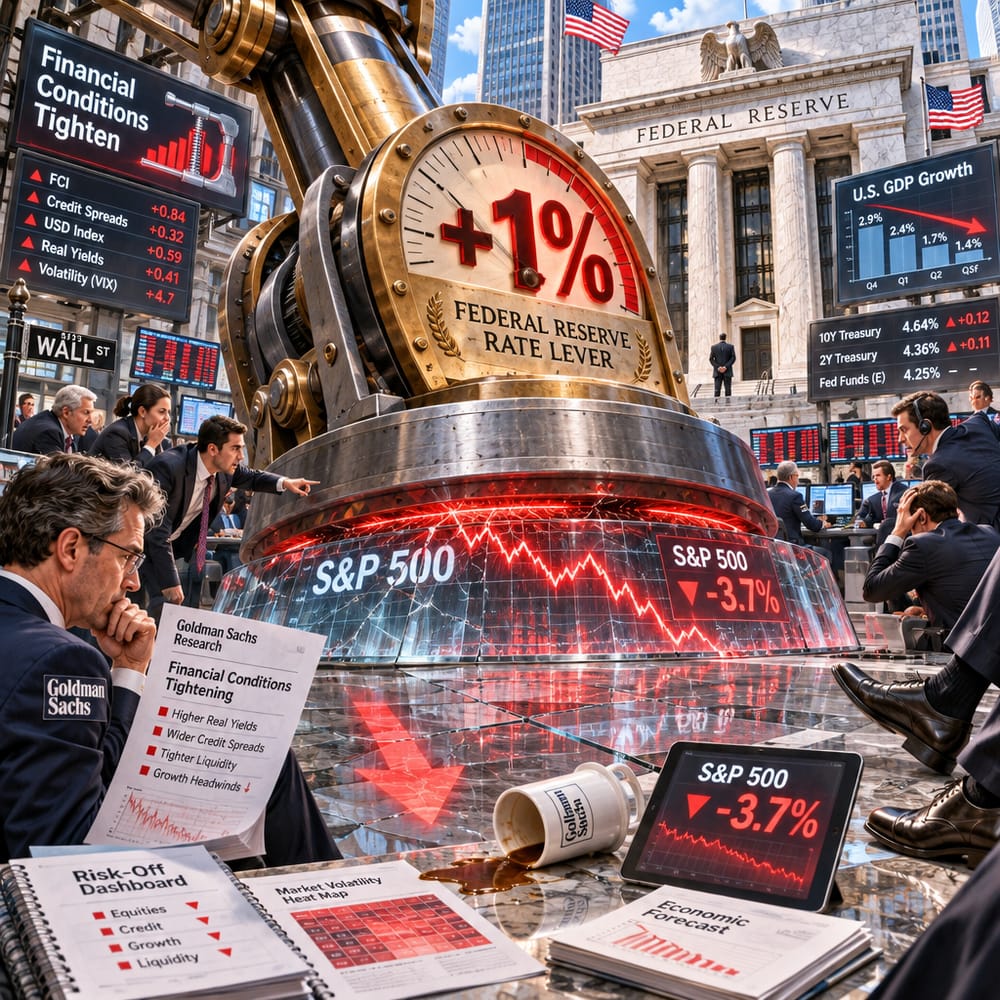
Buckle up, folks. The same market that was rocketing upward a few days ago has suddenly decided to pull a U-turn. According to those brainiacs over at Goldman Sachs, the recent 3.7% dip in the S&P 500 is equivalent to a Fed rate hike of 1%. Yep, you heard that right—no need for the Fed to make a move; the market's just gone ahead and done it for them. Let's dive into this financial funhouse.
SCENE SETTER: MARKET SWINGS AND THE FED
To the uninitiated, a stock market drop might just seem like a bad day for traders, but it’s much more. When the financial conditions tighten, it feels like someone just turned up the gravity on the economy. It's harder for businesses to borrow, consumers to spend, and yes, it’s a potential game-changer for Gross Domestic Product (GDP) growth.
So, why is the S&P 500's little tumble such a big deal? Goldman's economists argue that the market’s mood swings—like this recent one—can mimic the effects of actual Federal Reserve interest rate hikes. This isn’t just about making traders sweat; it has real-world implications for how much money is swirling around in the economy.
WHAT’S THE FED THINKING?
Here's where it gets as tricky as trying to predict the plot of a soap opera. The Federal Reserve has been trying to control inflation by adjusting interest rates—a bit like trying to steer a 747 with a joystick. But now, the market's doing some of that work for them. Does this mean that the Fed might hit pause on its rate hikes?
Well, it’s complicated. The Fed doesn’t just look at the stock market when making decisions. They’re more like helicopter parents, obsessed with everything from employment numbers to inflation reports to how many oat milk lattes are being bought in the Financial District. But if the market keeps up this self-tightening, it could give the Fed some breathing room—or at least an excuse to sit back, sip their coffee, and watch from the sidelines.
GDP GROWTH: THE RIPPLE EFFECT
Hold onto your hats because this is where it really hits home. When financial conditions tighten, businesses rethink their expansion plans, consumers become cautious about splurging on the latest iPhone, and GDP growth can take a hit. It's like the economy collectively decides it's time for a diet—and not the fun kind with cheat days.
What does this mean for the average Joe or Jane? If GDP growth slows, it can lead to fewer jobs, lower wage increases, and a ripple effect that touches almost every part of daily life. So, whether you're looking to buy a house, get a car loan, or just fill up your grocery cart, these financial shifts can have a real impact.
THE INVESTOR TAKEAWAY
Okay, enough doom and gloom. What’s a savvy investor to do in light of all this market-tightening talk? First, don’t panic. Remember, the market's mood swings more than a teenager on TikTok.
Consider diversifying your portfolio to ride out the waves. If stocks are giving you heart palpitations, bonds might be your new best friend. Stable, reliable, and perfect for when you need a breather from the stock market roller coaster. You might also want to keep an eye on sectors that tend to thrive in slower growth environments—think utilities or consumer staples, the stuff we can’t live without even when times get tough.
And keep those eyes peeled for any Fed updates. If the central bank does decide to hit the brakes on rate hikes, it could change the game yet again.
THE BOTTOM LINE
Remember: the financial world is a maze where everything’s connected. What happens with interest rates, the stock market, and GDP isn’t just fodder for Wall Street Journal headlines—it influences the dollars and cents in your pocket. So keep your wits about you and stay informed. The market may be tightening, but that doesn't mean your strategy has to. Stay sharp, stay savvy, and don't let the market's jitters get to you.
This article is for informational purposes only and is not investment advice. Always do your own research or consult a licensed financial professional before making investment decisions.
© Copyright 2024. All Rights Reserved.
© Copyright 2024. All Rights Reserved.