

Market Speculation on a Surprise Fed Rate Hike
Wednesday, July 29, 2026
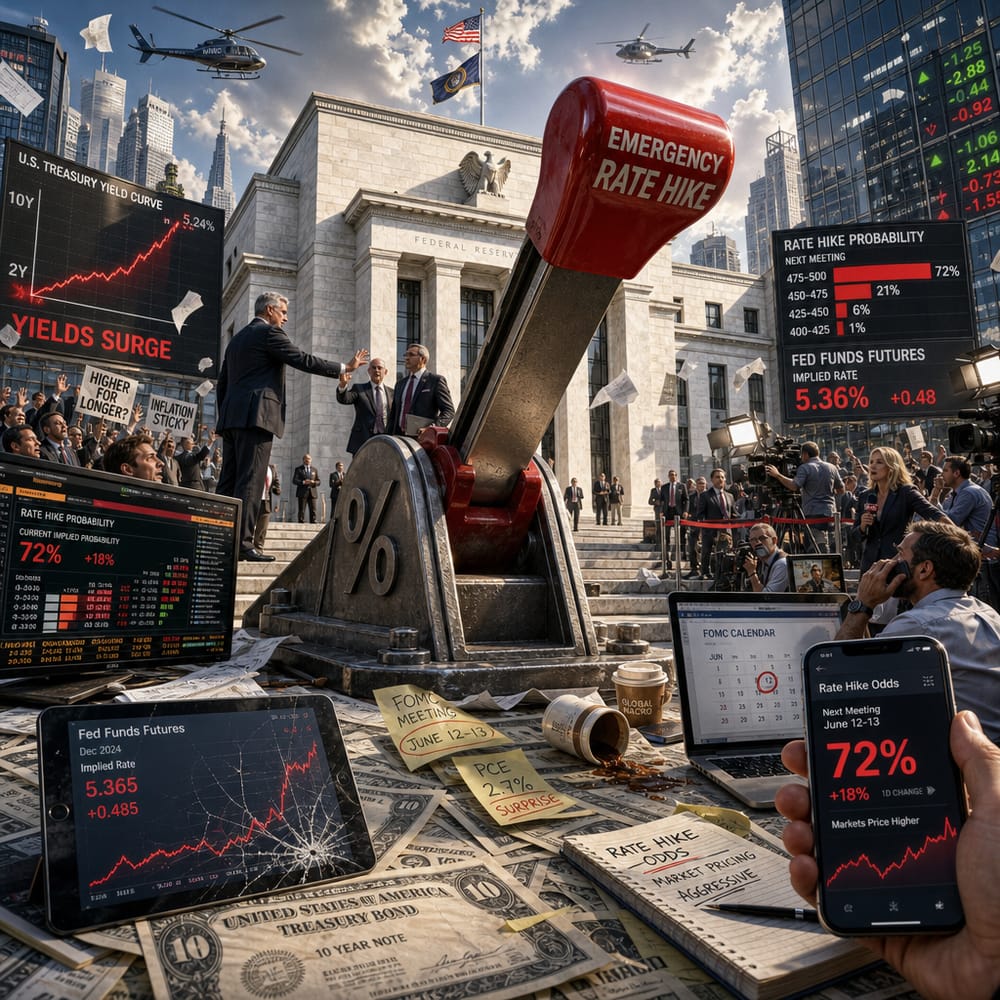
IS THE FEDERAL RESERVE ABOUT TO PULL A FAST ONE?
In the high-stakes poker game of monetary policy, the Federal Reserve is the player everyone's watching — and right now, it's giving off some serious poker tells. Investors are squinting at the Fed's face, trying to decipher whether it’s about to surprise everyone with an interest rate hike. But why all the suspense? And what happens if the Fed really does pull an ace out of its sleeve?
Let’s break it down.
WHY THE ANTICIPATION?
Imagine you're at a concert where the band keeps hinting at a surprise guest. Investors are in a similar headlock, speculating about a rate hike that wasn’t in the setlist. The Fed has been playing a mellow tune of gradual changes, but there’s chatter it might crank the volume unexpectedly.
Part of this anticipation is fueled by the recent uptick in economic indicators. Inflation, like that annoying kid at the back of the class who just won’t settle down, has been more persistent than expected. The U.S. job market is also looking awkwardly robust, even as other sectors show signs of cooling off. With such mixed signals, investors are pulling out their magnifying glasses, scrutinizing every word from the Fed like it's a Shakespearean sonnet.
CONSEQUENCES OF A SURPRISE MOVE
So, what happens if the Fed goes rogue and drops a rate hike? To put it mildly, it could be like setting off fireworks in a crowded room — dazzling but potentially chaotic.
Interest rates are like the thermostat of the economy. Turn it up and borrowing costs rise, which can slow down spending and investment. This could throw a curveball into a stock market already tiptoeing around uncertainties. Credit card debt, mortgages, business loans — they all get pricier, pinching the wallets of consumers and businesses alike.
For stock markets, a surprise hike often translates to volatility. Investors hate uncertainty more than they hate pineapple on pizza. A sudden rate hike could send them running for the hills, triggering sell-offs and rattling the already jittery nerves of financial markets.
And let's not forget the global stage. The Fed's decisions echo beyond U.S. borders, affecting everything from emerging markets to European equities. A surprise hike can lead to a stronger dollar, making U.S. exports pricier and impacting international trade dynamics.
FED'S COMMUNICATION STRATEGY: A GAME OF TELEPHONE
The Fed's communication strategy — or in this case, its lack thereof — is playing a starring role in this drama. The central bank has prided itself on transparency, aiming to make its actions as predictable as possible. But, like a magician revealing too many secrets, it's finding out that transparency has its limits.
Critics argue that the Fed’s recent signals have been about as clear as a foggy morning. While it’s essential for the Fed to manage expectations and guide markets, the current whispers of a surprise hike are painting a picture of mixed messages.
Investors are left piecing together clues like they're solving a mystery novel. Is the Fed going to stick to its planned script, or is a plot twist on the horizon? If the Fed chooses the latter, it risks losing credibility faster than a politician caught in a lie.
LOOKING AHEAD
The speculation surrounding a potential surprise rate hike is more than just fodder for financial gossip — it’s a reminder of the delicate balance central banks must maintain. For retail investors, these conversations aren’t just for the talking heads on financial news networks. They impact 401(k)s, mortgages, car loans, and the overall economic outlook.
So, as we edge closer to the Fed’s next meeting, keep your ears to the ground and your eyes on the market. Whether the Fed delivers a surprise or plays it cool, one thing's for sure: the next move will be a critical chapter in the ongoing saga of the U.S. economy. And you don’t want to miss how this story unfolds.
This article is for informational purposes only and is not investment advice. Always do your own research or consult a licensed financial professional before making investment decisions.
© Copyright 2024. All Rights Reserved.
© Copyright 2024. All Rights Reserved.