

Market Seesaw: Dramatic Swings in U.S. Indices
Wednesday, November 25, 2026
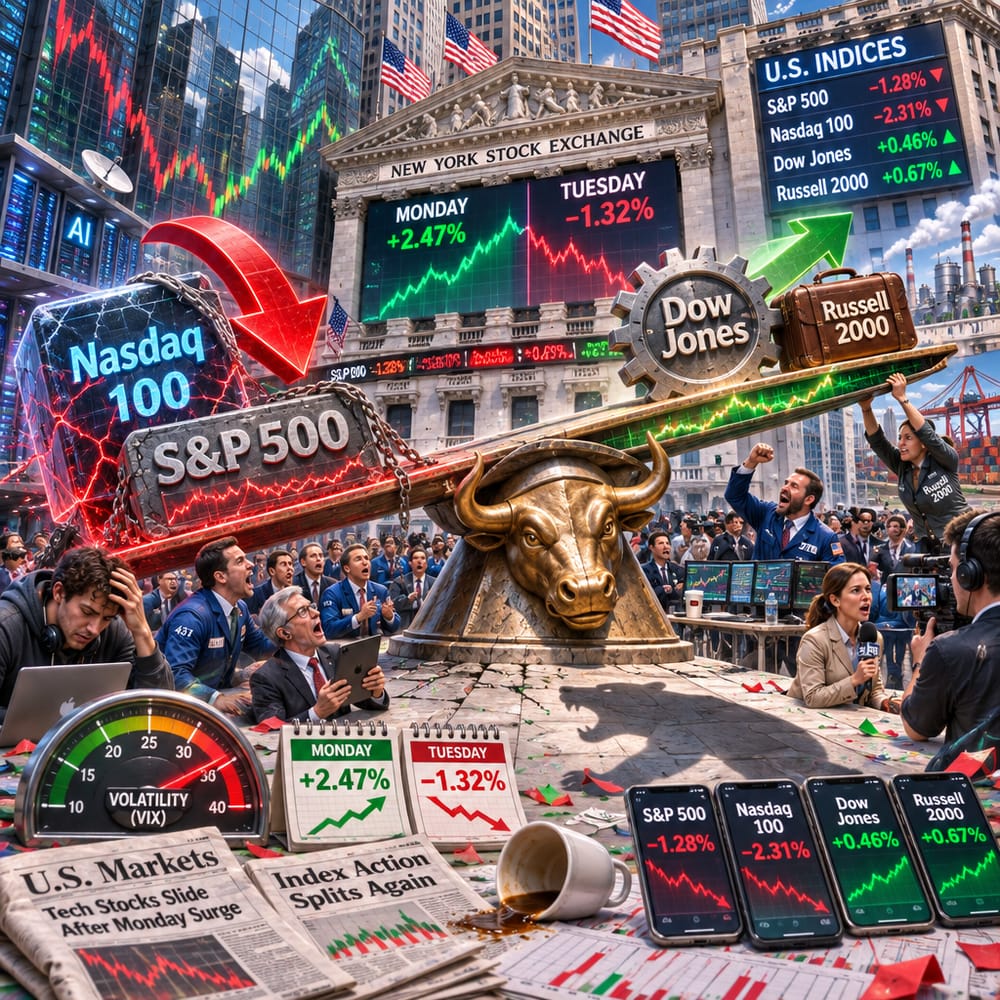
MARKET SEESAW: DRAMATIC SWINGS IN U.S. INDICES
If you thought the rollercoasters at Six Flags were thrilling, try keeping up with the U.S. stock market this week. Investors are clutching their portfolios like safety bars as equity indices swung violently, turning Wall Street into a white-knuckle ride of gains and losses.
The week started with a bang on Monday, November 23rd, as major indices staged an impressive rally. The S&P 500 and Nasdaq soared, giving investors a much-needed boost of autumnal cheer. But the markets took a sharp U-turn on Tuesday, with the S&P 500 and Nasdaq sliding back down while the Dow Jones and Russell 2000 eked out slight gains. So, what on earth is going on?
THE MONDAY LIFT-OFF
Monday’s market surge was as invigorating as your morning espresso, with major indices posting significant gains. Analysts pointed to several reasons for this brief ride to the top. There was optimism around Nvidia's latest strategy reveal, signaling a return to form under CEO Jensen Huang's reinstated leadership after a nail-biting absence. As the chip giant carries much weight in tech-heavy indices, Nvidia's uptick provided a solid launchpad.
Adding fuel to the Monday mania, there were whispers of potential easing in the Iran conflict, leading to a temporary dip in crude oil prices. This was music to investors' ears, who had been grappling with the financial squeeze of elevated energy prices.
Additionally, the Biden administration released a surprisingly rosy economic report indicating a stronger-than-anticipated GDP growth for the previous quarter. This sent investors clambering to buy before the climb steepened.
TUESDAY'S SLIDE BACK TO REALITY
But as quickly as they rose, the markets turned sour on Tuesday. The S&P 500 and Nasdaq bore the brunt as technology stocks resumed their slump. Nvidia, despite its Monday triumph, couldn’t escape the gravitational pull of broader tech woes. Meanwhile, newcomers like Anthropic failed to find footing, slipping below IPO prices as faith in their AI futures wavered.
The tech sell-off wasn’t just a local affair. It echoed globally, rattling stocks from Tokyo to Silicon Valley. Renewed fears about U.S. tariffs on tech imports loomed large, reminiscent of the trade war jitters that plagued markets in years past. This factor was no small potatoes, fueling doubts about the sector that once seemed invincible.
Meanwhile, geopolitical tensions added to the unease. The simmering conflict involving Iran and its regional implications continued to cast a shadow over global markets. Any hint of diplomatic friction has investors scrambling for the refuge of safer, non-tech assets, explaining why the Dow and Russell 2000—less tech-dependent indices—managed to inch upwards.
THERE'S MORE THAN MEETS THE EYE
Amid all the market drama, you'd be forgiven for asking what’s really driving these swings. The answer, like most in finance, isn't black and white—it’s a swirling palette of economic data, geopolitical tensions, and, dare we say, a sprinkle of investor psychology.
Interest rate uncertainties remain a critical undercurrent. The Federal Reserve’s future moves still hang in the balance, leaving investors jittery about which way the wind will blow. Will they hike rates to curb inflation or hold steady to nudge growth? This guessing game is enough to give any investor a headache.
And then there’s the looming shadow of the U.S.-Iran tensions, which continues to stir the oil pot. With fuel prices impacting everything from flights to freight, the war's ripple effects are hard to ignore. Airline stocks like Norse Atlantic have already felt the pinch, with fuel costs soaring to unheard-of levels. Such price pressures are bound to have wider economic impacts if they persist.
WHAT SHOULD INVESTORS DO?
So, what should you do when the market’s doing its best impression of a metronome? For the everyday investor, the key might be tuning out the immediate noise. Remember, markets are just as driven by emotion as they are by logic.
If you're eyeing tech stocks, consider the long game and the sectors with growth potential beyond the current turbulence. For those leaning towards the traditionally stable Dow-type stocks, this choppy market might just be an opportunity to buy low on the giants who can weather the storm.
In the meantime, keep a close watch on economic indicators and geopolitical shifts. While it’s impossible to predict exactly when the market will settle, understanding the forces at play can help you make better-informed decisions.
Strap in, stay savvy, and remember: like every rollercoaster ride, what goes up must come down—and then often goes back up again.
This article is for informational purposes only and is not investment advice. Always do your own research or consult a licensed financial professional before making investment decisions.
© Copyright 2024. All Rights Reserved.
© Copyright 2024. All Rights Reserved.