

Market Resilience Amid Seasonal and Fed Risks
Saturday, August 15, 2026
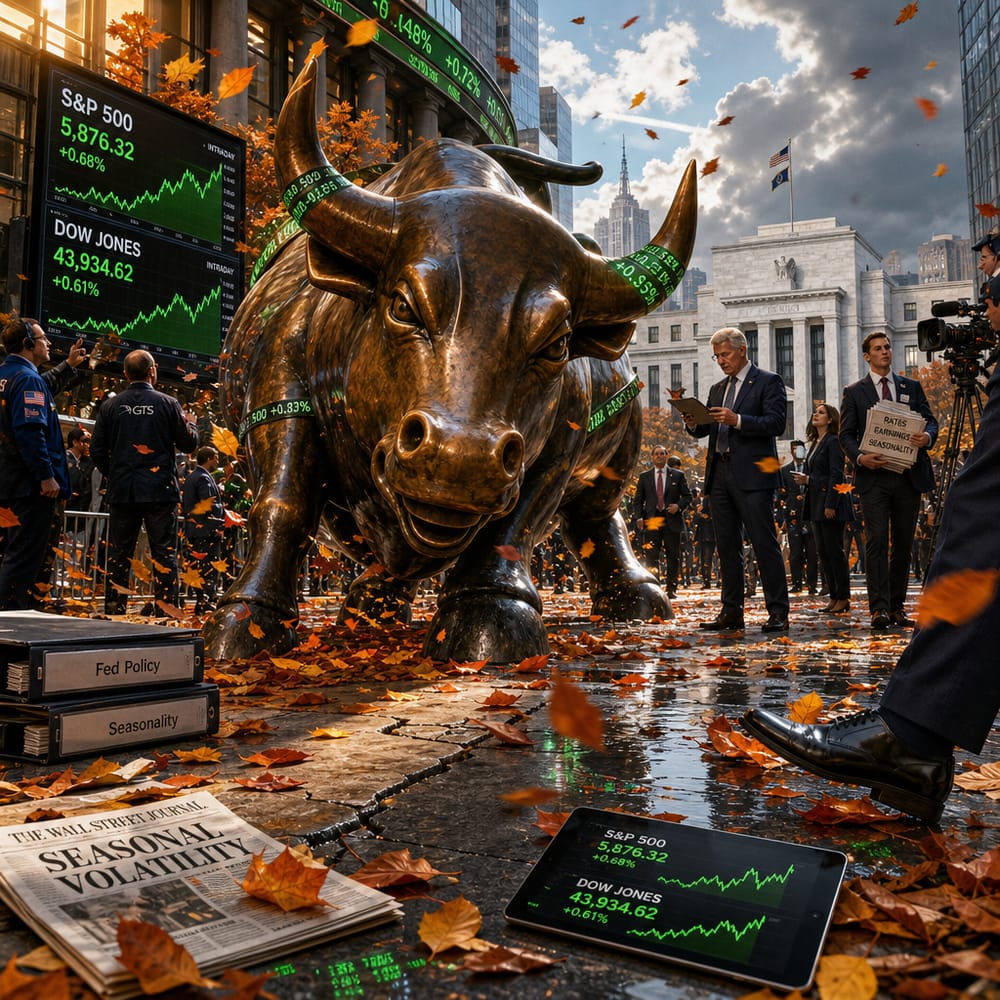
MARKET RESILIENCE AMID SEASONAL AND FED RISKS
Batten down the hatches! With the Federal Reserve acting like a mysterious oracle and the unpredictable winds of autumn swaying the markets like a shaky bridge, you'd expect the stock market to be tossing and turning. Yet, defying the odds, the U.S. market is holding steady, as if it’s had a daily dose of zen meditation.
SEASONAL PATTERNS AND MARKET EXPECTATIONS
Traditionally, autumn brings an eerie chill to the stock markets. September is infamously known as the worst month for stocks, with investors often pulling back as if Greta Thunberg herself warned them about the climate risks. This annual ritual isn't just rooted in folklore—historical data shows that since 1950, September has been the weakest month for the S&P 500.
But hold onto your PSLs and snug scarves, because this year, investors aren’t running for the hills just yet. The S&P 500 and the Dow Jones are showing unexpected resilience. It’s like watching a seasoned tightrope walker gracefully cross between skyscrapers while the wind howls—they know the risks, but they still see the rewards.
THE FED PUZZLE: POLICIES AND INVESTOR POSITIONING
Now, just as the red and orange leaves start to fall, here comes the Federal Reserve, throwing a spanner—or potentially, a golden ticket—into the mix. The Fed's mystifying signals about interest rate hikes have left investors as perplexed as a cat in a cucumber patch. Yet, market players are adapting by hedging their bets, adopting diversified portfolios, and keeping a keen eye on inflation rates, which are as stubborn as chewing gum on a hot sidewalk.
There's a whole game of strategy unfolding. Some investors are loading up on defensive stocks—those in consumer staples and utilities—like a squirrel stockpiling acorns for winter. Others are convinced that tech and growth stocks are the path to glory, especially as the AI boom sends waves of enthusiasm across sectors like semiconductors.
BALANCING RISKS AND RESILIENCE
But why the resilience? One word: fundamentals. The underlying strength of the U.S. economy, despite the murmurings of a looming recession, is keeping investors optimistic. Unemployment rates are as low as the limbo bar at a beach party, corporate earnings are robust, and innovation is driving productivity like a turbo-charged engine.
Even with consumer spending showing signs of fatigue, it's not all doom and gloom. Companies have learned to navigate uncertainties with the finesse of a seasoned surfer riding the wave of supply chain disruptions and fluctuating demands. Additionally, the market is buoyed by strategic investments, like Berkshire Hathaway’s hefty stake in Delta and Alphabet, injecting confidence and cash into sectors ripe with opportunity.
WHAT COMES NEXT?
So, what’s next on this high-stakes rollercoaster? Investors are keeping their eyes peeled for September's economic data releases and Fed announcements like a hawk eyeing its prey. They'll be analyzing every word from Fed Chair Jerome Powell, looking for clues like a sleuth at a crime scene.
While the market's steady performance is heartening, we shouldn't pop the champagne just yet. Geopolitical tensions, potential natural disasters like Hawaii's looming storm, and unexpected global events could all send shockwaves rippling through. It’s essential to stay informed and agile, ready to pivot faster than a startup founder with a new business idea.
In conclusion, the market's resilience amid the seasonal and Fed risks reflects a blend of cautious optimism and strategic preparation. Understanding these dynamics can provide retail investors insight into the complex ballet of caution and confidence playing out on Wall Street. Whether you're a seasoned investor or just dipping your toes into the stock waters, remember: fortune favors the well-prepared. Stay sharp, informed, and ready to act—and may your investments weather the autumnal storms with grace and stability.
This article is for informational purposes only and is not investment advice. Always do your own research or consult a licensed financial professional before making investment decisions.
© Copyright 2024. All Rights Reserved.
© Copyright 2024. All Rights Reserved.