

Market Rebound: S&P 500 and Nasdaq Lead Weekly Gains
Saturday, November 14, 2026
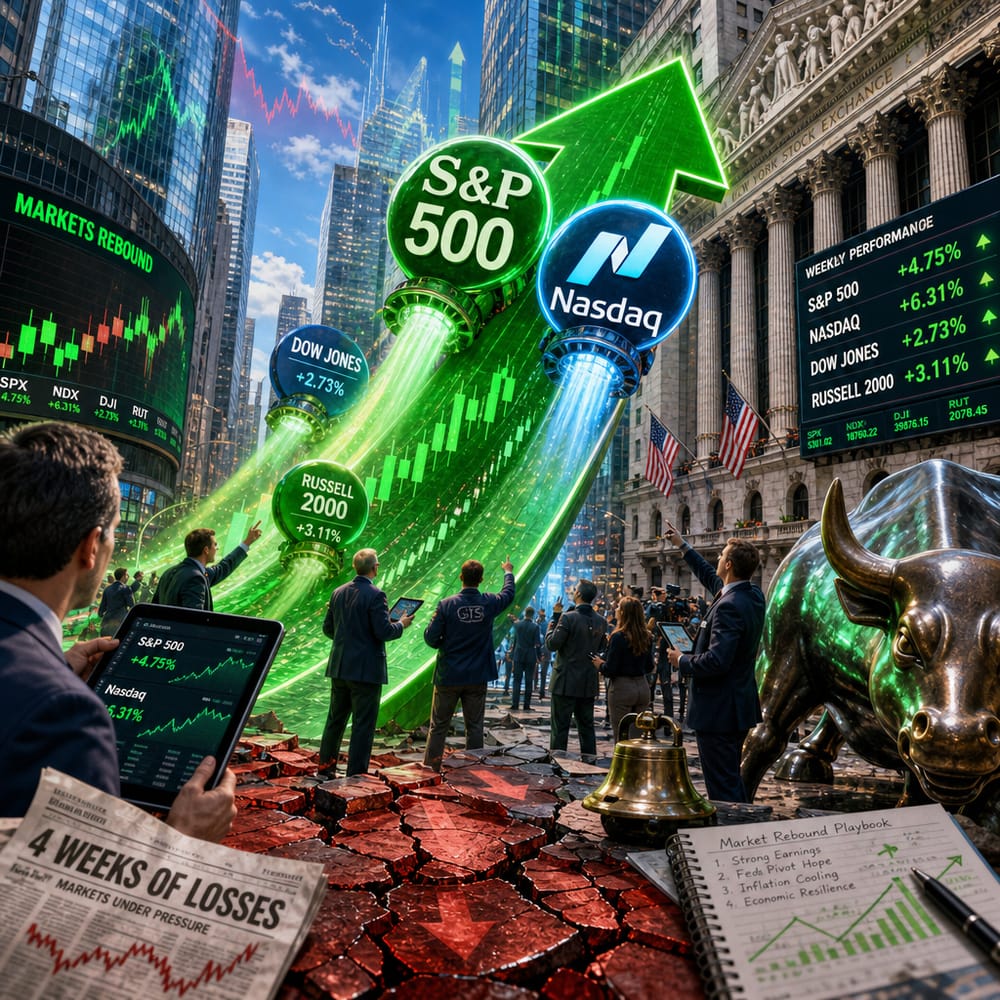
MARKET REBOUND: S&P 500 AND NASDAQ LEAD WEEKLY GAINS
If you blinked, you might have missed the market’s latest Houdini act. After a brutal month of losses, the S&P 500 and Nasdaq pulled a rabbit out of the hat, posting solid gains and leaving investors wondering whether we’re witnessing a genuine market revival or just a flashy bit of financial sleight of hand.
Is this a sign of renewed investor confidence or a fickle market playing with our emotions? Let's dive into this rollercoaster and see if the ride’s worth the price of admission.
WHAT SPARKED THE TURNAROUND?
In the world of stocks, sifting through the noise to find the real movers and shakers can feel like finding a needle in a haystack – while blindfolded. But this week, some key factors helped the S&P 500 and Nasdaq break their four-week losing streak and put the Dow back in the green.
Firstly, the Federal Reserve’s recent comments on future interest rate hikes provided a glimmer of hope. When Fed officials talk, the market listens, and their suggestion of slower, more gradual rate hikes was music to investors' ears. Like a gentle lullaby, it soothed fears of runaway inflation and breathed life back into the markets.
Tech stocks, particularly those linked to the booming AI sector, were also instrumental in the rebound. Despite Nvidia’s dramatic CEO exit, the AI sector still has its mojo. With AI becoming the darling of investors, stocks like Microsoft and Alphabet swooped in to fill the void left by Nvidia’s turmoil, bolstering the Nasdaq's gains.
ARE SECTORS SINGING A NEW TUNE?
While the tech sector hogged the spotlight, it wasn’t the only player cashing in on the market’s rebound. Industrial stocks, often seen as the barometer of economic health, found themselves in the driver’s seat. As Wall Street money continues to flow into industrial outdoor storage investments, demand for heavy equipment is on the rise, giving these stocks a much-needed boost.
But not every sector is wearing a party hat. Financials, still reeling from interest rate uncertainties, are cautiously optimistic. As the Fed continues to tread lightly on rate hikes, banks may find themselves in a better position down the road, but for now, they’re sticking to the sidelines, keeping their powder dry.
HOW LONG CAN THIS MAGIC LAST?
So, is this a long-term market recovery or just a mirage? That’s the billion-dollar question. While investor sentiment appears to be shifting positively, it’s wise to approach this rebound with a healthy dose of skepticism.
Global uncertainties, including geopolitical tensions and supply chain disruptions, still loom large. The unfolding drama in the tech world, with Nvidia's scandal and its implications on AI industry dynamics, could add a few more twists to the tale.
Moreover, the resilience of the U.S. economy is still being tested. The next steps by the Federal Reserve and key government policies will play a crucial role in determining if the current market bounce has legs or if it’s just a temporary reprieve.
INVESTOR TAKEAWAYS
For the everyday investor, the message is clear: keep your eyes wide open. This market rebound, enticing as it may be, is not a surefire ticket to easy profits. Diversification remains your best friend, and staying informed about economic indicators and sector-specific developments can help navigate these turbulent waters.
Continue to keep an eye on interest rate signals from the Fed, and don’t ignore the macroeconomic themes at play. The dance of stock prices on the charts may be mesmerizing, but the fundamentals will always cut through the noise.
In a market as unpredictable as a magic show, being prepared for surprises is your best bet. Whether this rebound is the start of a new bull run or just a passing phase, only time will tell. Until then, enjoy the show, but don’t be swept off your feet.
This article is for informational purposes only and is not investment advice. Always do your own research or consult a licensed financial professional before making investment decisions.
© Copyright 2024. All Rights Reserved.
© Copyright 2024. All Rights Reserved.