

Market Reaction to Rising Odds of a Fed Rate Hike After July FOMC “Dissents”
Tuesday, August 25, 2026
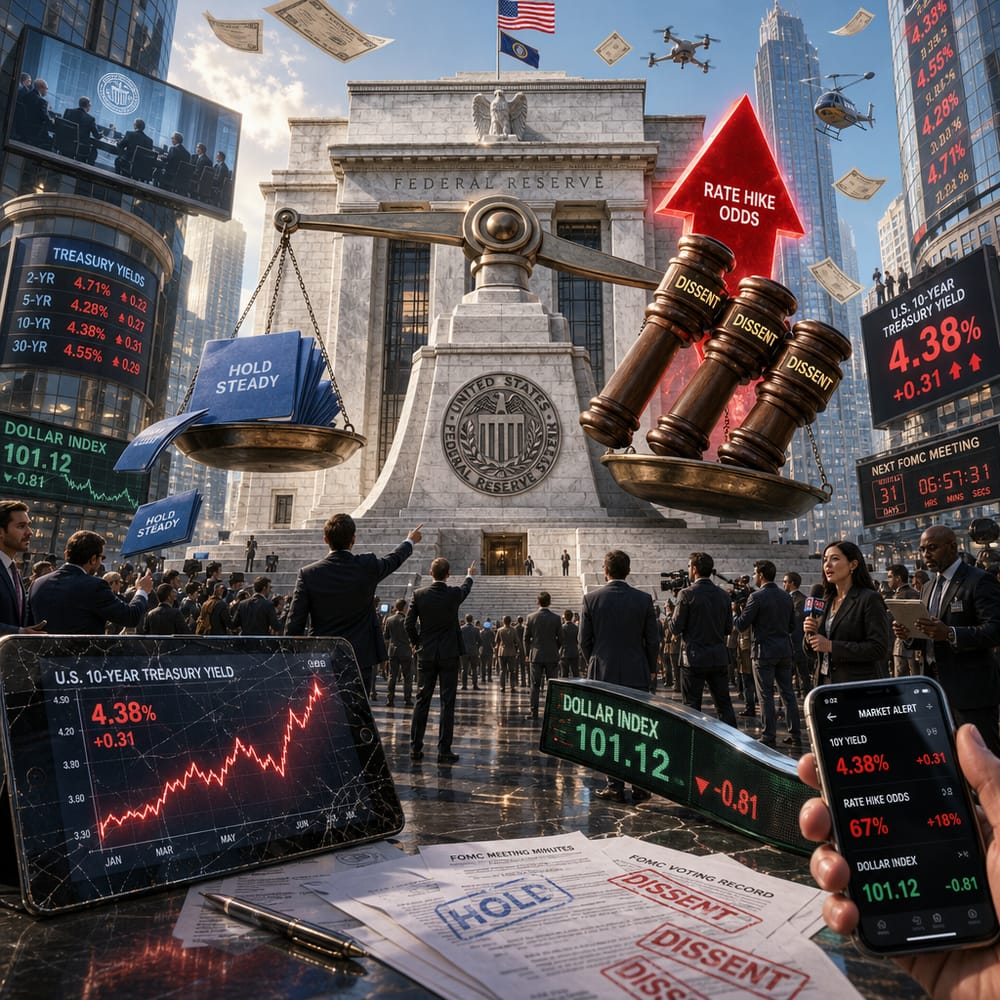
FED DISSENT: WHAT DOES IT MEAN FOR YOUR MONEY?
Hold onto your hats, folks. The Federal Reserve has just given us a juicy bit of drama that’s got the financial world buzzing louder than a bee in a flower shop. Picture this: At the recent FOMC meeting, the Fed decided to keep interest rates right where they are. But a few members weren’t having it. Three strong-willed officials stood up and said, "Raise those rates!"
Now, you might be wondering why you should care about some internal spat at the Fed. Well, this seemingly small rebellion could be a big deal for your wallet, your investments, and possibly your next vacation abroad.
THE FEDERAL RUMBLE: WHY THE DISSENT?
Let’s start with the dissidents. Why are they pushing for higher rates? In one word: inflation. Despite the Fed’s attempts to cool things down, inflation is sticking around like a college kid who won't move out of his parents' basement. These Fed members are getting antsy, thinking it's time to dial up interest rates to put the squeeze on inflation. This internal discord signals that the Fed isn't necessarily singing a unified chorus, and future rate hikes might be on the horizon sooner than expected.
MARKET REACTIONS: TREASURY YIELDS CLIMB, DOLLAR STUMBLES
The markets, being the drama detectors they are, picked up on this dissent faster than you can say "interest rate." U.S. Treasury yields have taken a hike, with the 10-year yield catching some serious altitude. This matters because when Treasury yields rise, it often signals that investors expect future rate hikes.
But it’s a mixed bag—while Treasury yields are up, the dollar index has taken a bit of a nosedive. The dollar index measures the value of Uncle Sam’s greenbacks against a basket of major foreign currencies. With the hint of rising rates in the air, investors are skittish, and some are fleeing the dollar like it's an unpopular kid at the prom.
SO, WHAT'S IN IT FOR YOU?
Alright, let’s talk about what this means for you—the everyday investor who's just trying to figure out where to park some cash or which stocks to bet on.
First off, if you’re holding long-term Treasuries or thinking about buying some, brace yourself for possible short-term pain, but potential long-term gain. Yields are up, which means prices might drop, but new bonds will pay out more interest. Think of it as getting a raise on future paychecks.
As for the dollar’s slide, it’s a classic case of good news, bad news. If you're planning a European vacation, your dollars might not stretch as far. On the flip side, if you're investing in U.S. companies that sell products overseas, a weaker dollar could be a boon since it makes American goods cheaper abroad.
Investors in stocks best brace themselves for a wild ride. Market volatility could spike as traders try to sniff out the Fed's next move. Keep an eye on sectors sensitive to rate changes—like real estate and utilities—but don't start panic-selling just because the market's got the jitters.
To sum it up, this bout of internal Fed dissent isn’t just about three officials kicking up a fuss; it’s a signal that future rate hikes might hit sooner rather than later. That means it’s time for investors to strategize, potentially adjusting portfolios to mitigate against what's coming down the pipeline.
So, whether you’re an investment rookie or a seasoned pro, keep those ears perked for any hints of movement from the Fed. In the meantime, hold tight and maybe enjoy the show—just like a good thriller, there’s bound to be a few plot twists along the way.
This article is for informational purposes only and is not investment advice. Always do your own research or consult a licensed financial professional before making investment decisions.
© Copyright 2024. All Rights Reserved.
© Copyright 2024. All Rights Reserved.