

Market Pullback as Retail Slump and Rising Oil Prices Weigh on Stocks
Saturday, August 15, 2026
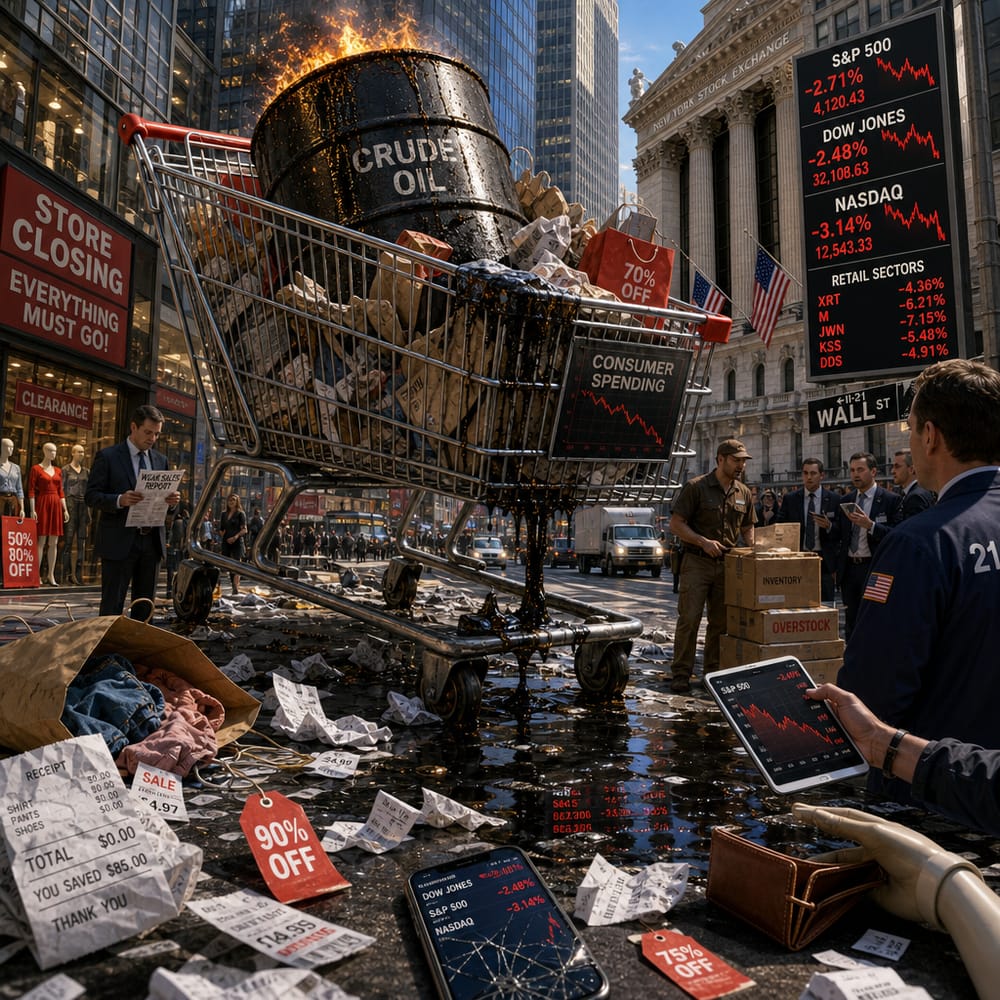
MARKET PULLBACK AS RETAIL SLUMP AND RISING OIL PRICES WEIGH ON STOCKS
Batten down the hatches, folks, because August 14, 2026, delivered a one-two punch that knocked the wind out of Wall Street. The S&P 500, the Dow Jones, and the Nasdaq all took a nosedive, leaving investors clutching their smartphones with shaky hands, wondering if this was just another hiccup or something more sinister. Weak retail spending data and soaring oil prices were the culprits, and they’ve got market watchers buzzing like bees in a downpour.
So, what's the big fuss about consumer spending? Well, in the grand carnival of capitalism, the consumer is both the ringmaster and the main attraction. When consumers close their wallets, it sends ripples through the market like a stone tossed into a still pond. Retail spending is the canary in the coal mine for economic health. It's the difference between a bustling bazaar and a ghost town. If people aren't spending, companies aren't selling, and if companies aren't selling, you can bet your bottom dollar their stock prices aren't climbing.
Now, brace yourself for act two: rising oil prices. The black gold has been flexing its muscles lately, climbing faster than a cat up a tree. When oil prices rise, it’s not just your gas tank that takes the hit. The cost of everything from shipping to manufacturing rises, squeezing margins tighter than a new pair of jeans after Thanksgiving. Suddenly, that takeout pizza costs a little more to deliver, and those sneakers you're eyeing online might take a little longer to ship. High oil prices spread their sticky fingers across the economy, nudging inflation upwards and making the Fed sweat bullets over interest rates.
The long-term effects of rising oil prices on equities aren't exactly a Hallmark moment either. High fuel costs can hinder growth and slow down the economic engine, leaving investors with portfolios that aren't exactly singing "Happy Days Are Here Again." Companies in the transport and logistics sectors like airlines might feel like they've been thrown to the wolves. Meanwhile, consumer goods companies might have to tighten their belts as production costs rise, potentially passing some of that burden onto consumers, who are already pinching pennies.
And what about other sectors? Well, tech stocks, usually the darling of the market ball, could also find themselves in a bit of a pickle. Rising inflation tends to dampen the valuation party for growth stocks, as future profits look less attractive when discounted back to the present in a high-inflation environment. On the flip side, energy stocks might be popping the champagne as oil prices soar, but any investor knows that joy is often short-lived as market dynamics are fickle friends.
Investor sentiment, that elusive yet essential market ingredient, is currently as jittery as a cat on a hot tin roof. The S&P 500’s recent slide is a stark reminder that uncertainty is the market's nemesis. With consumers keeping a tight grip on their wallets and oil prices straining budgets, it’s no wonder investors are skittish.
The question on everyone's minds is, what's next? Will consumer spending bounce back, bringing joy and merriment to retail stocks once again? Or will the shadow of inflation loom larger, forcing the Fed to slam the brakes with rate hikes? These are the questions that keep traders and analysts burning the midnight oil.
For now, it seems the market is in a bit of a pickle, balancing the hopes of a recovery with the fears of inflationary pressures. As the retail sector feels the squeeze and oil prices climb, the market's mood may continue to be as unpredictable as a summer storm. So, as you sip your morning coffee and scroll through the latest market updates, remember: in the topsy-turvy world of finance, change is the only constant. Stay informed, stay nimble, and maybe keep a stress ball handy just in case the market throws another curveball.
This article is for informational purposes only and is not investment advice. Always do your own research or consult a licensed financial professional before making investment decisions.
© Copyright 2024. All Rights Reserved.
© Copyright 2024. All Rights Reserved.