

Market Expectation Shift: USD/JPY and Emerging FX Lifted by Dollar Softening
Friday, August 21, 2026
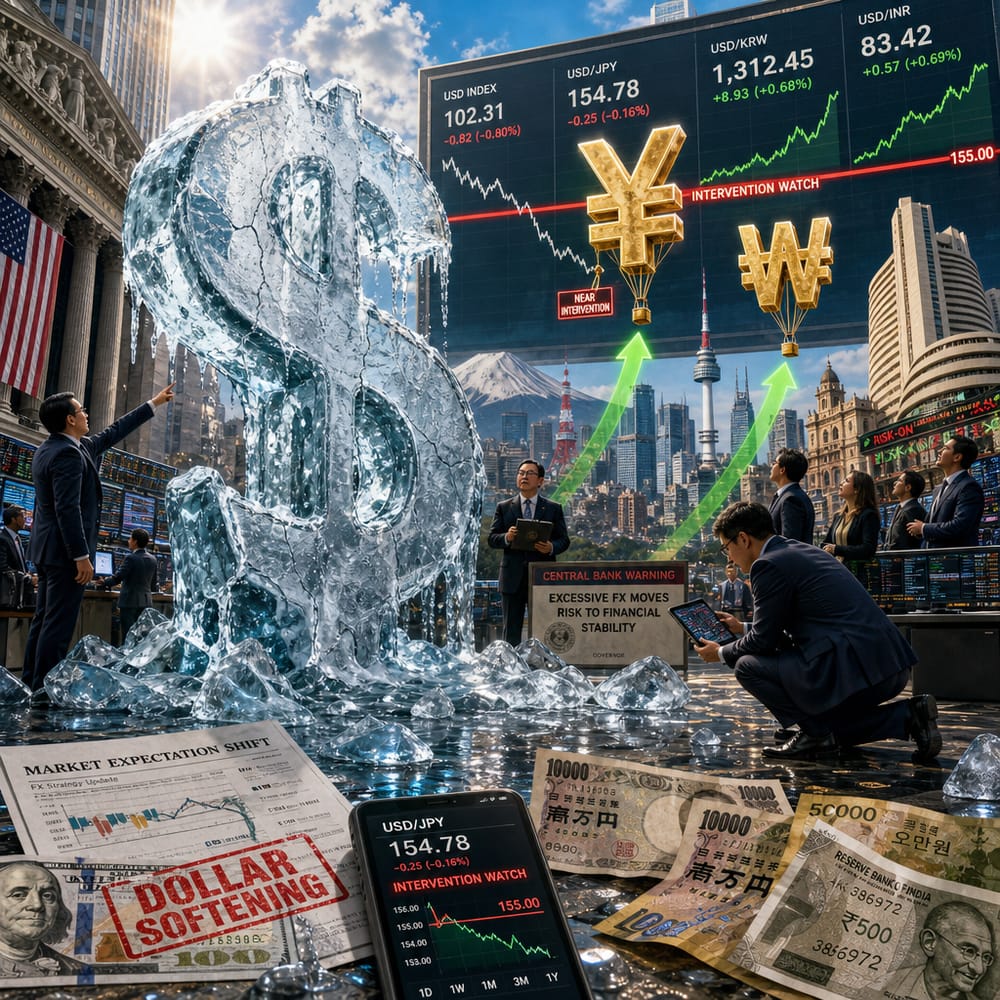
IF THE DOLLAR TAKES A DIVE, WILL EMERGING MARKET CURRENCIES TAKE FLIGHT?
Once upon a time, the U.S. dollar was like that confident quarterback strutting around the global financial field. But now, it seems to have twisted its ankle, and everyone’s wondering if the backup players — like the Japanese yen and emerging market currencies — are ready to step up and steal the show.
The U.S. dollar has taken a bit of a breather lately, and while some might think that’s as thrilling as watching paint dry, it’s shaking things up in ways that could make or break economies. The USD/JPY pair is inching dangerously close to the levels where central banks might feel the itch to intervene. Meanwhile, currencies like the South Korean won and the Indian rupee are suddenly finding themselves in the spotlight, boosted by the dollar's softer stance.
If you're pondering why you, a proud retail investor, should care about these currency acrobatics, here's the scoop: Currency shifts can mess with trade balances and economic stability in emerging markets faster than you can say "foreign exchange."
CENTRAL BANK INTERVENTION: RISKY BUSINESS?
Imagine the foreign exchange market as a wild party. Central banks are the chaperones, ready to step in when things get too lively. But intervening in this dance floor comes with its own risks. When central banks decide to meddle with currency values, it can lead to unpredictable swings. For instance, Japan’s central bank might pull the trigger to prevent the yen from becoming too weak. While the intention is to stabilize things, it could set off a chain reaction that sends markets into a tizzy.
Now, if you're wondering why Japan's central bank would want to intervene, it’s because a weak yen can inflate import costs, putting pressure on consumers and businesses alike. It’s like buying popcorn at the movies — suddenly, everything’s overpriced.
EMERGING MARKET RESPONSE: CARPE DIEM OR CAN OF WORMS?
Flip the script to emerging markets, where a weaker dollar can actually feel like a breath of fresh air. Think of it as the dollar taking a dip on the currency seesaw, letting emerging currencies rise gracefully — or at least less clumsily. When the dollar is not flexing its muscles, imports become cheaper for countries like India and South Korea, potentially stimulating their economies and easing inflationary pressures.
But it’s not all sunshine and rainbows. These emerging markets have been known to take two steps forward, one step back. A suddenly stronger local currency can challenge exports by making them more expensive on the global stage. It’s the classic "you win some, you lose some" scenario.
For emerging markets, the key is strategy. A weaker dollar means a chance to adjust monetary policies, maybe even cut interest rates to stoke growth. However, it also means walking the tightrope between capitalizing on improved purchasing power and avoiding the pitfalls of an export slowdown.
THE GLOBAL RIPPLE EFFECT
So what does all this currency kerfuffle mean for the average Joe or Jane scrolling on their phone? It means keeping an eye on how these dance moves on the global currency stage can eventually tap your shoulder at home.
A stronger yen might mean Japanese goods cost slightly more at your local store. A lively Indian rupee could influence the price of the spices in your favorite curry. Even your tech gadgets — often manufactured in South Korea — might see a price shift thanks to the won’s newfound energy.
And beyond the shelves? If central banks start stepping in to stabilize their currencies, expect the financial markets to respond. Investors might shift their portfolios, markets could fluctuate, and if history teaches us anything, surprises are never far behind.
WHAT TO WATCH
In this global currency soap opera, keep your eyes peeled for central bank announcements and policy shifts. If Japan decides to pull the intervention card, grab your popcorn — it’s bound to be a show. On the other hand, if emerging markets start capitalizing on the weaker dollar, we could see new investment opportunities pop up faster than you can refresh your stock app.
Remember, the dollar’s softening isn't just a financial blip; it’s a ripple that could turn into a wave across economies. As the currency world continues to tango, the lessons for savvy investors are clear: stay alert, stay curious, and never underestimate the power of a dollar — even when it takes a knee.
This article is for informational purposes only and is not investment advice. Always do your own research or consult a licensed financial professional before making investment decisions.
© Copyright 2024. All Rights Reserved.
© Copyright 2024. All Rights Reserved.