

Market Drift After Hotter Inflation Data
Saturday, August 29, 2026
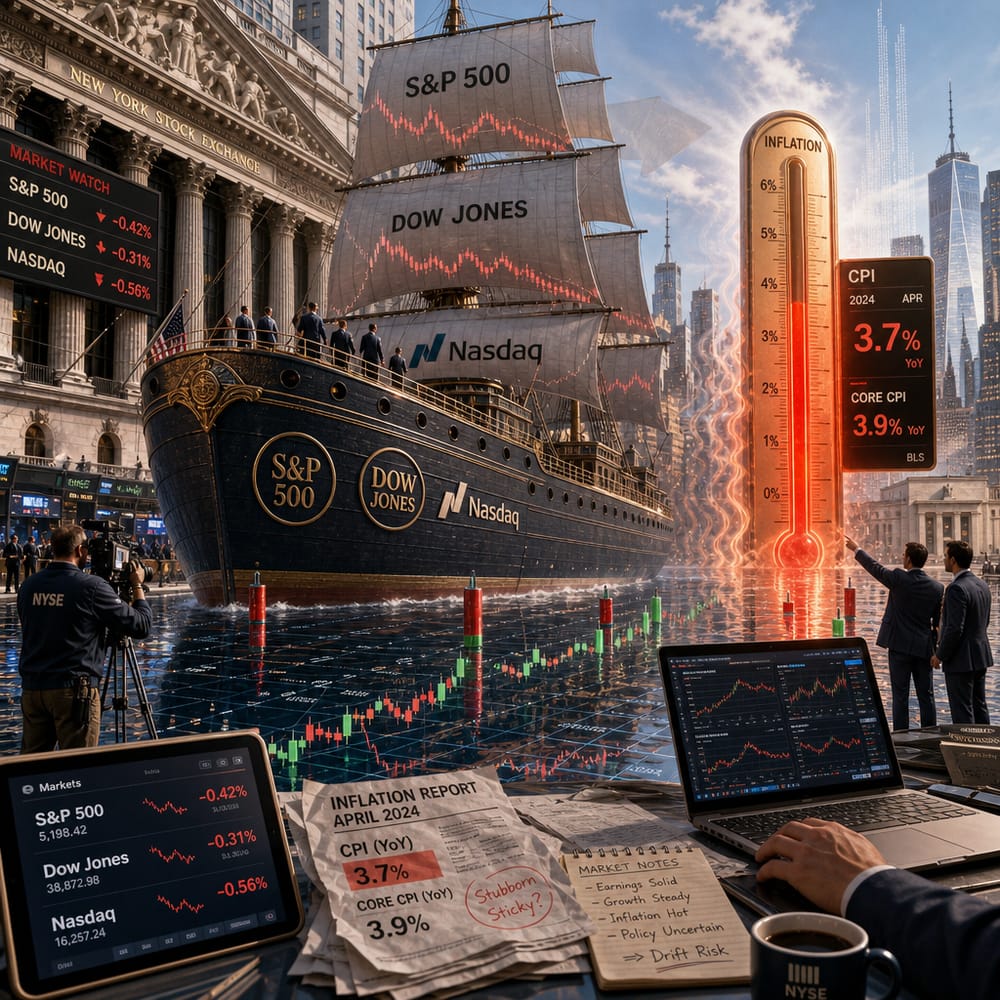
WHEN HOT INFLATION LEAVES MARKETS COLD
Blink, and you might have missed it. The stock market just wrapped up a sleepy session that followed a sizzling inflation report. Yes, you read that right—hotter-than-expected inflation data, and yet, the market barely flinched. So, why didn’t Wall Street pull an all-nighter after the news? Well, it’s a bit like trying to sleep through a car alarm that’s been going off for the better part of the year; eventually, you just learn to ignore the noise.
The S&P 500, Dow Jones, and Nasdaq each took a micro nap, registering minor declines. It was the kind of day where traders might’ve been more concerned with the new season of The Great British Bake Off than the latest CPI numbers (that’s consumer price index, basically the price of stuff you buy). But here’s the scoop: inflation creeping up more than expected throws a curveball at the Federal Reserve, which then needs to decide whether to hike interest rates and rain on everyone's parade or let the economy do its thing.
WHY ALL’S QUIET ON THE MARKET FRONT
So, why did markets respond with all the enthusiasm of a teenager told to clean their room? Two words: inflation fatigue. We’ve been here before—the same old inflation song and dance from last month, and the month before that. Like a Spotify playlist stuck on repeat, investors are learning to live with it.
Plus, the Fed’s been putting on quite the poker face lately. Chairman Kevin Warsh, in his latest Jackson Hole address, went full stoic on us, keeping his cards close to his chest about future rate hikes. When your usual party DJ suddenly decides to stop announcing what song's coming next, you start dancing to the music you have. That’s investors right now—trying to groove to the unknown beat of Fed policy shifts.
THE FUTURE FED FACTOR
Now, don’t think that this serenity means markets are sipping piña coladas by a zen pond. There’s a cyclone called Fed Policy on the horizon. If inflation continues to heat up, the Fed could be forced to crank up those interest rates. Higher interest rates can put the brakes on the economy, making borrowing more expensive and slowing down spending. That’s the kind of shindig nobody wants an invite to.
In theory, higher rates should cool inflation, but in practice, it’s a delicate dance. The Fed doesn’t want to tap-dance us into a recession. So, you can bet investors are keeping one eye on inflation data and the other on Fed speeches, waiting for a slip, a hint, anything to clarify the future.
CONCLUSION: WHAT'S NEXT FOR YOU, THE RETAIL INVESTOR?
If you’re someone who likes to know what’s coming next, it might feel like you’re trying to watch the next episode of a show without a trailer. But fear not, because navigating these choppy waters doesn’t require a crystal ball—just a well-balanced investment strategy. Diversification remains the name of the game, spreading risk across different assets to cushion against shocks.
Remember, the market hates surprises more than Garfield hates Mondays. Keep your ears to the ground for any Fed signals, and hold tight to the assets that align with your risk tolerance. Inflation might be the hot topic, but with a cool head and a steady hand, you can ride out whatever the market heats up next.
In the meantime, keep an eye on the usual suspects—S&P, Dow, Nasdaq—and who knows, maybe even splurge on some beef at its new temporarily reduced price, courtesy of free-trade beef imports. Just don't expect your grocery list to magically shrink along with inflation worries. After all, in today’s market, predictability is as rare as a free lunch.
This article is for informational purposes only and is not investment advice. Always do your own research or consult a licensed financial professional before making investment decisions.
© Copyright 2024. All Rights Reserved.
© Copyright 2024. All Rights Reserved.