

Market Caution Ahead of Fed and Nvidia Announcements
Friday, August 28, 2026
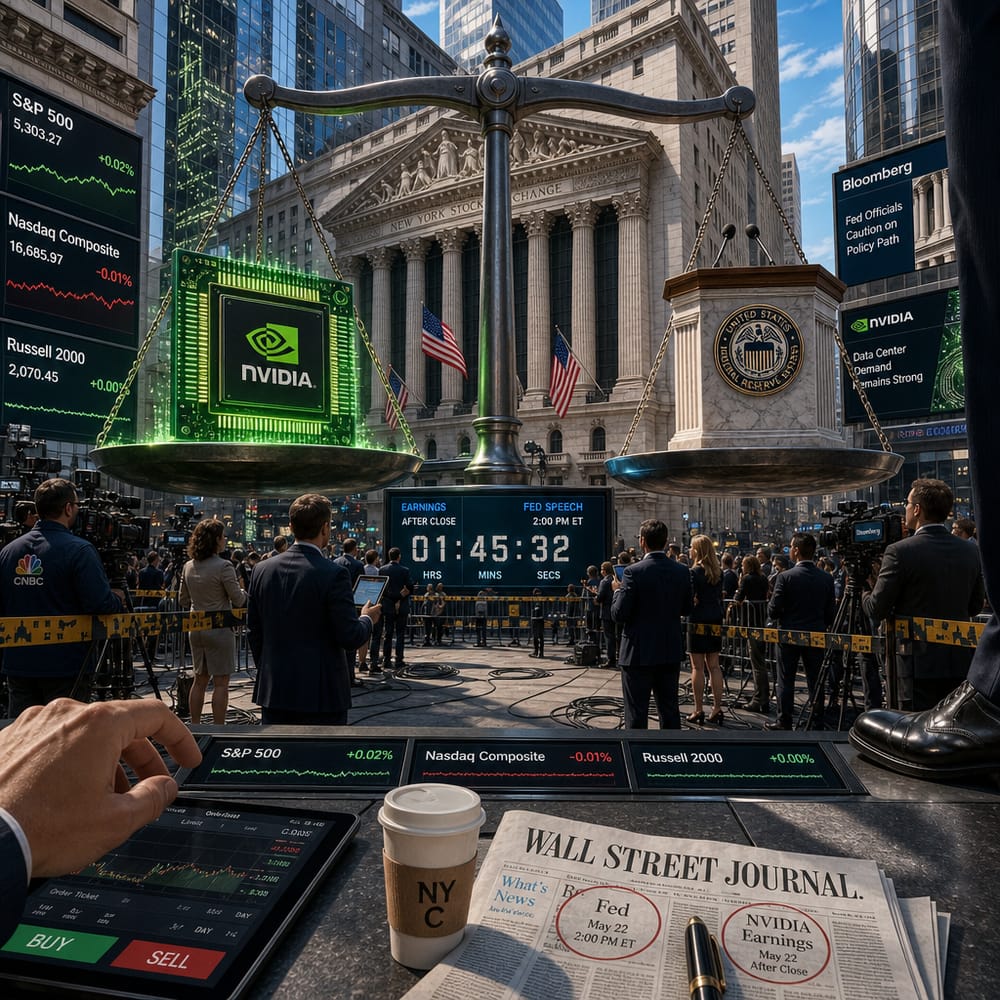
MARKET CAUTION AHEAD OF FED AND NVIDIA ANNOUNCEMENTS
Ever tried to walk a tightrope while holding a tray of champagne flutes? Welcome to the U.S. stock market this week. Investors are delicately balancing their portfolios, eyes wide open as they await two pivotal moments that have the potential to spill bubbly all over Wall Street: Federal Reserve Chairman Kevin Warsh’s inflation-fueled musings, and Nvidia’s earnings report, which could either electrify or short-circuit the tech-heavy Nasdaq.
With the market in a cautious pause, it feels a bit like the calm before a storm. The S&P 500, Nasdaq Composite, and Russell 2000 are lying low — no roller-coaster rides this week, folks. Everyone's playing it cool, like a poker player with an unpredictable hand. But what's behind this collective holding of breath? Two words: uncertainty and anticipation.
THE FED'S NEXT MOVE
Let's start with the guy holding the biggest lever in the market right now: Fed Chairman Kevin Warsh. Fresh off his speech at the Jackson Hole symposium, Warsh is the man everyone is trying to decode. His recent stance? Inflation is the beast that must be tamed. Warsh didn’t mince words, hinting at a potential rate hike if inflation doesn't start behaving. To the untrained ear, it might sound like financial gobbledygook. But for investors, it’s a clarion call that interest rates might rise, tightening the economy’s belt even further.
Why does this matter to you, the retail investor? Because the Fed’s decisions ripple across the market. Higher interest rates can make borrowing more expensive, affect consumer spending, and even swing the stock market pendulum. Warsh’s warning shot across the bow has everyone hedging their bets. They’re playing defense, avoiding major moves until the Fed shows its cards.
NVIDIA'S MOMENT OF TRUTH
Then there's Nvidia, the heavyweight champ of chip stocks, standing nervously in the earnings ring. The semiconductor giant's report is hotly anticipated, with investors eagerly waiting to see if Nvidia will continue its winning streak or stumble under market pressures. Nvidia’s performance is a big deal for anyone tracking tech stocks, as the company often serves as a bellwether for tech sector health.
The cautious sentiment isn’t misplaced. Tech stocks have been the market's darling for ages, but they're also the most prone to volatility. If Nvidia hits a home run with its earnings, it might just send a rally through the Nasdaq. Miss the mark, and you could see investors fleeing tech stocks faster than you can say “semiconductor shortage.”
MARKET VOLATILITY IN CHECK
So, what does all this hullabaloo mean for market volatility? Right now, it’s as if the market’s running on decaf. Volatility is low, primarily because everyone’s in a wait-and-see mode. This lull gives investors a chance to think, strategize, and maybe even catch their breath before the next big move.
When markets are this calm, it’s often a sign that something’s brewing. Investors are cautious, yes, but they’re not asleep. They're meticulously weighing their options, ready to make a move once they get clarity from Warsh’s intentions and Nvidia’s earnings.
THE BIGGER PICTURE
In the grand scheme of things, this waiting game highlights how sensitive the market is to economic data and policy signals. Every whisper from the Fed, every quarter from a big player like Nvidia, can tip the scales. For everyday investors, it’s crucial to stay informed but also to keep a steady hand. The market might dance to the beat of Fed announcements or tech earnings, but your investment strategy doesn’t have to be a jittery jitterbug.
Keep your eyes peeled, your strategy sound, and your sense of humor intact. Markets, after all, have a way of surprising even the most seasoned investors. Whether the champagne spills or we toast to new highs, one thing’s for certain: it’s going to be an interesting ride.
This article is for informational purposes only and is not investment advice. Always do your own research or consult a licensed financial professional before making investment decisions.
© Copyright 2024. All Rights Reserved.
© Copyright 2024. All Rights Reserved.