

Market Breadth Divergence: A Hidden Risk in Index Performance
Thursday, August 20, 2026
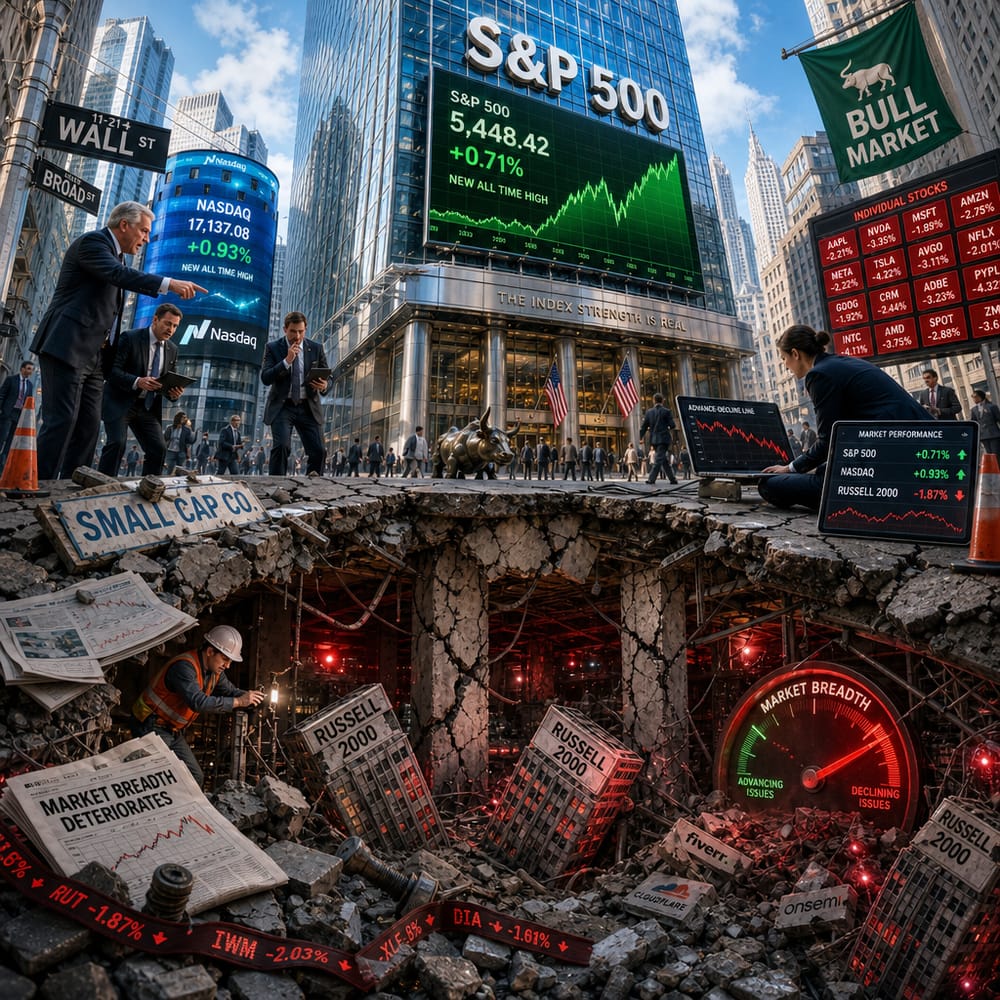
MARKET BREADTH DIVERGENCE: A HIDDEN RISK IN INDEX PERFORMANCE
Well, folks, it looks like the stock market might be pulling a Houdini on us. You see, while the headline indices like the S&P 500 and Nasdaq are strutting around like peacocks at a beauty pageant, the underlying market breadth is quietly slipping into an old pair of sweatpants. This divergence isn’t just a minor wardrobe malfunction; it’s a flashing red signal for anyone who’s paying attention.
Let’s break it down. Market breadth essentially measures how many stocks are participating in the market's upward or downward moves. Think of it like counting how many players are actually scoring versus just sitting on the bench. When indices rise but market breadth declines, it’s like discovering half the team is actually just chilling on the sidelines. It might look like a victory from afar, but a closer inspection tells a different story.
Why does this matter? Imagine trying to balance on a three-legged stool where one leg is three inches shorter than the others. Uncomfortable, right? That’s the kind of instability we’re talking about. The S&P 500, for instance, might be showing off its gains, but if that performance is driven by just a handful of big names, it’s a wobbly podium at best. The same goes for the tech-heavy Nasdaq, often buoyed by its mega-cap darlings, while the rest of the lineup may not be pulling their weight.
This brings us to the big question: what does this divergence between index performance and market breadth reveal? It can indicate underlying market fragility and point to potential rotation risks. If only a few stocks are carrying the weight, it means any hiccup for those stocks could lead to a market stumble. Worse yet, it suggests that many stocks might already be in a silent sell-off, even if the indices don’t show it upfront.
Now, what’s a savvy investor to do with this information? First off, don’t panic, but do pay attention. Consider diversifying your portfolio to hedge against these potential pitfalls. It’s not about jumping ship but rather making sure your investment vessel is seaworthy in choppy waters. Keep an eye on sectors or stocks that have been showing resilience or are undervalued—these could be your life rafts if the storm hits.
Consider the smaller stocks in the Russell 2000, often overlooked when the big players hog the spotlight. These can sometimes offer hidden value, especially if the market undergoes a rotation out of overbought stocks into those that haven’t been as heavily traded. It’s like finding a hidden pathway through the jungle of market noise.
The implications for market stability are significant. When the market breadth is on the decline, and everyone’s eyes are glued to those sparkling indices, it might be the calm before the storm. Investors should brace themselves for potential volatility, keeping an eye out for sudden shifts that could mean the big players decide to take a breather or rotate into less flashy sectors.
Sure, Treasury yields are climbing and causing a stir, oil prices are doing their rollercoaster thing, and geopolitical tensions are adding spice to this financial jambalaya, but the stealthy decline in market breadth is what the seasoned market hawks are whispering about at cocktail parties. It’s the subtle drumbeat beneath the surface noise—one that could crescendo into a significant market event if left unchecked.
So, what do you do in the meantime? Besides diversifying, stay informed. Keep track of which stocks are truly driving those index performances versus which ones are just along for the ride. As with any ensemble, the stars might get the applause, but it’s the entire cast that makes the show. And when the cast starts to wobble, well, you get the picture.
In short, don’t be fooled by the flashy headline numbers. Check under the hood of the market car before you decide it’s safe to put the pedal to the metal. Keep your portfolio balanced, your eyes peeled, and your coffee strong. You’ll need it if this rollercoaster decides to take an unexpected turn.
This article is for informational purposes only and is not investment advice. Always do your own research or consult a licensed financial professional before making investment decisions.
© Copyright 2024. All Rights Reserved.
© Copyright 2024. All Rights Reserved.