

Magnificent Seven's Significant Sell-off
Tuesday, July 28, 2026
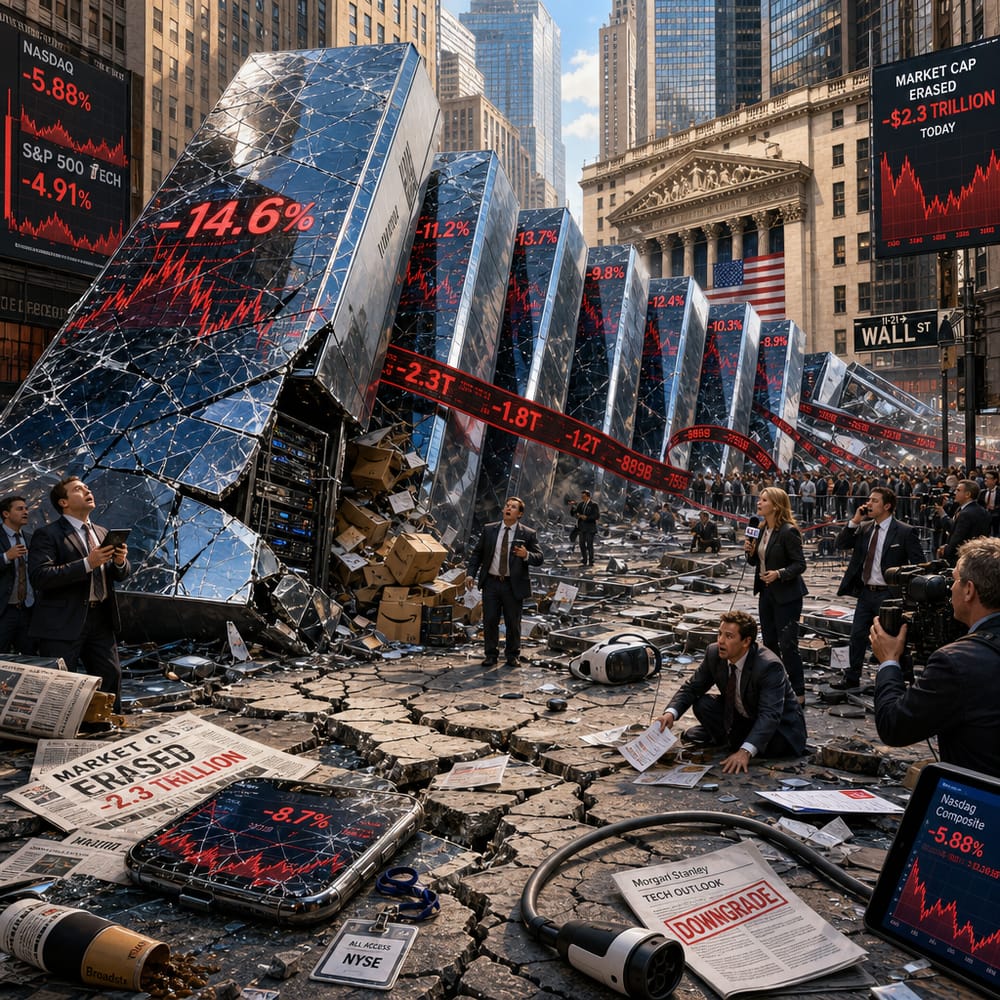
THE MAGNIFICENT SEVEN'S SIGNIFICANT SELL-OFF
In the world of Wall Street's high-stakes drama, Tuesday's performance by the Magnificent Seven wasn’t exactly a box office smash. In fact, it was a little more of a horror flick as these tech titans—Tesla, Alphabet, Amazon, Meta, Microsoft, and Apple—staged their largest one-day sell-off in over a year. Cue the dramatic music: investors watched billions in market cap evaporate like a magician's trick gone wrong.
So, what sent these heavy hitters tumbling like dominoes? Was it the ghost of tech valuations past haunting the present, or something more sinister lurking in the shadows of corporate earnings?
The spooked sell-off was largely driven by jitters over the future of artificial intelligence (AI) spending. Investors are starting to wonder if the golden goose of tech profits might be running out of golden eggs. With the sizzling AI hype cooling down, questions are floating around Silicon Valley faster than you can say "Moore's Law."
AI, once the dazzling jewel in tech's crown, is now under the magnifying glass. We've seen huge investments in AI infrastructure, from data centers to next-gen chips. But as the novelty wears off, so too does patience. Investors want to know: is there enough bang for all those bucks? The sell-off suggests some are decidedly skeptical.
There’s been a whisper in the tech corridors—AI spending might not be as sustainable as once thought. What’s causing this existential crisis? It's partly about the broader economic picture. Rising interest rates and inflationary pressures are tightening purse strings, making those once-justifiable AI investments look a bit extravagant.
Not to mention, the semiconductor sector is another player in this drama. The recent plummet in South Korean chip stocks sent ripples through the market, raising eyebrows and causing some to wonder if the AI train might slow to a crawl if chip supplies tighten or costs rise.
Let’s not forget the delicate dance between U.S. and Asian tech stocks. The correlation between South Korea's Kospi and the Nasdaq has hit its highest level since 2021, tying the fates of companies like Samsung and Nvidia together. If one stumbles, the other feels the tremor. As these markets sway together, investor anxiety about supply chain snafus or geopolitical tensions grows.
So, what does this mean for the future of tech investments? Should you be dialing down your exposure in tech faster than a Tesla on autopilot, or is this just a temporary hiccup?
While this sell-off is a stark reminder that what goes up can also come down, it doesn’t spell doom for tech stocks. The Magnificent Seven might be licking their wounds, but they’re not out of the game. After all, these companies are still raking in cash from various ventures beyond AI. Cloud computing, digital advertising, e-commerce—these are sectors where the big players still shine.
If anything, this market drama is a golden opportunity for savvy investors. As the old saying goes, the best time to buy is when there's blood in the streets—or in this case, when tech stocks are on sale.
Of course, caution is key. Keep an eye on those earnings reports and guidance on future spending. Are companies tightening their belts or doubling down on AI projects? Are they pivoting to other revenue streams? These are the breadcrumbs that could lead you to the treasure.
In the end, it’s clear that the tech sector, much like the nascent AI it champions, is still learning and evolving. And for investors, that means staying informed, being flexible, and, most importantly, keeping your sense of humor intact. Because if there’s one thing a day like Tuesday teaches us, it’s that the stock market often has a sense of irony, if not a downright wicked sense of humor.
While the Magnificent Seven regroup and strategize their next move, we can sit back, watch, and, as always, stay tuned for the next thrilling episode in the saga of tech stocks.
This article is for informational purposes only and is not investment advice. Always do your own research or consult a licensed financial professional before making investment decisions.
© Copyright 2024. All Rights Reserved.
© Copyright 2024. All Rights Reserved.