

Macro Shock from Jackson Hole Speech Sparks Crypto Sell-Off
Saturday, August 29, 2026
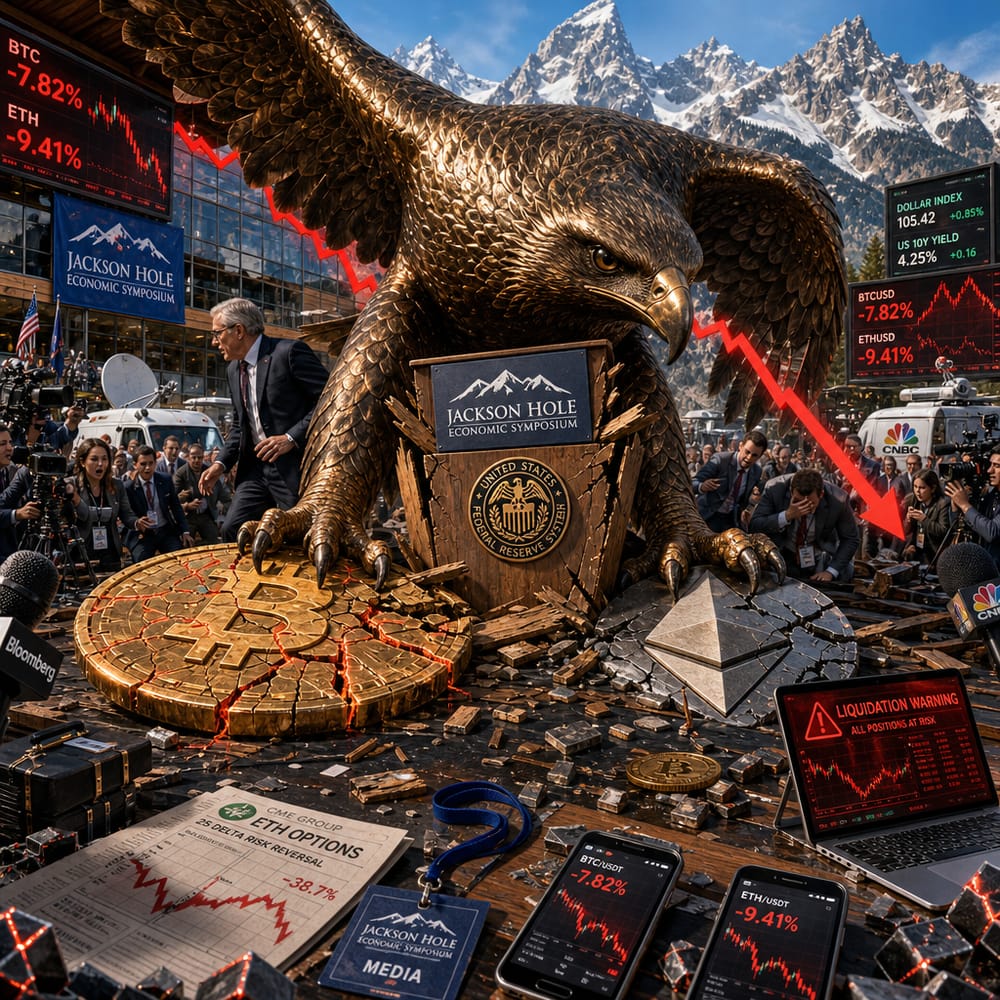
A hawkish wind blew through the sleepy town of Jackson Hole, Wyoming, and it wasn't just the mountain breeze. At the Federal Reserve's annual economic symposium, Fed Chair Kevin Warsh's cautious tone on inflation sent a chill through assets that usually bask in high-risk sunshine—cryptocurrencies. Like clockwork, Bitcoin and Ethereum saw red, reminding investors that the crypto playground is more like a rollercoaster you can’t get off.
Warsh's speech, which was light on specifics but heavy on concern, left traders clutching their Bitcoin wallets a little tighter. With the Fed showing no cards about future interest rate hikes, the market got a stark reminder: When it comes to betting on crypto, macroeconomic policies are the house, and they always have the edge.
Crypto markets, already on edge from earlier volatility, spiraled into a sell-off after Warsh’s words wafted through the mountains. In an industry known for its wild swings, the reaction was almost Pavlovian. Bitcoin, the crown jewel of digital currencies, tumbled, dragging Ethereum down the crypto rabbit hole with it. But was it all doom and gloom? Not quite.
The crypto sell-off wasn’t just a knee-jerk reaction to the Fed’s hawkish tone. It also coincided with a massive $6.4 billion options expiry—think of it as a deadline for bets on where crypto prices are heading. As the clock ran out on these options, traders scrambled to adjust their positions. Picture a crowded casino floor just as the roulette wheel starts to slow, and you have the right idea.
This expiry played a big role, intensifying the sell-off like salt in a wound. The delicate dance of cryptocurrency markets often hinges on such expirations, where traders either double down on their bets or cut their losses. This time, many chose the latter, adding fuel to the fire Warsh sparked in Jackson Hole.
But why does a speech in Wyoming ripple through the digital stratosphere? It’s all about sentiment. Cryptocurrencies exist on the fringes of traditional finance, yet they’re exceptionally sensitive to its mood swings. When the Fed expresses worry about inflation, it hints at higher interest rates ahead. Higher rates make traditional investments like bonds more attractive, pulling the rug from under riskier assets like crypto.
Moreover, the crypto options market is like a giant seesaw. When it tips—and it often does—investors must rebalance, leading to sharp price movements. The recent expiry ratcheted up the pressure, forcing panicked repositioning just as macro fears took hold.
And then there's the intrigue of ETF flows—or should we say, the lack thereof? Exchange-traded funds (ETFs) tied to crypto are still walking a tightrope between regulatory approval and market acceptance. Without robust ETF action, crypto remains a volatile beast swayed by every whisper from Wyoming to Wall Street.
So, how fragile is the current crypto sentiment? Like a soufflé in a wind tunnel. The Jackson Hole episode underscores a key takeaway for retail investors: Crypto is not an island. It's tethered to the broader economic landscape, and the forces of monetary policy can whip it into a frenzy faster than you can say "decentralized finance."
In this digital age, where a tweet can tank a coin and a speech can send markets into a tizzy, crypto investors must ride these waves with a steady hand—or at least brace for impact. The Jackson Hole shock was a reminder that while you may find gold in Bitcoin, it’s still subject to the same storms that buffet traditional assets.
So, next time the Fed speaks, keep one eye on the macro and another on the microcosm of your crypto holdings. Crypto might be the Wild West of finance, but even in the Wild West, it pays to know when to hold 'em and when to fold 'em. And if you’re in it for the long haul, buckle up. The next ride is just a speech away.
This article is for informational purposes only and is not investment advice. Always do your own research or consult a licensed financial professional before making investment decisions.
© Copyright 2024. All Rights Reserved.
© Copyright 2024. All Rights Reserved.