

Macro Pressures Shake Crypto Markets Ahead of Inflation Data
Tuesday, August 18, 2026
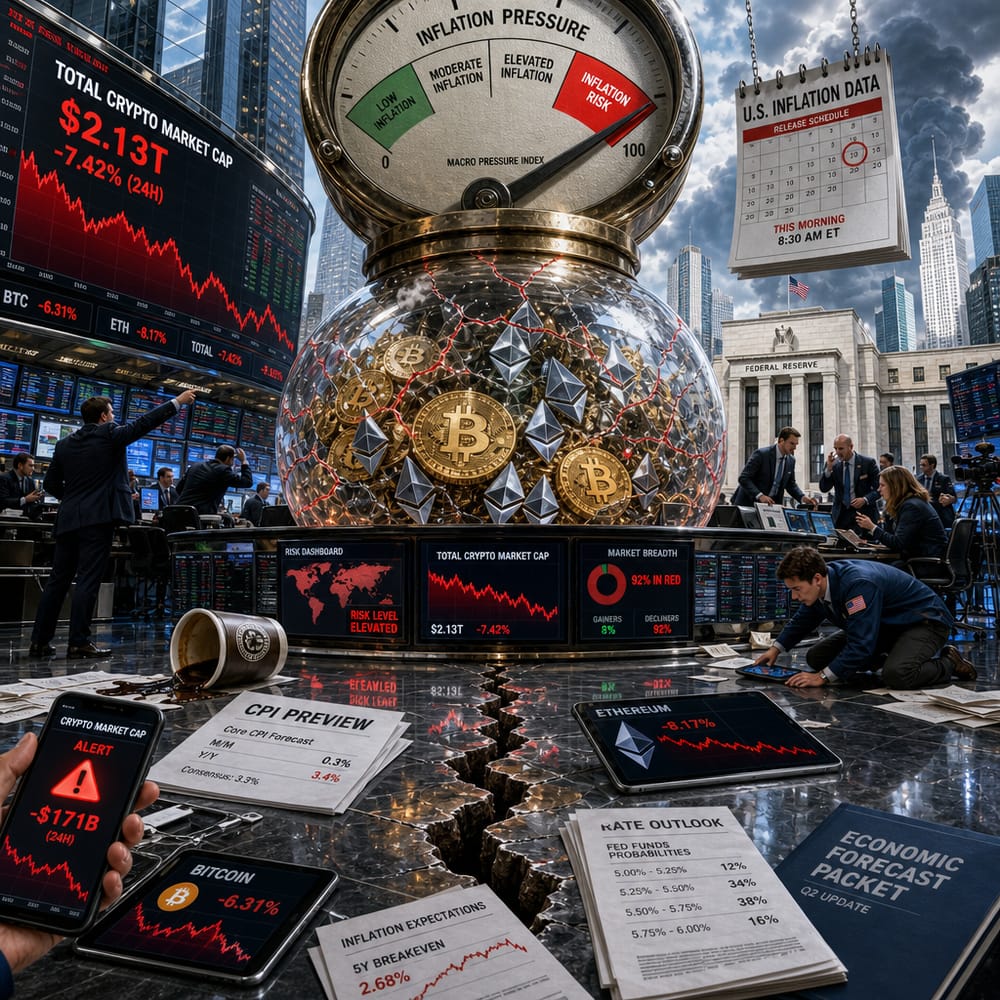
CRYPTO MARKETS STRUGGLE AS INFLATION GHOST LURKS
In the realm of cryptocurrencies, volatility is a constant companion—like that one friend who crashes every party and turns it upside down. But as the total crypto market cap takes a nosedive, dropping faster than your phone battery at the end of the day, we find ourselves asking: what's spooking the crypto crowd this time? The ghost in the room isn't just the usual market jitters; it's the looming specter of U.S. inflation data, and it's making investors buckle up for a wild ride.
If you’ve been hugging your Bitcoin or Ethereum like a crypto teddy bear, brace yourself. Macro pressures are rattling the digital money tree, and it’s all eyes on the Federal Reserve's next move. Inflation is the uninvited guest at this crypto party—its consequences rippling beyond traditional markets into the mysterious depths of cryptocurrency.
THE MACRO MONSTER UNDER THE BED
First, let’s talk macroeconomics. Inflation is the economy's way of telling us that money is losing its mojo; prices go up, and purchasing power goes down. How does this affect crypto? Well, your Bitcoin might not sweat it, but the folks trading it sure do. A higher inflation report could mean the Fed will keep hiking interest rates to cool things down, which usually spells out trouble for riskier assets. Just like a cranky diner sending back their undercooked steak, investors might ditch cryptos for more stable, interest-yielding options.
The recent spike in Treasury yields is another chapter in this suspense novel. With the 30-year Treasury yield hitting a high not seen in nearly two decades, investors are glued to their screens, waiting for what’s next. Who knew government bonds could be so dramatic?
THE CRYPTO FACTOR: BEYOND THE NUMBERS
But here's the twist: crypto isn't just another asset class. It's the rebellious teenager of the financial world. Unlike stocks or bonds, Bitcoin and Ethereum are influenced by more than just traditional market factors. There’s the whole narrative of decentralized finance (DeFi), technological adoption, and regulatory crackdowns that add more layers to the trading game.
Consider Bitcoin's role as a 'digital gold.' In theory, it's a hedge against inflation, but in practice, it doesn't always act like it. When inflation fears hit, you’d expect Bitcoin to shine. Sometimes it does, sometimes it doesn’t—like a moody pop star refusing to stick to just one genre. Ethereum, on the other hand, juggles its role as a platform for decentralized apps and a playground for investors—so it's facing its own set of challenges in these turbulent times.
WHAT'S NEXT: ANTICIPATING THE DATA DROP
So, why is everyone on edge about the upcoming inflation data? Well, it's like the next episode of your favorite thriller—everyone's waiting to see the plot twist. If the numbers suggest inflation is still heating up, we could see another wave of crypto selling. But if inflation shows signs of cooling, investors might just breathe a sigh of relief and dive back into the crypto pool.
In this high-stakes waiting game, the crypto market's reaction will provide clues about how much traditional macro factors really weigh against the unique dynamics of digital assets. It's an ongoing tug of war between old-school economics and the new guard of digital currency.
CONCLUSION: THE WINDING ROAD AHEAD
As the countdown ticks down to the inflation data release, crypto investors are left with more questions than answers. Will Bitcoin and Ethereum weather the storm or be swept away by the macroeconomic tides? The answer may lie in the very nature of cryptocurrencies: unpredictable, volatile, yet endlessly intriguing.
In the end, the crypto market might just continue to dance to its own beat, even as inflation tries to play the tune. For those watching from the sidelines, it's a fascinating spectacle; for those in the ring, it's a test of nerves and strategy. So buckle up, crypto enthusiasts—the ride is only just beginning, and it's guaranteed to be a rollercoaster.
This article is for informational purposes only and is not investment advice. Always do your own research or consult a licensed financial professional before making investment decisions.
© Copyright 2024. All Rights Reserved.
© Copyright 2024. All Rights Reserved.