

Macro Cross-Asset Tensions: Rising Oil Versus Equities
Friday, August 14, 2026
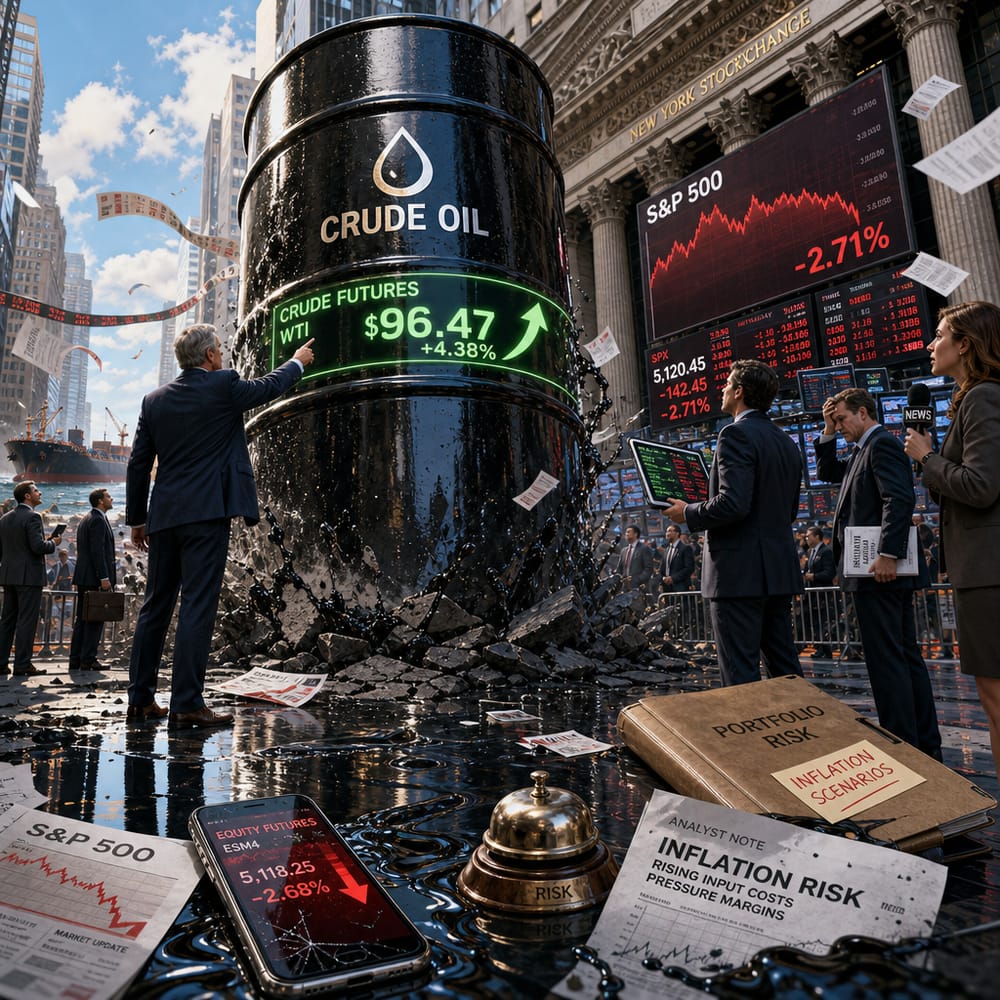
MACRO CROSS-ASSET TENSIONS: RISING OIL VERSUS EQUITIES
Ah, oil prices. Like that one unpredictable guest at a dinner party, they have a knack for showing up and shaking things up just when things seem to be going smoothly. As the price of oil climbs higher, there's a ripple of tension zigzagging through equity markets. Investors find themselves caught between the Scylla of inflation fears and the Charybdis of growth slowdowns. Welcome to the thrilling world of macro cross-asset tensions.
Let's dive straight into the deep end: what exactly is cooking with oil prices, and why should you care? Well, dear reader, when oil prices rise, the ripple effects can be felt far and wide. Just recently, Brent crude oil hit around $88.52 a barrel, fueled by geopolitical uncertainties and supply disruptions. For the mystified among us, Brent crude serves as a global benchmark for oil prices. The price surge is reminiscent of a high-stakes poker game, where everyone's got their eyes peeled, watching for the next move.
Why does rising oil send shivers down the spine of the stock market? Here’s the scoop: higher oil prices can unleash inflationary pressures. And inflation is like that sneaky thief who robs consumer purchasing power. As the cost of living edges up, wallets get tighter. It's not just households feeling the pinch; corporate profits take a hit too, as rising energy costs eat into their margins. When consumers tighten their belts, companies feel the squeeze, prompting concerns about future earnings and, consequently, stock prices.
Let's talk inflation expectations. Rising oil prices can fan the flames of inflation, prompting investors to reassess their outlook. Central banks like the Federal Reserve are particularly sensitive to inflationary pressures. If oil-induced inflation runs amok, the Fed might have to rethink its merry dance with interest rates. While Wall Street’s recent optimism was buoyed by the prospect of steady interest rates, an inflation uptick could change that tune faster than you can say "rate hike."
Now, which sectors are most vulnerable in this oily saga? Transport and airlines top the list, naturally, as fuel prices are a significant component of their operating costs. When oil goes up, it's like asking airlines to fly with one wing tied behind their back. Next, we have consumer goods companies. With rising transport and manufacturing costs, prices at your local store might start to look a bit more unfriendly. And then there’s the industrial sector, where the cost of raw materials surges just as quickly as those oil prices do.
As investors, it's essential to look at how these dynamics might influence central bank policy. The Fed, for instance, has a delicate tightrope to walk. On one hand, it must keep inflation in check; on the other, it has to nurture economic growth. Rising oil prices add a complex layer to this equation. If inflation pressures boil over, there could be calls for rate hikes sooner rather than later. But with the economy showing signs of slowing down—hello, disappointing retail sales—such a move could stifle growth, setting off a fresh bout of market jitters.
In the backdrop of this oil drama, the S&P 500 has been trying to find its footing. The index recently slipped 0.2%, as investors grappled with mixed signals: weak retail sales data juxtaposed against the backdrop of rising oil prices. It's a delicate dance of market forces, where optimism and caution must coexist.
So, what does all this mean for you, the everyday investor? As oil prices climb, keeping a keen eye on inflation trends and central bank pronouncements becomes crucial. Diversification could be your best friend here. Consider exposure to sectors that might benefit from inflationary pressures, such as energy, while keeping an eye on those vulnerable to higher costs.
For now, the party continues, with oil prices playing the unpredictable guest. But armed with insight and vigilance, you can navigate these macro cross-asset tensions with a little more confidence. As ever, the key is to stay informed and keep those investment strategies flexible. After all, when it comes to markets, adaptability is the name of the game.
This article is for informational purposes only and is not investment advice. Always do your own research or consult a licensed financial professional before making investment decisions.
© Copyright 2024. All Rights Reserved.
© Copyright 2024. All Rights Reserved.