

Luxury’s Comeback: Why 2026 Could Be the Year the Glamour Returns
Friday, December 05, 2025
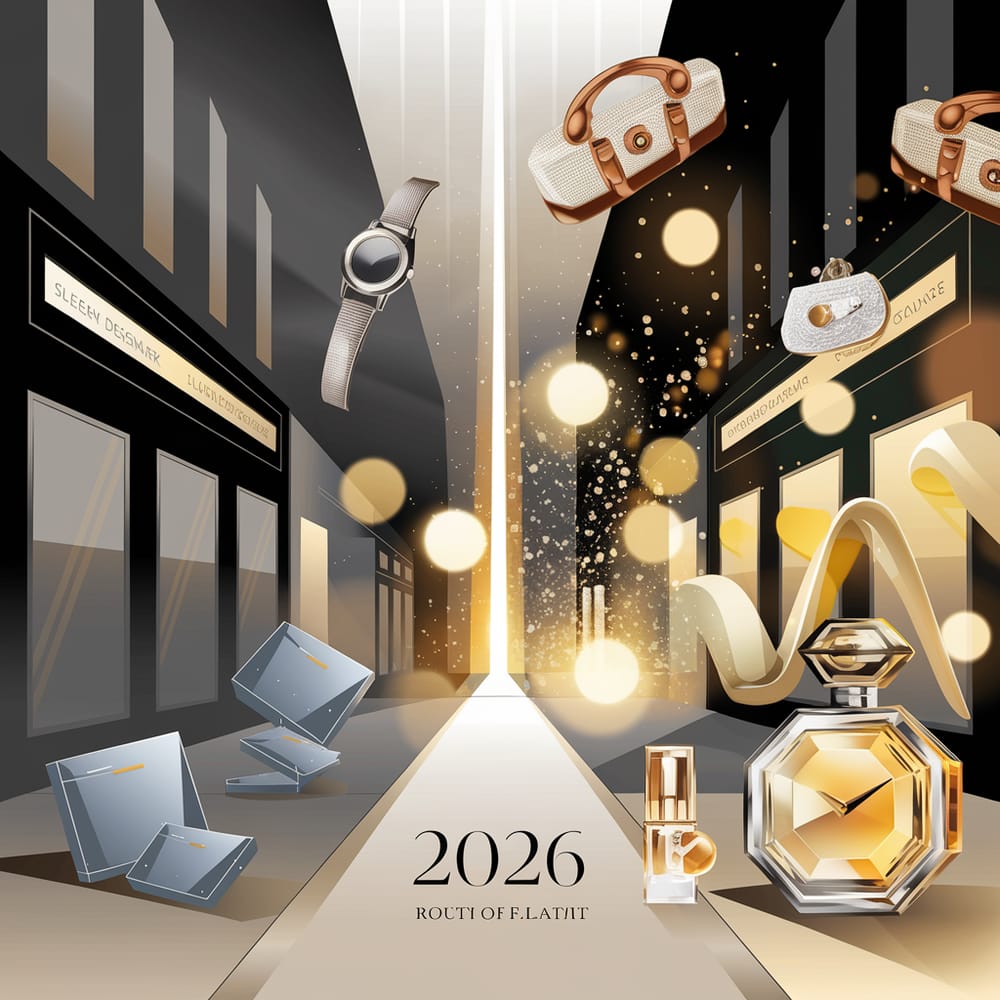
A Rollercoaster Year Sets the Stage for a Turnaround
After a turbulent 2025 filled with tariff shocks, weak Chinese demand, and consumer hesitancy, Europe’s luxury giants are ending the year with a surprising spark. Analysts across major banks are now leaning bullish, betting that the rebound that started in the second half of 2025 has enough fuel to keep going well into 2026. Third-quarter earnings were stronger than expected, and the mood among industry watchers has shifted from “brace yourself” to “maybe the worst really is behind us.”
China’s Reawakening Could Be the Game-Changer
One of the biggest drivers of this fresh optimism is China. After spending much of 2025 digesting economic slowdown and geopolitical noise, Chinese consumers appear ready to return to luxury boutiques. Beijing is considering new stimulus measures, and analysts expect Chinese luxury spending to grow about 6% in 2026 — a dramatic reversal from this year’s decline.
For brands heavily linked to Chinese buyers — think Moncler, Swatch, and major fashion houses — even a modest recovery could be the difference between a sluggish year and a breakout one.
Creativity Is Back, and It’s Pulling Customers In
The industry has also seen a renewed wave of creative leadership. New artistic directors at major houses are rolling out bolder collections, fresh runway concepts, and buzzy collaborations. Analysts argue this surge in creativity is crucial: it’s what gets high-spending clients excited again and draws younger shoppers back into the luxury orbit. After years of safe, pandemic-era design strategies, the aesthetic reset is arriving right on time.
But Don’t Expect a Return to the “Stupid Growth” Era
Analysts and executives are clear: the early-2020s boom — turbocharged by Chinese demand and post-lockdown splurging — isn’t coming back anytime soon. Those were the years when “everything sold out,” whether it made sense or not. The current recovery is far more grounded. Aspiring luxury consumers, especially in Europe and the U.S., are still watching their budgets, cutting back on discretionary spending, and gravitating toward long-lasting pieces rather than high-turnover fashion buys.
This means the comeback is real, but it won’t be wild.
High Expectations Mean Higher Pressure
Even with improving sentiment, luxury valuations are already creeping toward demanding levels. Forward price-to-earnings ratios for the sector have shot back toward the upper range of the past few years, nearly twice that of the broader market. Translation: investors have priced in a recovery — now companies must earn it through sales and margin growth.
This puts pressure on management teams to deliver flawless execution in 2026. Any stumble could be punished quickly.
The Analyst Favorites: Richemont Leads the Pack
If there’s one company analysts can’t stop praising, it’s Richemont. The Swiss jewelry powerhouse — owner of Cartier and Van Cleef & Arpels — has weathered the downturn better than most, delivering double-digit growth recently and outperforming rivals across Europe. Multiple banks, including UBS, JPMorgan, HSBC, and Deutsche Bank, have crowned it their top pick.
Other names expected to shine:
- LVMH, lifted by a blockbuster 45% rally since June and renewed growth across key divisions.
- Hermès and Prada, both positioned to gain as China stabilizes and high-end demand outperforms.
- Moncler and Tapestry, highlighted for resilience and diversified growth drivers.
A More Picky Consumer Will Shape the Winners
Consumers in 2026 will be more discerning than ever. Jewelry is gaining appeal as better long-term value compared to handbags, a shift analysts say could boost brands with strong fine-jewelry portfolios. Meanwhile, entry-level luxury — the segment serving aspirational shoppers — may struggle to regain past momentum as inflation keeps pressure on lower-income consumers.
The Bottom Line: The Worst Seems Over — but Not All Boats Will Rise
The luxury sector is heading into 2026 with renewed confidence, healthier demand signals from China, and a revitalized creative landscape. But this isn’t a broad-based explosion. It’s a selective, quality-driven revival where strong brands with disciplined execution and global reach will thrive — and weaker, overly stretched labels may continue to fade.
It’s not the return of luxury mania — it’s the start of a smarter, more sustainable growth cycle.
© Copyright 2024. All Rights Reserved.
© Copyright 2024. All Rights Reserved.