

Loonie Slides as Trade Tensions Escalate
Friday, August 28, 2026
LOONIE SLIDES AS TRADE TENSIONS ESCALATE
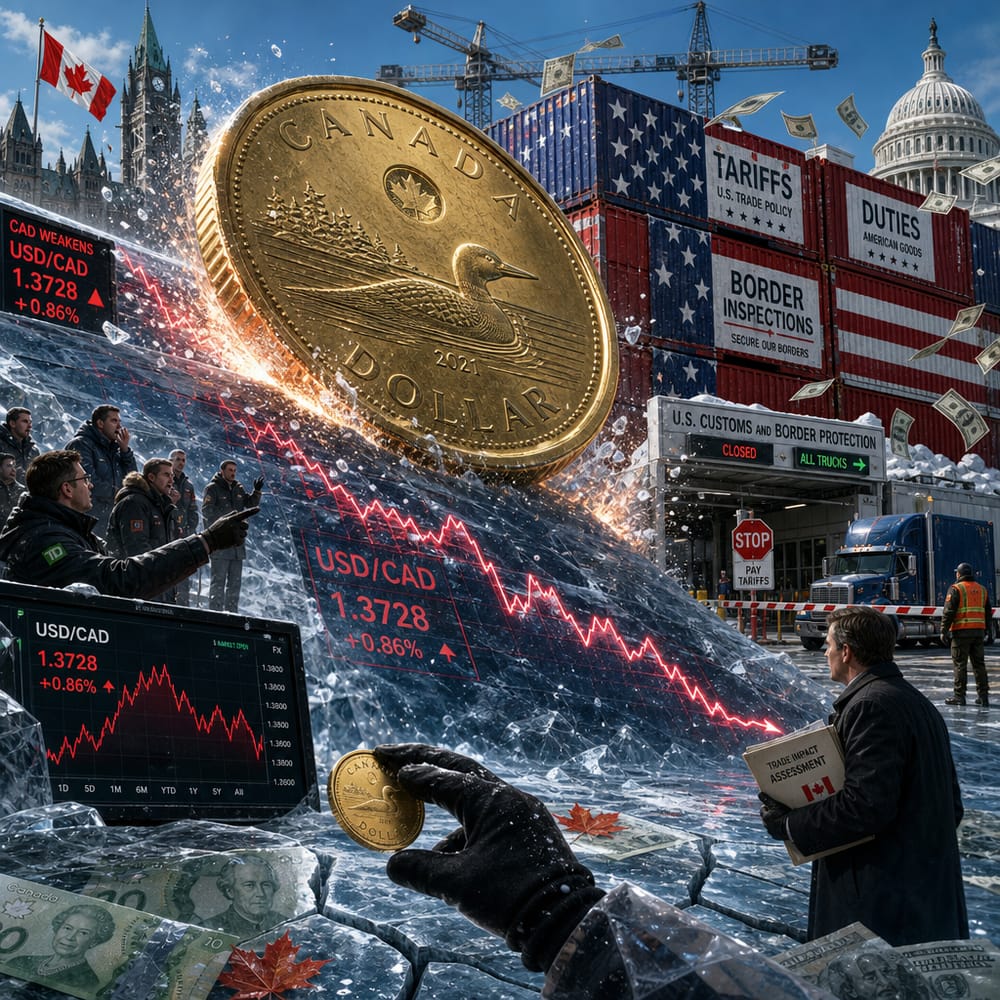
The Canadian dollar's gotten a bit loopy lately, and no, it’s not because it drank too much maple syrup. It’s trading drama. Yes, you read that right. Trade tensions between Washington and Ottawa are heating up, and it’s making our northern neighbor’s currency—the loonie—go on a downhill ski run. But what’s really going on? Let’s dive into this north-of-the-border saga.
First off, let's spill the tea on what's causing these trade tensions. Picture this: Washington and Ottawa, usually the friendly neighbors sharing a fence (and the longest unprotected border), are at a little bit of a standoff. The sticky wicket here is all about trade policies and tariffs—imagine two folks arguing over who gets the last slice of poutine. The U.S. isn't shy about flexing its muscle on trade matters, and Canada’s not exactly a pushover. Between tariffs on goods and a few pointed comments, it's become a classic tale of "he said, she said," but with more spreadsheets and fewer emotions.
All this geopolitical bickering is making the loonie, Canada’s whimsical name for its dollar, not so loonie anymore. The USD/CAD exchange rate is feeling the pressure, which means one U.S. dollar is buying more Canadian dollars than before. For retail investors, this isn't just a numbers game—it's real money on the line when you’re planning that trip to the Great White North or investing in Canadian goods.
Trade spats aside, there's another heavyweight punching the loonie: central-bank policy divergence. While the Bank of Canada is trying its best to keep inflation under control without completely tanking the economy, our own Federal Reserve is playing it a bit differently. Fed Chairman Kevin Warsh is peeking over his glasses, hinting at possible interest rate hikes if inflation doesn't cool its heels. His words are more closely watched than the latest TikTok trend, and they’re making U.S. Treasury yields do a little jig.
So, how does this all tie back to our loonie? Well, interest rate drama means investors might be tempted to pull money out of Canada and park it in the States where they might get better returns. It’s like choosing between a ski resort with fresh powder and one with artificial snow—people opt for the real deal. As a result, the Canadian dollar is slipping and sliding in the forex market.
Now, what does this mean for the loonie in the near future? Let’s break it down without breaking out a crystal ball. If trade tensions keep bubbling up, the loonie might continue its downhill trajectory. Investors could get spooked, pulling their money out faster than a moose running from a hunter. On the flip side, if cooler heads prevail and trade talks lead to mutual back-patting, we could see the loonie regain some ground.
But let's not forget, the currency market is like a moody teenager—unpredictable and always full of surprises. Today's trade tension could be tomorrow's trade triumph, so keeping an eye on negotiations and central bank signals is crucial.
So, what should you, the everyday retail investor scrolling through your phone while sipping a double-double, do? Keep your ear to the ground and your eyes on the news. Trade relationships, interest rates, and economic indicators are all puzzle pieces in this global game. Stay informed, stay nimble, and maybe think twice before converting your savings to loonies until the dust settles.
In essence, the Canadian dollar's recent slide is more about the shaky relationship between Washington and Ottawa—not to mention a bit of central bank showmanship—than a sudden preference by Canadians for American dollars. Whether these trade tensions will simmer down or boil over remains to be seen, but the loonie is certainly in for a ride.
So, buckle up, because in the world of forex, nothing's quite as certain as uncertainty. But hey, if the tension passes and the loonie rebounds, you might just find yourself thanking your lucky northern stars.
This article is for informational purposes only and is not investment advice. Always do your own research or consult a licensed financial professional before making investment decisions.
© Copyright 2024. All Rights Reserved.
© Copyright 2024. All Rights Reserved.