

Long-Term Yields Hold Steady as Markets Digest Fed Uncertainty
Friday, August 28, 2026
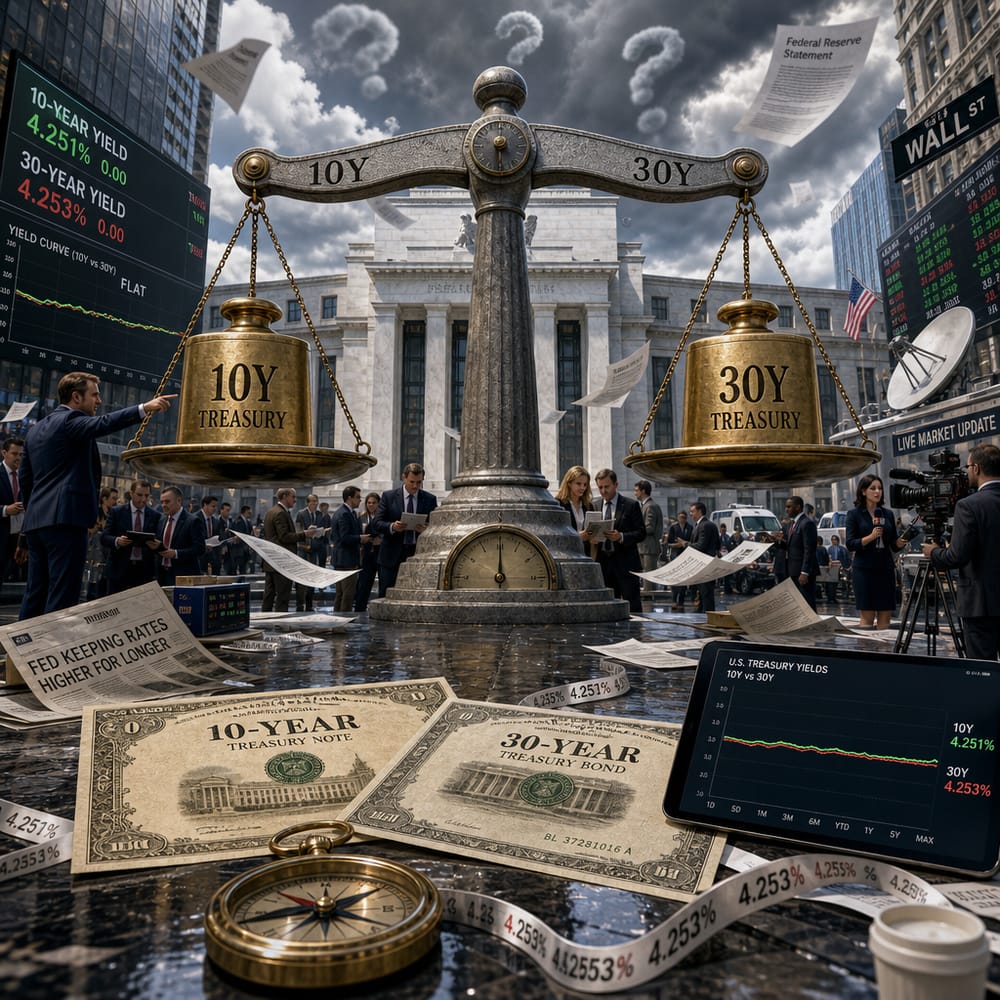
LONG-TERM YIELDS HOLD STEADY AS MARKETS DIGEST FED UNCERTAINTY
If you’ve ever watched a pot of water, half expecting it to boil faster just because you’re staring at it, you’ll get a sense of what’s going on in the bond market these days. Long-term Treasury yields are sitting there, cool as cucumbers, even as Federal Reserve honchos like Kevin Warsh tighten the screws to rein in inflation. Investors, traders, and amateur market sleuths are trying to figure out why these long-term rates are catching their breath while short-term yields do the jitterbug.
So, what’s the deal with these steadfast long-term yields? Are they simply ignoring the Fed's hawkish tunes? Let's dive into the why, the how, and the what’s-next of long-term Treasury yields.
THE STABILITY FACTORS
First up, let’s talk about the major players keeping long-term yields in check. The Federal Reserve's recent commentary has everyone bracing for potential interest rate hikes. You’d think that would have long-term rates bouncing around like a pogo stick, but nope. Imagine a magician’s trick - making riskier assets disappear and investors magically reappear in the safe arms of long-term Treasuries. The result? Stable demand and steady yields.
Another actor in this drama is economic uncertainty. When the markets are not sure which way the economic winds will blow, they tend to cling to anything that's less risky. Long-term bonds, with their predictable returns, become the financial equivalent of comfort food.
Moreover, global market dynamics also have a say. While the Fed may want to play it hard with rates, global demand for U.S. bonds often acts as a counterweight. Foreign investors looking for safe and reliable returns are like kids in a candy store when it comes to U.S. Treasuries, and their buying helps keep yields stable.
LONG-TERM INVESTMENT STRATEGIES: KEEPING IT STEADY
Let's break down what these stable long-term yields mean for your portfolio. For starters, if you’re eyeing a long-term investment strategy, steady yields mean less drama and more predictable returns. In times of uncertainty, this is the financial equivalent of opting for a drama-free relationship.
Investors can count on a steady flow of income from these bonds, which also means less volatility for the broader markets. When long-term yields are stable, it typically points to lower loan and mortgage rates. That’s good news if you’re looking to finance a home or expand your business, as it means cheaper borrowing costs.
But there’s a trade-off. For those relying on bonds for income, the stability might also imply lower yields compared to periods when interest rates are rising sharply. Still, stability can be golden, especially when economic prospects are as clear as a foggy morning.
WHAT COULD STIR THE POT?
However, in this economic landscape, stability is more of a temporary tattoo than a permanent fixture. So, what might cause long-term yields to start moving?
First off, let’s talk about inflation. If inflation stays high, and the Fed’s tough talk turns into action, we could see shifts in long-term yields. Investors would demand higher returns to compensate for the decrease in purchasing power.
Additionally, any significant changes in global demand for U.S. bonds could tip the scales. If, say, international buyers lose their appetite for U.S. Treasuries, yields could climb.
And of course, let’s not forget the economic wildcards — unexpected economic growth or downturn, geopolitical tensions, or shifts in consumer behavior (hello, high gas prices?) — could all play their part in reshaping the yield landscape.
THE BOTTOM LINE
Long-term yields are like the eye of a storm — calm and collected while the world around them swirls with uncertainty. They offer us a peek into market expectations and are a critical gauge for economic health. Their stability right now suggests a market that’s hedging its bets about what the Fed will do next, and just how bumpy the economic road might be.
So, whether you’re clutching bonds close to your chest or watching from the sidelines, remember: steady long-term yields might just be the tranquility before the next market tempest. Keep your eyes peeled and your portfolio ready.
This article is for informational purposes only and is not investment advice. Always do your own research or consult a licensed financial professional before making investment decisions.
© Copyright 2024. All Rights Reserved.
© Copyright 2024. All Rights Reserved.