

LIV Golf's Financial Struggles Without Saudi Support
Saturday, August 08, 2026
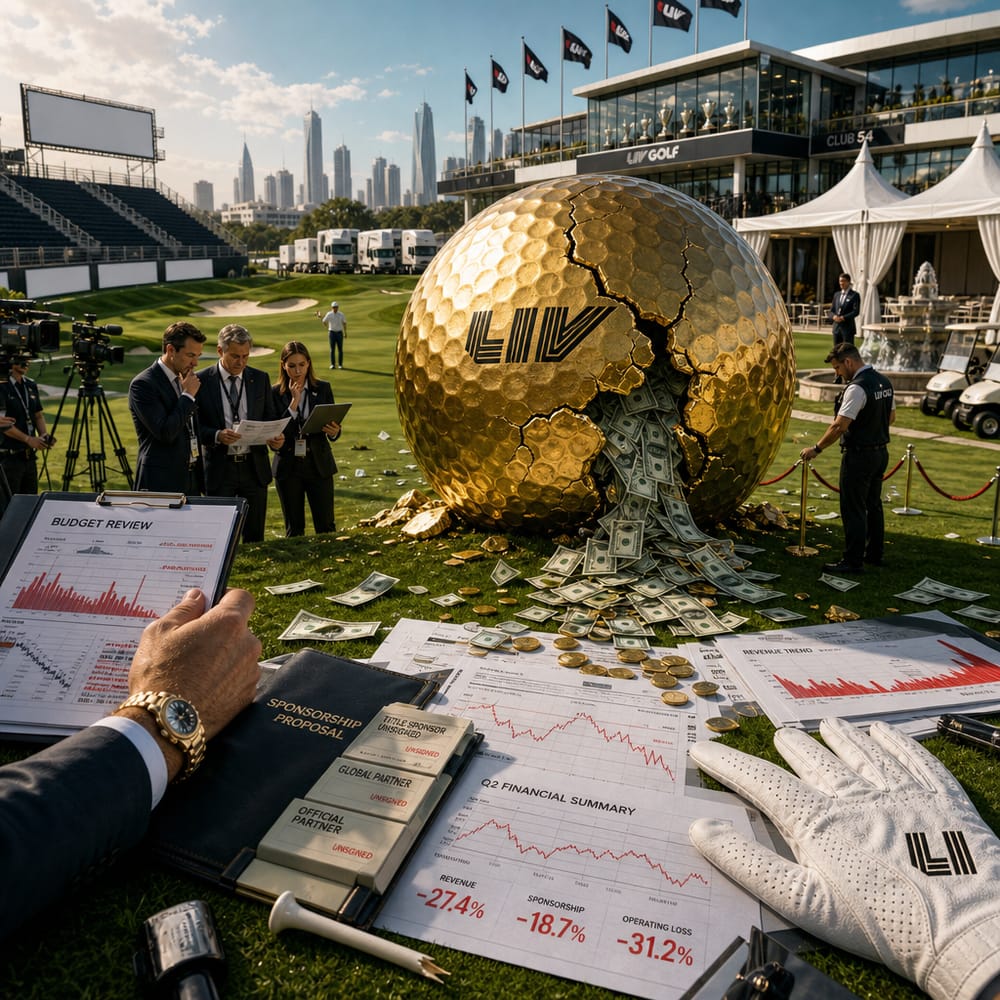
LIV Golf's Financial Woes: Surviving the Sand Trap Without Saudi Support
Gone are the days of LIV Golf's opulent spending sprees, the kind that would make even a high roller in Vegas blush. With Saudi Arabia's financial backing now a distant memory, LIV Golf finds itself scrambling to keep its head above water. But what led to this sudden withdrawal of Saudi funds? And how is LIV Golf planning to navigate these financially choppy waters? Grab your popcorn, folks; this is a drama worth tuning into.
THE SAUDI DISAPPEARING ACT
Imagine building a shiny new clubhouse, only to find out the bank’s footing the bill just ghosted you. That’s the situation LIV Golf finds itself in. Saudi Arabia's Public Investment Fund, previously the cash cow for LIV Golf, decided it was time to close the purse strings. Why? Well, it seems the Saudis are rethinking their global investment strategy. Diversification is the name of the game, and pouring money into a project that hasn’t quite delivered the expected hole-in-one might not align with those new priorities.
But as with any break-up, it’s a little more complicated than it seems. Behind closed doors, rumors of disagreements over governance and strategic direction have fueled the split. The Saudis might be saying, “It’s not you, it’s me,” but that doesn’t make the sting any less for LIV Golf.
THE PLAN TO STAY AFLOAT
So what’s next for our cash-strapped golf challenger? LIV Golf is now in the market for new investors like a teenager desperate for a summer job after blowing through allowance money. The league is seeking other deep-pocketed friends who believe in its vision of revamping professional golf with a splash of drama and a sprinkle of rivalry.
In a bid to appear more attractive to potential investors, LIV Golf is trimming the fat. Expect reduced prize pools and a departure from the hefty guaranteed payments that lured names like Jon Rahm and Bryson DeChambeau. This fiscal diet might not be popular with players, but it’s a necessary evil if LIV Golf wants to survive.
In a bid to keep fans engaged and revenue flowing, LIV Golf plans to expand its global footprint. More tournaments in more countries could mean more eyeballs and hopefully more dollars. It’s a risky strategy, akin to swinging for the fences, but in times like these, desperation breeds audacity.
THE BROADER RIPPLE EFFECT
But let's zoom out for a second. What do these money woes mean for the larger world of sports sponsorship? As it turns out, quite a bit. With LIV Golf tightening its belt, sponsors might think twice before dropping dough on sports leagues with unstable finances. A ripple effect could spread, making sponsorship dollars harder to come by for other emerging sports entities.
Moreover, this situation serves as a cautionary tale for leagues that lean heavily on a single source of funding. Diversification might not just be a fancy term thrown around at investor meetings; it’s a financial lifeline.
LIV Golf's predicament is also a wake-up call for players. The era of cushy contracts without commercial return is under threat. Golfers might need to embrace the grind of securing personal endorsements and appearances now more than ever.
THE FINAL PUTT
While LIV Golf attempts to reinvent itself, the clock is ticking. Finding a sustainable financial model is about as urgent as getting an umbrella after spotting storm clouds on the horizon. The league’s ability to attract new investment while retaining its star players and engaging fans will determine whether it sinks or swims in the cutthroat world of professional sports.
For now, the golfing world holds its breath. Will LIV Golf find new backers, or will it fade into obscurity, another ambitious project left to gather dust? One thing’s for sure: in the high-stakes game of sports finance, nothing is ever set in stone, and the plot twists just keep coming. Stay tuned.
This article is for informational purposes only and is not investment advice. Always do your own research or consult a licensed financial professional before making investment decisions.
© Copyright 2024. All Rights Reserved.
© Copyright 2024. All Rights Reserved.