

Liquidity Strains and Bond Yield Surge Add Downward Pressure on Major U.S. Indices
Saturday, August 15, 2026
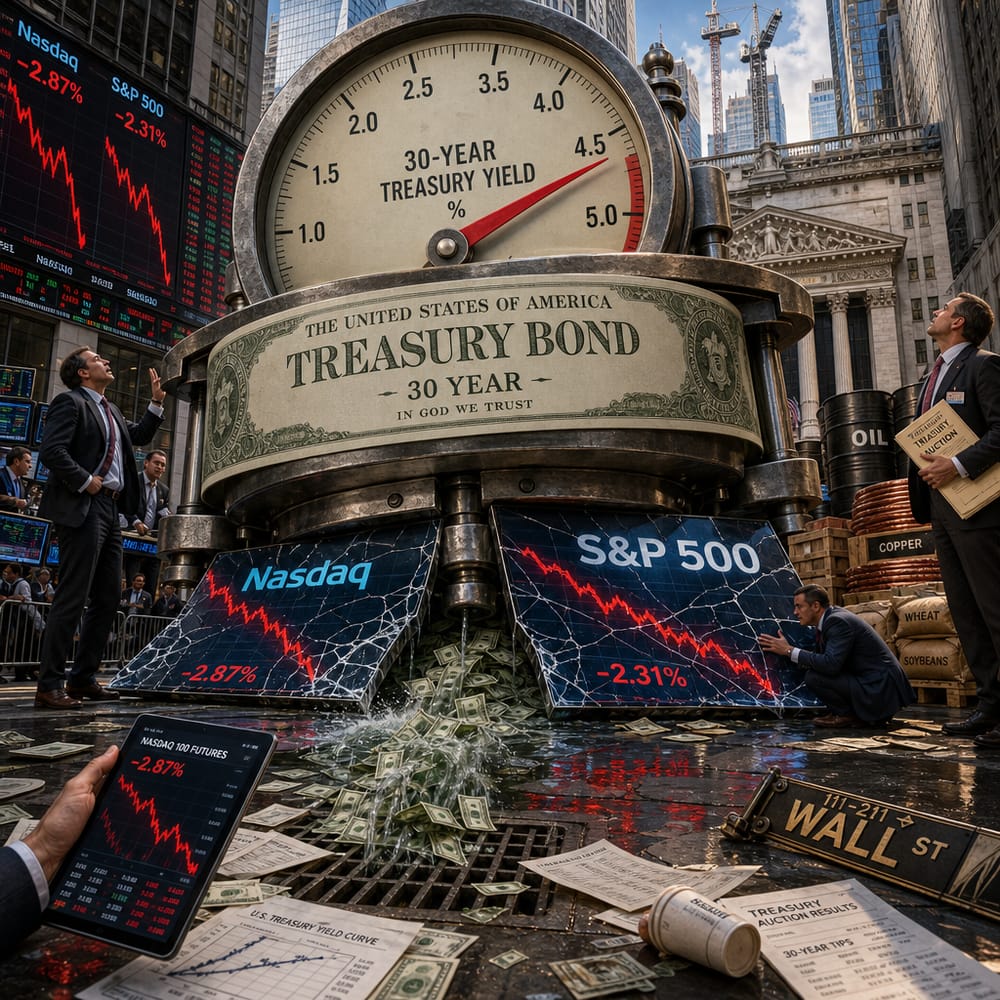
Buckle up, folks, because the financial rollercoaster has just hit a steep climb. Rising bond yields and soaring commodity prices are tightening the screws on financial conditions, and it's starting to feel like Wall Street is sweating bullets. Major U.S. indices like the Nasdaq and S&P 500 are starting to look like they've got lead in their boots, weighed down by these market dynamics. So, what's going on, and why should you care? Let's dive into the financial fray and explore what these liquidity strains mean for your investments.
If rising bond yields were a horror movie, they'd be the monster creeping ever closer, casting a long shadow over equity markets. As bond yields rise, they offer investors higher returns on what is typically a safer bet compared to stocks. This makes them more appealing, and as a result, some investors might start trading in their risky stocks for these shiny new bonds. The knock-on effect? Stock indices, particularly those high-growth darlings like the Nasdaq and the S&P 500, could see their values slip as money flows out and into bonds.
To understand why rising yields are such a big deal, consider them as the financial world's version of gravity. When yields climb, borrowing costs for companies increase, which can crimp profits and make future growth look a bit more like wishful thinking. High-growth companies, which make up a hefty portion of the Nasdaq, are particularly vulnerable since their valuations are often tied to high expectations for future earnings. If it suddenly costs more to finance their ambitious growth plans, those future earnings may not look so rosy.
Now let's talk liquidity, or rather, the lack thereof. Liquidity in the financial market is like oil in an engine—essential for smooth running. Recently, though, it's been feeling like trying to squeeze water from a stone. With bond yields rising, accompanied by an uptick in commodity prices, investors are hoarding cash and becoming increasingly risk-averse. This risk-off sentiment means they're less inclined to splash their cash on stocks, leading to less liquidity in the market.
The relationship between liquidity and investor sentiment is a bit like the chicken and the egg—it’s hard to tell which came first, but they both end up in the same place: affecting market dynamics. When investors start backing away from the table, it can create a chilling effect, making others more hesitant to jump in until the waters calm.
So, should you start packing your bags and heading for the exit? Not necessarily. While rising bond yields and liquidity strains are painting a somewhat grim picture, it’s essential to remember that markets are cyclical beasts. They ebb and flow with the economic tides, and what goes down often rises again. The key is to keep a cool head and a keen eye on what's next.
As investor sentiment becomes a tad cautious, it's worth considering diversification. Spreading your bets across a range of assets can help buffer against the volatility. Keep an eye on sectors savvy enough to weather higher borrowing costs, such as consumer staples or healthcare, which tend to remain robust even when the economic skies darken.
In conclusion, the financial landscape is shifting, with rising bond yields and liquidity pressures signaling a potential shift towards a risk-off sentiment. This could reshape investor behavior and market dynamics, putting downward pressure on major indices. But don't despair—markets have weathered such storms before. For now, stay informed, diversify wisely, and perhaps throw an extra glance at those bonds; they might just be the silver lining in an otherwise cloudy outlook.
In the ever-evolving world of finance, the only certainty is change. Stay sharp, keep your eyes on the prize, and remember: in the market jungle, it's adapt or get left behind.
This article is for informational purposes only and is not investment advice. Always do your own research or consult a licensed financial professional before making investment decisions.
© Copyright 2024. All Rights Reserved.
© Copyright 2024. All Rights Reserved.