

Latin American Currencies Under Pressure from USD Strength
Saturday, September 26, 2026
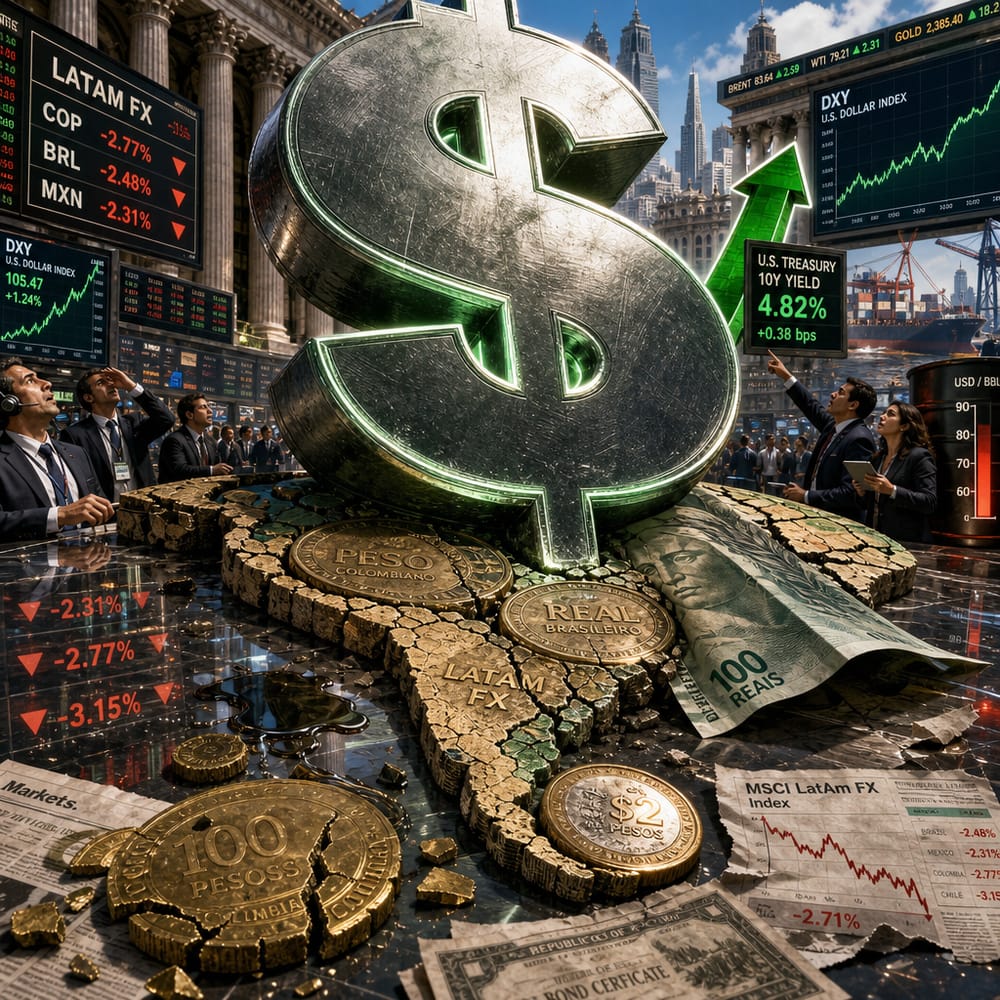
DON'T CRY FOR ME, LATIN AMERICA: YOUR CURRENCIES HAVE COMPANY
It's an alphabet soup kind of day in the financial world — USD, EUR, JPY, and all their friends are out in full force. But for the Latin American currencies, it’s more like a group therapy session where everyone's airing their woes about the U.S. dollar flexing its muscles. It’s that awkward moment when Uncle Sam shows up at the family reunion with a new six-pack under his belt, and everyone else looks down at their slightly chubbier midsections.
So, why is the U.S. dollar strutting around like it just booked the lead role in the latest summer blockbuster? Well, it’s got a lot to do with rising oil prices and U.S. bond yields shooting up faster than a cat on a hot tin roof. We’re talking about those U.S. Treasury yields that have gone through the roof, making Uncle Sam’s bonds more attractive than a two-for-one sale at your favorite store. Higher yields mean investors across the globe are scrambling for dollars to buy these bonds, pushing the greenback up and squeezing everyone else.
Now, let's zoom in on Latin America. Picture the Colombian peso, Brazilian real, and Mexican peso trying to keep up with this dollar dash. Spoiler alert: they’re struggling like marathon runners with a pebble in their shoe. The MSCI LatAm FX Index, which tracks these currencies, shows they've been taking a hit as the dollar continues its joyride.
THE IMPACT ON LATIN AMERICAN ECONOMIES
The ripples of a robust U.S. dollar are washing over Latin American economies like a wave at the beach, and not the fun kind. For starters, their exports become pricier and less attractive in global markets, hurting trade balances. Countries relying heavily on exports, like Mexico and Brazil, feel the pinch the most.
Inflation is another guest that crashes the party whenever currencies depreciate. With a weaker currency, imported goods become more expensive, and suddenly, the cost of living starts climbing like it’s on a rock wall competition. Central banks in the region are attempting to combat this by hiking interest rates, but it’s like trying to plug a leaky boat with gum.
CENTRAL BANKS: THE UNSUNG HEROES?
Latin American central banks are donning their superhero capes and trying to save the day. They're hiking interest rates to make their currencies more appealing and curb inflation. Brazil’s central bank has already taken this route, but it’s a delicate balancing act. Raise rates too high and you risk stalling economic growth; leave them too low and inflation runs rampant like a toddler in a candy store.
Mexico, too, is considering similar measures, but each decision is like playing chess with the economy. Make a wrong move, and well, you’re looking at checkmate in the form of a recession.
SECTORS FEELING THE HEAT
Not all sectors are suffering equally from this financial fiesta. Commodity exporters might have a silver lining, as their products are priced in dollars. Miners and oil producers might find their revenues holding steady, but manufacturing sectors that rely on imports are taking it on the chin. It’s a mixed bag, leaving some companies to feel like they’ve won a vacation in Siberia – not quite what they signed up for.
Banks, on the other hand, might see a boost if they handle international transactions or hold dollar assets. However, they also face higher default risks if economic strains lead to bankruptcies, making their spreadsheets look more like a game of Tetris.
THE ROAD AHEAD: WHAT NOW?
What’s next for Latin America as the dollar continues its world tour? Watching the USD climb feels a bit like watching a toddler learn to walk – you’re not sure if it’ll stabilize or face-plant spectacularly. Policymakers will need to play it smart, coordinating interest rate tactics while keeping an eye on inflation.
For investors, this region of volatility can also mean opportunity. Depreciating currencies could make Latin American assets look like dollar-store bargains. But beware of catching a falling knife – just because something's cheap doesn’t mean it’ll cut you a break.
In the meantime, keep an eye on oil prices and bond yields. They hold the keys to whether Uncle Sam will keep flexing or if Latin America can catch its breath. Until then, keep those financial seatbelts fastened – it’s gonna be a bumpy ride.
This article is for informational purposes only and is not investment advice. Always do your own research or consult a licensed financial professional before making investment decisions.
© Copyright 2024. All Rights Reserved.
© Copyright 2024. All Rights Reserved.