

Larry Fink’s Big Bet: Why Private Assets Are the New Black
Wednesday, April 02, 2025
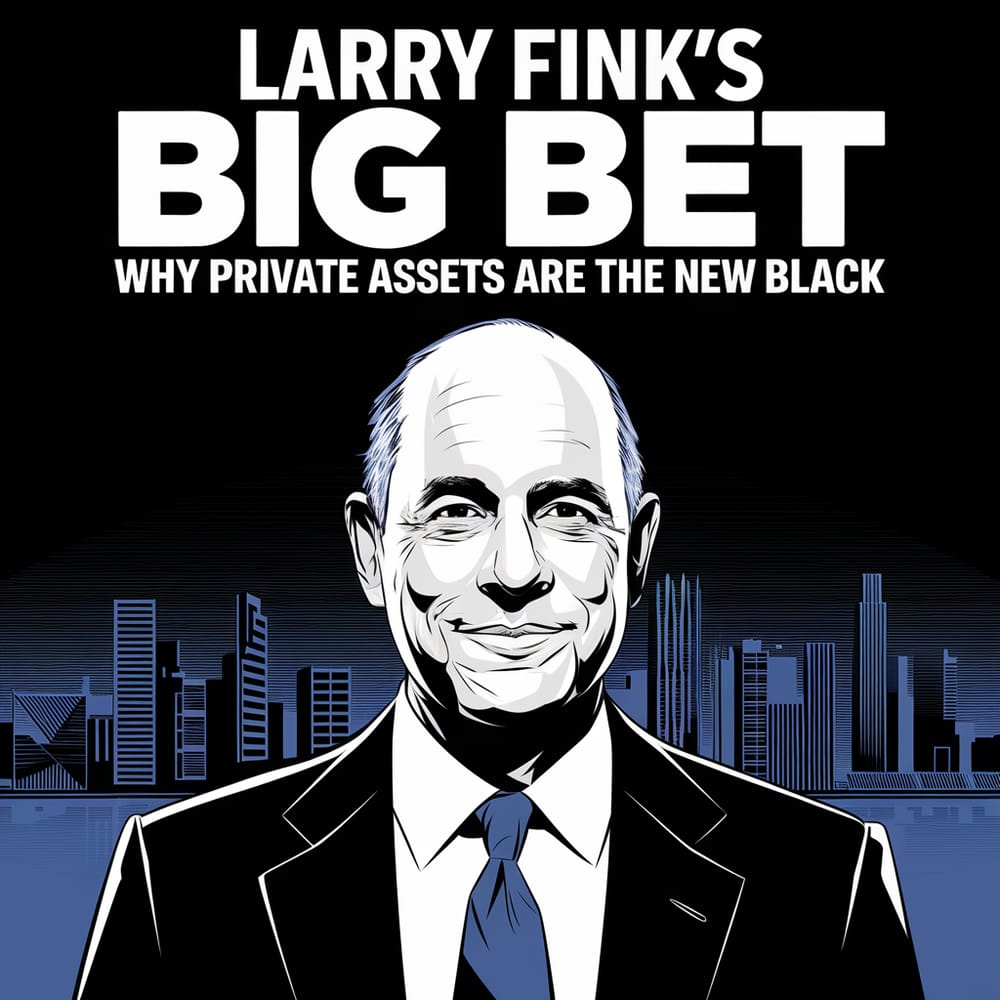
When Larry Fink speaks, Wall Street listens. And in his latest annual letter, the BlackRock CEO dropped a portfolio bombshell: the classic 60/40 mix of stocks and bonds? Outdated. Instead, he’s proposing a fresh recipe—50% stocks, 30% bonds, and a bold 20% scoop of private assets. Think hedge funds, private equity, real estate—the kinds of investments typically reserved for the ultra-wealthy.
But hold your applause. Just because Fink says “go alternative” doesn’t mean it’s a smooth ride. A recent study from the National Bureau of Economic Research throws a wrench into the pitch. It found that the bigger the private-equity fund, the worse the performance. In plain English: size matters, and not in a good way.
That’s the tightrope investors now walk. Want a smaller, scrappier fund with potential? Great—except it probably has a short track record, so good luck knowing if it’s legit. On the flip side, bigger funds have the history but tend to get bloated and underperform. Even BlackRock can’t escape this paradox. The more they push private funds, the bigger those funds get—and the more they risk becoming mediocre.
So how are BlackRock’s own private offerings holding up? Not great. Their iShares Listed Private Equity UCITS fund, for European investors, clocked in at a 12% annual return over the past decade. Sounds solid—until you remember the S&P 500 did 13.1%. Another fund available to U.S. institutions only returned 6.8% over the last three years—again trailing the S&P’s 8.9%.
Now, private investments don’t have to beat the S&P to be valuable. If they’re less correlated with the market and add diversification, they can still earn their keep. But BlackRock’s European fund has moved nearly in lockstep with the S&P, while being 52% more volatile. That’s like riding a roller coaster that ends up in the same place as the escalator.
Still, BlackRock seems keen to tap into the growing hunger for private assets—and that might not be just about helping investors. A 2023 study in the Review of Financial Studies suggests firms like BlackRock time the launch of high-fee products to align with peak investor excitement. In other words, when buzz is loudest, Wall Street shows up with new toys to sell.
The risk? Investors could be buying in at the top of the hype cycle, only to get burned when reality hits.
Bottom line: Fink’s portfolio shake-up isn’t crazy. Diversifying into private assets makes sense—if you do it smartly. But timing is everything, and as with most things on Wall Street, following the crowd might leave you holding the bag.
© Copyright 2024. All Rights Reserved.
© Copyright 2024. All Rights Reserved.