

Labor Market Weakness Influences Fed Rate Decisions
Monday, August 24, 2026
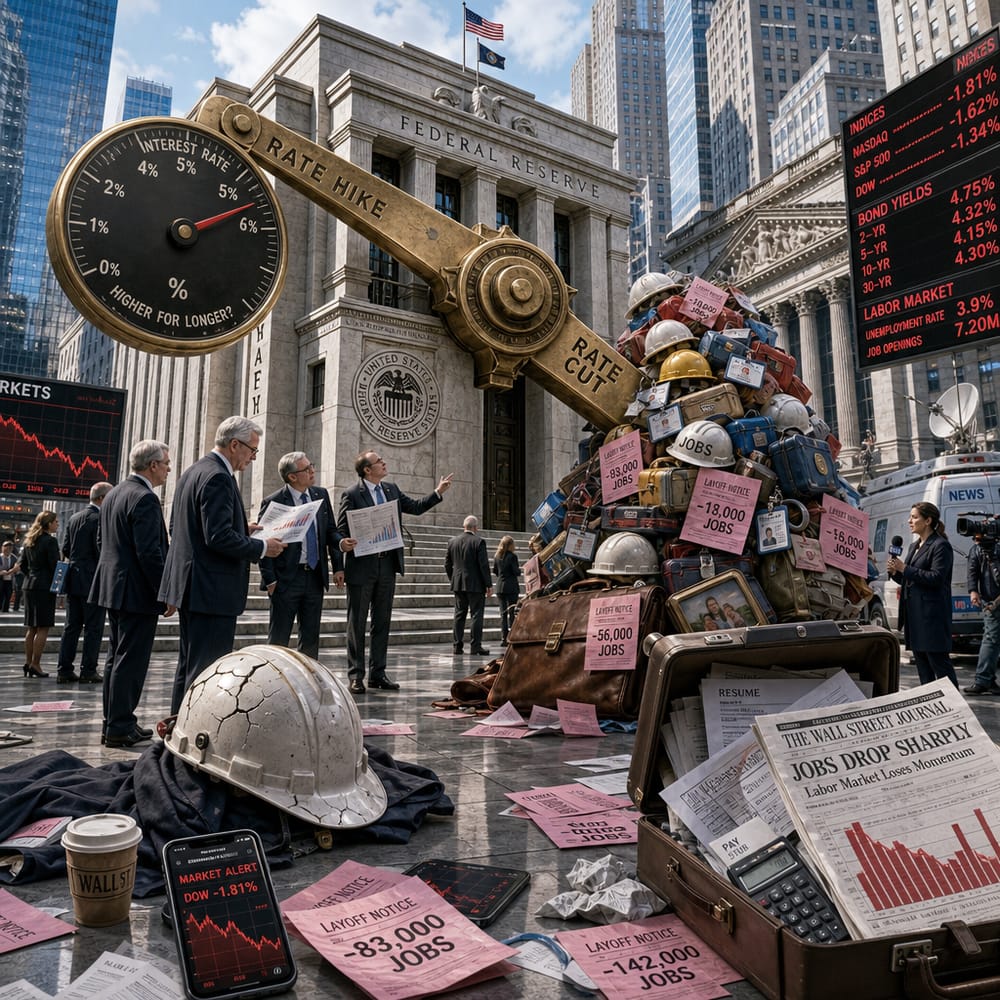
THE FED'S RATE CONUNDRUM: DOES A SHAKY JOB MARKET HOLD THE ANSWER?
When the labor market sneezes, the whole economy catches a cold. This adage holds especially true now that the U.S. economy has unexpectedly shed 23,000 jobs in July. Like a sudden change in weather, this jobs data has brewed up a storm of uncertainty over the Federal Reserve's next move on interest rates. So, what's the Fed to do when job losses gnaw at their rate hike plans?
Imagine the Fed as a tightrope walker balancing inflation and employment—two often-conflicting goals—while the economy below looks on with bated breath. Until recently, the Fed has been tiptoeing along the line, raising rates to keep inflation in check. But with job losses now in the mix, the central bank's deliberations are looking a tad more like an episode of "Survivor."
Fed officials have long been the self-proclaimed Masters of the Universe, controlling rates like cosmic levers to propel economic growth while taming inflationary beasts. Yet, the recent labor market stumble puts them in a pickle. The Fed could pause the rate hikes, but that risks inflation heat. Or, they could stick to their guns, potentially exacerbating job woes. It's the ultimate catch-22.
KNOWING WHEN TO HOLD AND WHEN TO FOLD
Continued job losses could pressure the Fed to hit 'pause' on its rate hike journey. Why? Because higher rates generally make borrowing more expensive, which can slow down businesses looking to hire or expand. And when businesses get skittish, workers might find fewer 'Help Wanted' signs around town.
But wait, there's more. If the Fed decides to cool its jets on rate hikes, inflation—which has been lurking just out of sight—might step back into the limelight. Keeping inflation at bay is a bit like playing Whac-A-Mole: just when you think you've got it nailed, it pops up somewhere else.
THE SLIPPERY SLOPE OF ECONOMIC IMPLICATIONS
So, what are the broader implications of a weakening labor market? We’re talking the whole shebang—consumer spending, corporate earnings, and even those colorful charts Wall Street types obsess over.
A faltering job market means folks on Main Street could tighten their purse strings. Less spending means less revenue for businesses, potentially clipping corporate wings just as they have begun to spread post-pandemic. And if businesses anticipate that consumers might soon be holding onto their dollars more tightly, they might slam the brakes on hiring and investment.
Moreover, stock investors might find themselves in a sticky situation. With the specter of a tepid jobs market, the Fed's rate decisions will weigh heavily on market volatility. It could send financial markets on a roller coaster ride, as investors try to read the Fed's tea leaves while managing portfolios that would make even the most seasoned poker player break a sweat.
THE PRESSURE COOKER
The Fed has been feeling the heat from all sides. Stubborn inflation and skyrocketing borrowing are keeping long-term interest rates elevated, putting additional strain on stocks. The 10-year Treasury yield is creeping up to 4.7%, which might not sound like much at a cocktail party, but in the financial world, it's the equivalent of a loud siren.
If the Fed maintains its rate hike path to cool inflation, it risks worsening unemployment, creating a vicious cycle that could take years to unwind. However, pivoting away from rate hikes might light an inflationary fire that could leave consumers and businesses scrambling for cover.
So, as Powell & Co. mull over their next move, we mere mortals can only wonder: will they chase the inflation beast or soothe the job market's wounds? The Fed's upcoming meetings are sure to be a nail-biter, with each tick of the clock sounding like a countdown to the next major economic pivot.
THE FINAL THOUGHT
In the end, the Fed's path is far from clear. As we wait to see which way the economic winds will blow, remember this: the landscape may be changing, but the dance between interest rates and employment is as timeless as the tango. Whatever the outcome, the Fed's decision will have ripple effects far beyond Wall Street and Main Street—affecting budgets, investments, and the overall economic narrative that shapes our everyday lives. So, buckle up, and keep your eyes on the Fed, because the next chapter in this unfolding economic saga is about to be written.
This article is for informational purposes only and is not investment advice. Always do your own research or consult a licensed financial professional before making investment decisions.
© Copyright 2024. All Rights Reserved.
© Copyright 2024. All Rights Reserved.