

Labor Market Weakness: Implications for Fed Policy
Friday, August 14, 2026
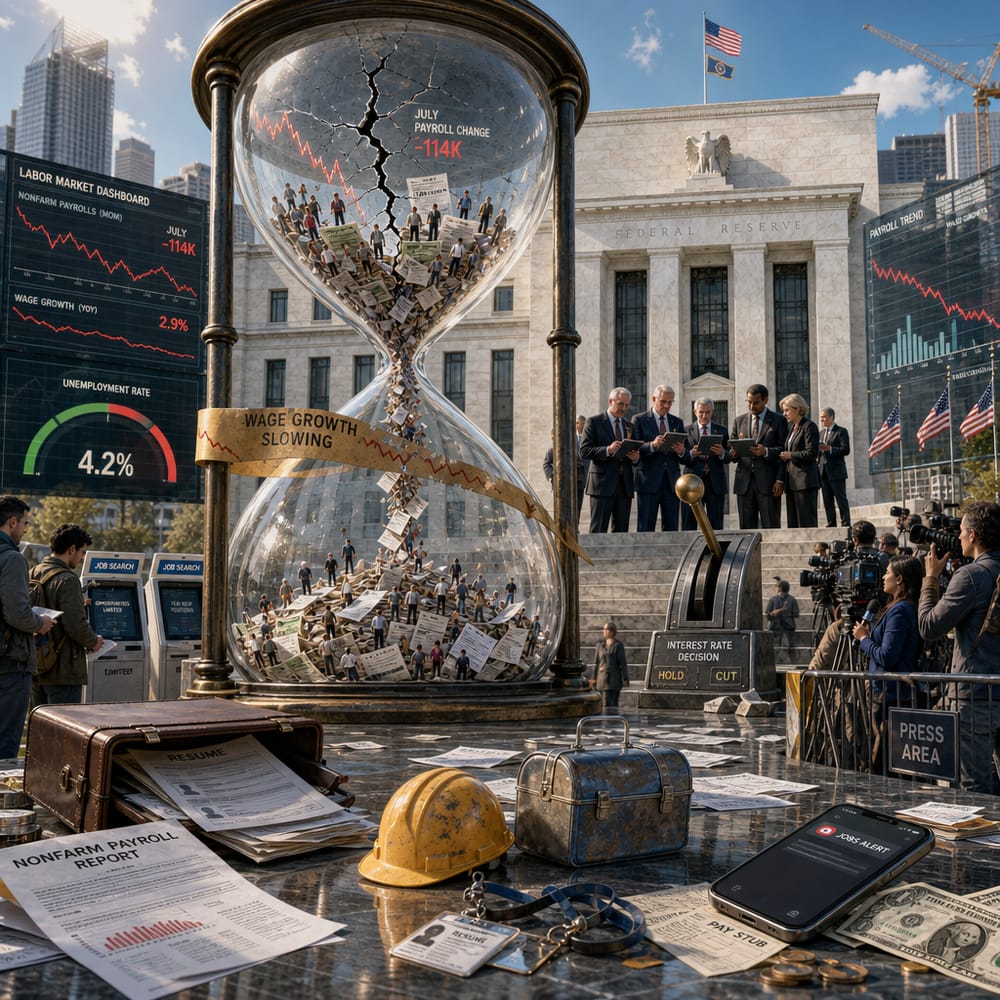
FEDERAL RESERVE'S DILEMMA: THE LABOR MARKET'S UNINVITED COOLDOWN
Fasten your seatbelts, folks. The U.S. labor market, once the pride of the economic freeway, just hit a pothole. July's nonfarm payrolls threw us a curveball, declining by 23,000 and leaving economists with dropped jaws and furrowed brows. What's going on here? Is this a temporary blip or the beginning of a chilling trend? More importantly, what’s Uncle Sam’s money manager, the Federal Reserve, going to do about it?
Let's set the scene: July's hiccup in the labor market is akin to your favorite TV show leaving you on a cliffhanger. A decline in job numbers isn’t just another statistic; it's the pulse of an economy that’s been sprinting like Usain Bolt. Wage growth, the fuel for consumer spending, hit the brakes, and the unemployment rate dipped—but hold your applause, it’s mainly because some folks simply stepped out of the job-seeking race altogether.
So, is this cooling-off period a mere weather change, or is winter truly coming for the labor market? The truth is, no one has a crystal ball, but the signs aren’t exactly rosy. If the trend persists, we might be strapping ourselves in for a prolonged slowdown. But here's where it gets juicy—what does this mean for the Federal Reserve’s interest rate antics?
First, the basics: the Fed adjusts interest rates to either heat up or cool down the economy. Like Goldilocks, they're always in search of a rate that’s just right. If the economy overheats (think inflation), they crank up rates to douse the flames. But if things are dragging, they drop rates to give spending and investment a caffeine shot.
With the labor market showing signs of sneezing, the Fed might need to dig deep into its medicine cabinet. If the slowdown looks less like a passing cold and more like a drawn-out flu, they might delay planned interest rate hikes or even cut rates earlier than expected.
But hold the phone—there’s more at play. The Fed’s decision isn’t made in a vacuum. It’s like a chess game where the board is the broader economy, and every move is scrutinized. Lowering rates too soon could fuel unwanted inflation, while hiking them amidst a labor decline could snuff out growth altogether. It’s a delicate waltz on a tightrope.
Now, what are the broader implications if the labor market continues to fumble? For starters, a weaker job market could mean fewer dollars flowing into the hands of consumers, which in turn shrinks spending—the very heartbeat of the U.S. economy. Companies might hold back on investments, and before you know it, the economic engine starts to sputter.
In the stock market’s high-stakes poker game, sectors sensitive to consumer spending—think retail and travel—could feel the pinch. On the flip side, defensive sectors like healthcare and utilities might become investors’ cozy corners in stormy weather. As for investors eyeing the Fed like hawks, interest-sensitive sectors such as real estate could see a flip in fortunes based on rate trajectory.
For those of us not wearing a Fed Chairman cap, what should we be keeping an eye on? First, any signals from the Fed regarding their next moves. Their commentary post this labor market kerfuffle will be worth hanging on to. And second, additional data points—keep an ear out for upcoming job reports, wage data, and consumer confidence metrics.
The current labor market dance is more than a numbers game—it’s a story with implications reaching wider than a Kardashian Instagram post. Whether this slowdown is momentary or here for the long haul, the coming months promise a saga worth watching. So, grab the popcorn, stay tuned, and remember that in the financial world, the only constant is change.
This article is for informational purposes only and is not investment advice. Always do your own research or consult a licensed financial professional before making investment decisions.
© Copyright 2024. All Rights Reserved.
© Copyright 2024. All Rights Reserved.