

Labor Market Weakness Despite Unemployment Rate Drop
Friday, August 21, 2026
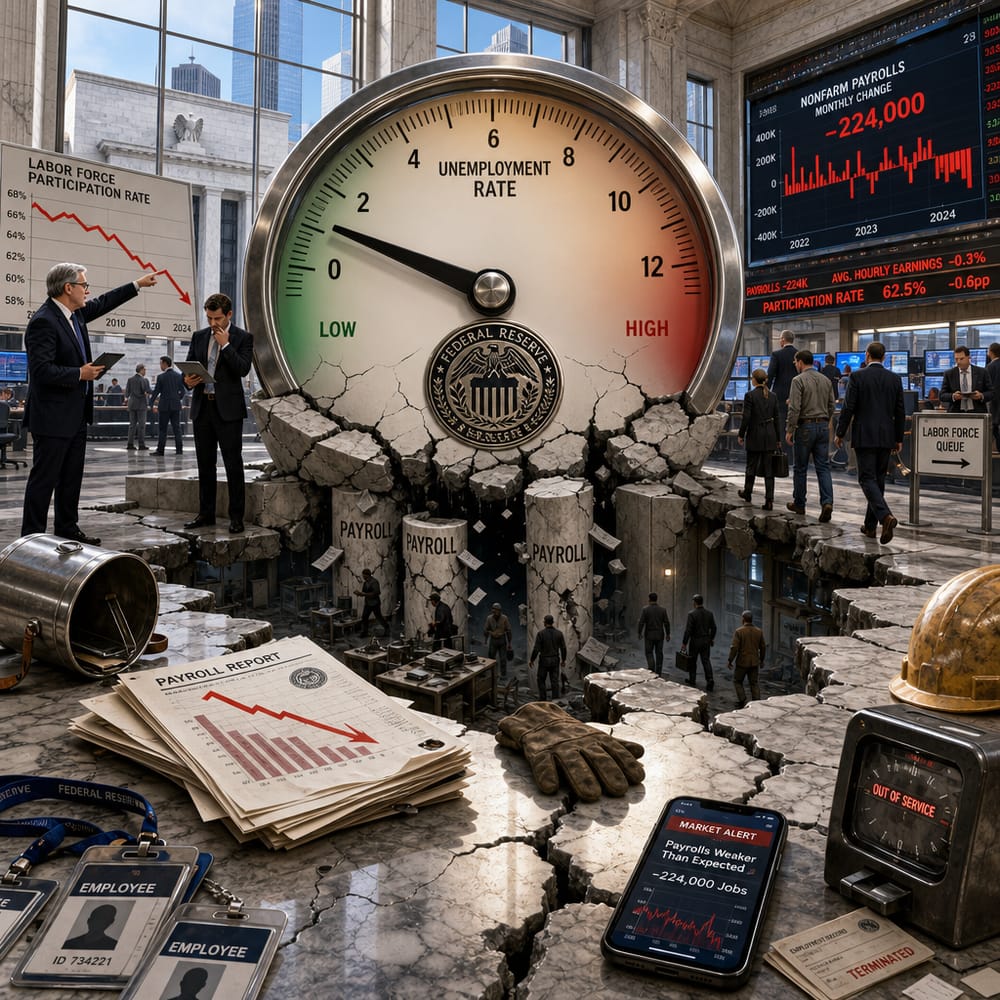
Looks like the American labor market is throwing a party, but someone forgot to bring the jobs. The latest St. Louis Fed Flash Report gives us a curious cocktail: a drop in the unemployment rate while nonfarm payrolls—essentially all jobs outside farms—are also dipping. If your eyebrows just shot up, you're not alone. This paradox could be the canary in the coal mine, signaling that maybe the U.S. economy isn’t the unstoppable train we've been led to believe.
Now, let’s break it down. The unemployment rate is down because fewer people are actively looking for work. It’s like saying you’ve run out of guests at your party, but really, they just left early. Labor force participation, the metric that tells us how many people are either working or looking for work, is shrinking. So, why aren’t people showing up to the labor market party?
One reason could be a classic “thanks, but no thanks” to unattractive job offers. Wages haven't exactly been skyrocketing, and with inflation sticking around like an uninvited guest, potential workers might be thinking twice before jumping into low-paying gigs.
Another factor could be changing demographics, like an aging population. Boomers are retiring, sometimes for good and sometimes flirting with the idea of a quiet comeback. Add in restrictive immigration policies, and you've got a recipe for fewer workers entering the workforce to replace those leaving.
But let's not ignore the elephant in the room: the gig economy. More people are picking up side hustles or freelancing gigs that technically don’t land them in traditional employment stats. So while they’re working, they’re not exactly showing up in your typical 9-to-5 numbers.
So, what does this mean for the economy? For starters, a weaker labor market might put the brakes on economic growth. Fewer people working means less spending, which could throttle consumer confidence—the lifeblood of economic activity. Remember, our economy is like a plant, and consumer spending is the sunlight it needs to grow.
Now, let's wade into some murkier waters: Federal Reserve policies. A shrinking labor force could make the Fed rethink its interest rate strategies. Will they keep rates high to combat inflation, or will they ease up, fearing that more aggressive moves could push us into an economic slowdown? If the Fed pulls back on rate hikes, it might give stocks a chance to breathe, but let's not hold our breath.
While we're on the subject of stocks, they’re already in a bit of a tizzy after recent Treasury yield rebounds sent investors into a tailspin. If labor market weakness keeps this up, the volatility we're seeing on Wall Street could become a more frequent visitor.
But before you stash your cash under the mattress, remember that markets are notoriously fickle. They react to whispers of news and can flip faster than a pancake on a Sunday morning. So, while the gloom of a weakening labor market might cast a shadow, it's always good to keep an eye on the bigger picture.
In essence, a weakening labor market is a red flag for economic growth and consumer confidence. It’s like a twist in a whodunit novel; it keeps investors on the edge of their seats, waiting for the next plot twist. And let’s be real: as retail investors, our job is to watch, learn, and adapt faster than you can say “market volatility.”
So, stay sharp and keep your eyes peeled. Whether it's the Fed’s next move or your favorite stock's unexpected dip, the labor market's current antics are an important chapter in the unfolding saga of economic recovery. And remember, it's not just about numbers—it’s about what those numbers mean for your portfolio, your purchasing power, and ultimately, your financial future. Keep your wits about you, and as always, invest wisely.
This article is for informational purposes only and is not investment advice. Always do your own research or consult a licensed financial professional before making investment decisions.
© Copyright 2024. All Rights Reserved.
© Copyright 2024. All Rights Reserved.