

Labor Market Weakness: After 23K Job Losses, What’s the Future for Fed Policy?
Wednesday, August 12, 2026
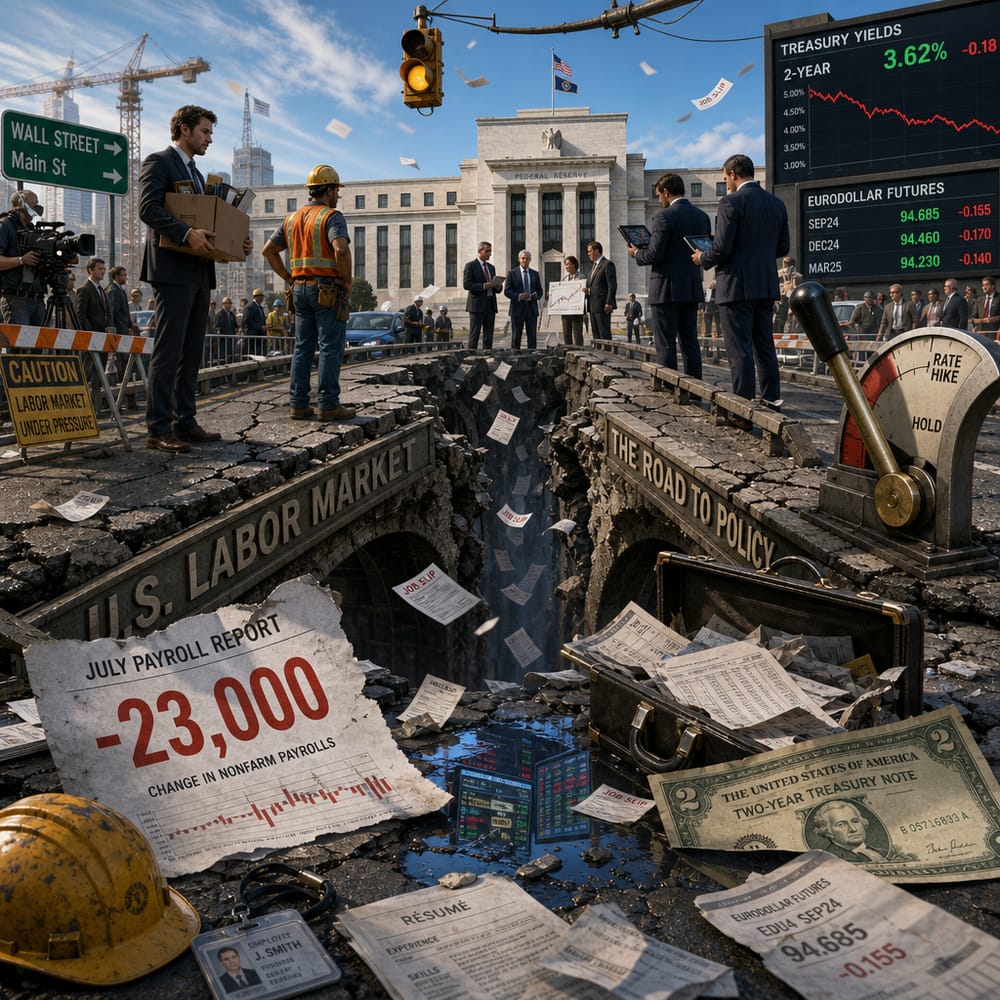
LABOR MARKET WEAKNESS: AFTER 23K JOB LOSSES, WHAT’S THE FUTURE FOR FED POLICY?
If the U.S. job market were a party, it just hit a record scratch moment. In July, instead of adding jobs, the economy pulled a disappearing act and dropped 23,000 of them. That's right, for the first time since February, jobs took a nosedive into the negatives, and suddenly everyone at the Federal Reserve is eyeing each other, wondering who spiked the punch.
But let's break this down. The jobs report wasn't just a blip; it was an unexpected twist in what was supposed to be a steady narrative of economic recovery. So, what's causing this hiccup? Well, it's a buffet of issues, really. The manufacturing sector bore the brunt of this job loss, with companies hit by dwindling demand and supply chain headaches deciding to tighten their belts. High interest rates over the past few months haven't helped, either, adding a financial strain on both businesses and consumers.
But it's not just the manufacturers nervously checking their bank balances. The tech sector is feeling the squeeze too. As digital transformation fever pitches, some tech roles have become as endangered as clear skies in a Netflix apocalypse drama.
So, what are the folks at the Fed thinking? Well, this is where things get tricky. Jerome Powell and his team at the Federal Reserve are like tightrope walkers balancing interest rates against inflation with precision. Up until now, inflation has been the main villain in their story. But this jobs report throws in a plot twist worthy of a soap opera, suggesting that perhaps the economy isn't as rosy as it seemed.
With this new data, the Fed might tap the brakes on its plans for more interest rate hikes. As of now, the market had penciled in a rate hike in the near future, but with fewer jobs around, the Fed could be forced to rethink its trajectory. Less labor means potentially less consumer spending, and that could cool inflation faster than expected.
Now, let's talk about the market's reaction, because it’s about as nervous as a cat in a room full of rocking chairs. 2-year Treasury notes, those safe little havens of the financial world, have seen yields dip. Investors are flocking to them like birds to breadcrumbs, betting that the Fed might just abandon further rate hikes. Eurodollar futures are also partying with the idea that rates might stay lower for longer, suggesting traders aren't convinced that a hike is still on the table.
But don’t reach for the panic button just yet. Despite the job losses, consumer spending hasn't exactly packed its bags and left town. People are still shopping; they’re just being a bit more selective. The saving grace may lie in the services sector, where jobs seem to be holding steady for now.
So, what's next? The Fed's future moves are now under the spotlight. The next inflation and employment reports are crucial. If inflation is indeed easing and the labor market stabilizes, the Fed might just hold its fire on more rate hikes. But if this job drop is the start of a trend, it’ll likely recalibrate more than a few economic forecasts.
In a nutshell, this job report is like a plot twist you never saw coming in your favorite thriller. For retail investors, it's a moment to stay nimble. Keep an eye on how the Fed reacts, watch those Treasury and Eurodollar futures, and maybe resist the urge to toss everything overboard at the first sign of turbulence.
After all, in the world of finance, like in any good mystery, it's never just about the current chapter. It's about how the storyline unfolds, and here's hoping for a satisfying conclusion.
This article is for informational purposes only and is not investment advice. Always do your own research or consult a licensed financial professional before making investment decisions.
© Copyright 2024. All Rights Reserved.
© Copyright 2024. All Rights Reserved.