

Labor Market Stumbles: July Sees 23,000 Job Losses—Signs of Weakening?
Monday, August 17, 2026
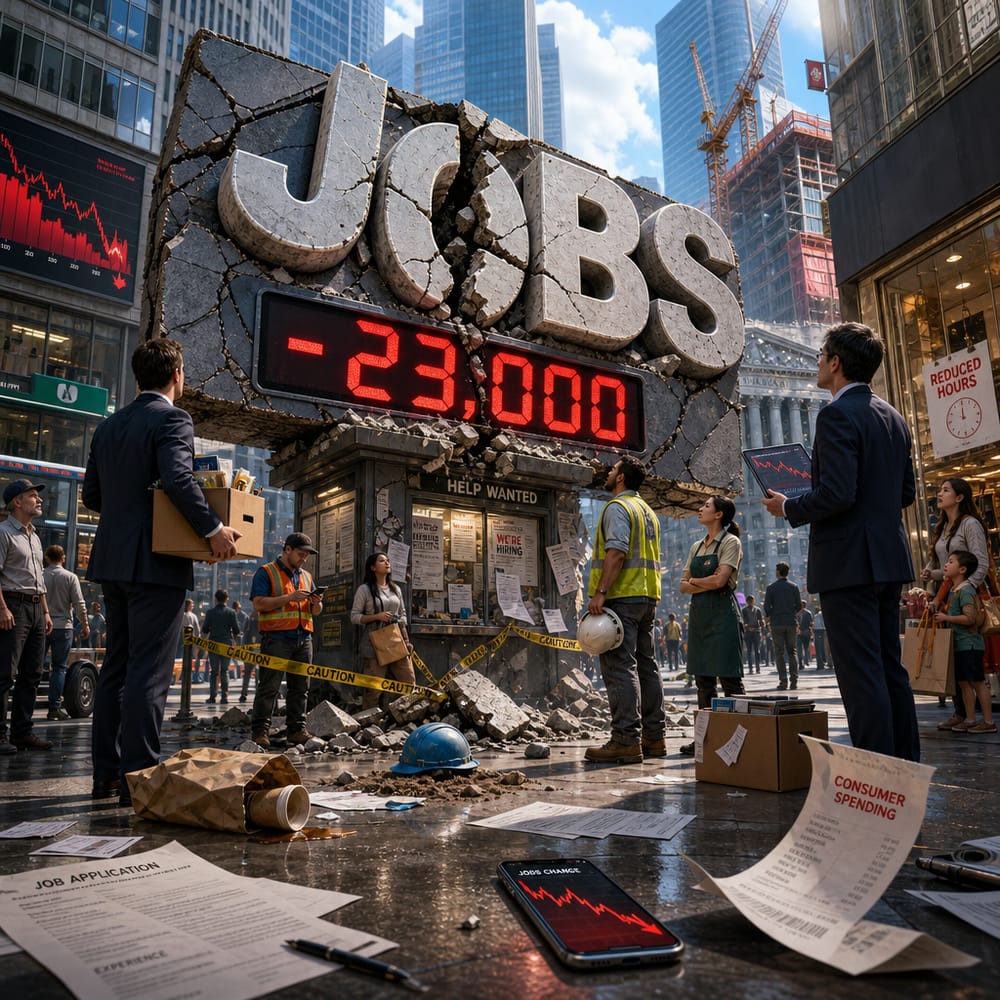
LABOR MARKET STUMBLES: JULY SEES 23,000 JOB LOSSES—SIGNS OF WEAKENING?
In the vast constellation of economic indicators, a nosedive in job numbers is like a red flare shooting across the market's night sky: impossible to ignore and usually a harbinger of bad news. As we trudge through August, it's already clear that July gave the U.S. labor market a reality check it seems to have missed, losing a staggering 23,000 nonfarm jobs. It's the first time we've seen a monthly job contraction since February—and yes, that's a red flag flapping vigorously in the economic breeze.
So, what's the big deal with a few lost jobs, you ask? Well, put simply, they might be the tip of the iceberg portending much bigger issues beneath the surface. When you consider how crucial a strong labor market is for consumer spending—the engine of the U.S. economy—and how it influences the Fed's policy decisions, it's no surprise this development has sent shivers down Wall Street's spine.
WHICH SECTORS ARE FEELING THE PINCH?
Before you start panic-selling your stocks, let's break down where these job losses are hitting hardest. The manufacturing sector, often the canary in the coal mine, took a considerable hit. With factories not buzzing as they used to, it's evident that demand isn't what it once was, possibly due to lingering supply chain issues that just won't quit.
Retail also saw a decline, largely impacted by the ebb and flow of consumer confidence. After a spring of mild optimism, it seems reality is starting to sink in as wallets tighten and discretionary spending dwindles. As folks stockpile their cash instead of new gadgets or fancy duds, retailers are feeling the squeeze.
But the tech sector—usually the headline-grabbing juggernaut—has also been trimming. Even in the land of silicon and code, projects and initiatives are being reevaluated as companies brace for a potential slowdown. The job cuts here might not be as severe as other sectors, but they certainly hint at companies battening down the hatches.
A HIT TO CONSUMER CONFIDENCE
Here's where the ripple effect starts to get scary. When people lose jobs, they spend less. It's that simple. And when they spend less, businesses make less, leading to—you guessed it—more layoffs. It's a vicious cycle, and right now, we're seeing the first couple of spins.
Consumer confidence is a fragile thing; it thrives on job stability and a sense of financial security. Knock those legs out from under it, and you’ve got a recipe for declining retail sales, a sluggish housing market, and even a hospitality sector that’s left with empty tables and vacant rooms.
FEDERAL RESERVE: TO HIKE OR NOT TO HIKE?
With all this economic turbulence, eyes now turn to the Federal Reserve. The big question: What will they do with interest rates? The Fed's been on a campaign to wrestle inflation into submission, jacking up rates to cool off an overheated economy. But job losses could change the game, forcing the cautious hand of monetary policy back into action.
If the job market continues to weaken, the Fed might have to slam the brakes on rate hikes or even consider cutting rates to keep the economy from spiraling into recession territory. It's like playing economic Jenga, and right now, the Fed's trying to keep the tower steady without toppling it.
WHAT'S NEXT?
No crystal ball is going to give you the perfect answer to what's coming next, but we can make some educated guesses. If job losses continue, expect a domino effect: reduced consumer spending, tighter corporate budgets, and eventually, more pressure on the Fed to pivot its policy strategy.
While we're not at the point of panic just yet, staying informed and prepared is the name of the game. Keep an eye on those monthly job reports, watch for Fed announcements, and perhaps most importantly, don't delete that job hunting app just yet. The labor market may be stumbling now, but remember, even the greatest comebacks start with a fall.
As always, keep your wits about you and your portfolio diversified. Because in a world where job numbers can swing from gain to loss in a matter of months, the only certainty is the constant presence of change.
This article is for informational purposes only and is not investment advice. Always do your own research or consult a licensed financial professional before making investment decisions.
© Copyright 2024. All Rights Reserved.
© Copyright 2024. All Rights Reserved.