

Labor Market Stays Firm Despite Cooling—Unemployment at ~4.1%
Saturday, August 29, 2026
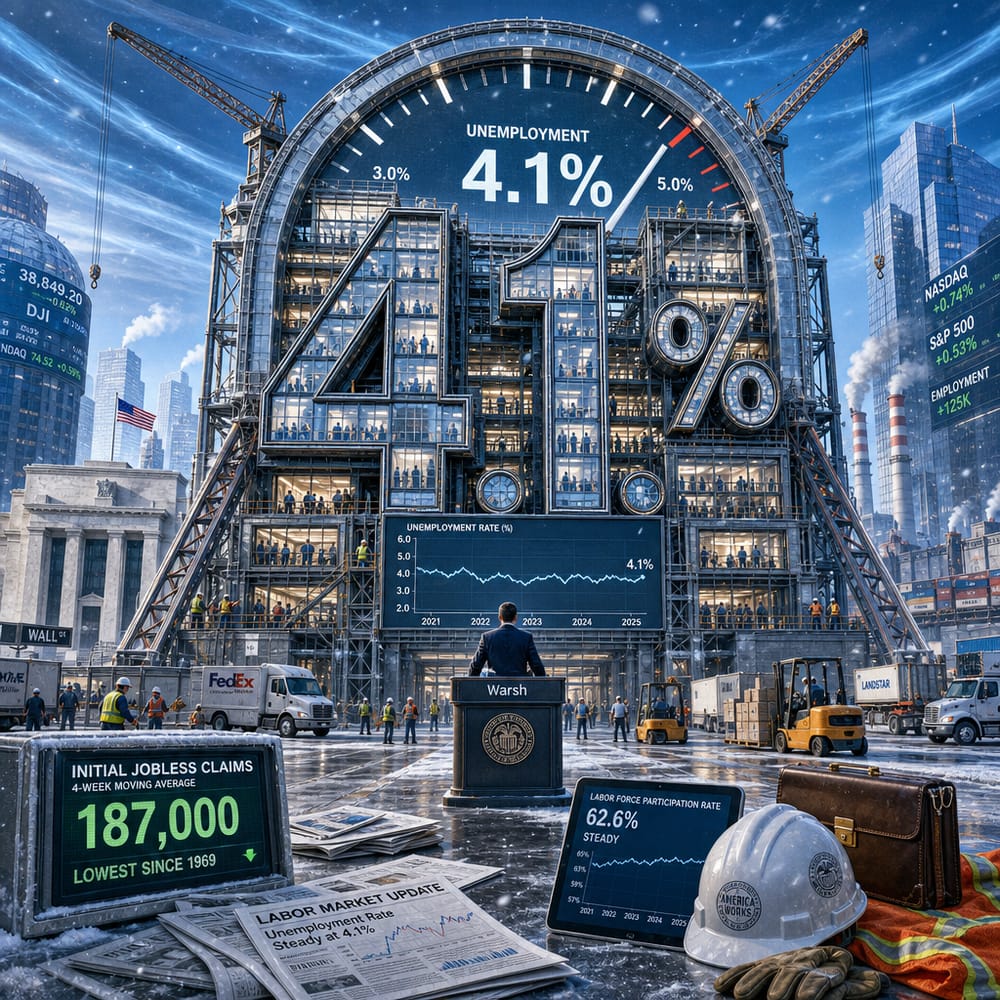
THE GREAT LABOR MARKET SHOWDOWN: UNEMPLOYMENT, INFLATION, AND THE FED'S TIGHTROPE WALK
In the midst of swirling market dynamics and global uncertainties, there's one constant keeping everyone on edge: the labor market's Houdini act of keeping unemployment steady at a miraculous 4.1%. Amidst the Phoenix-style rises and falls of corporate giants and the tech-fueled rollercoaster rides, the labor market seems unfazed, continuing its resilient march. But what does this all mean for inflation, the Fed, and your wallet? Let's dive in.
While Fed Chair Kevin Warsh has been playing his cards close to the chest regarding interest rate adjustments, he's been anything but silent on the labor market. The current unemployment rate of about 4.1% has been the talk of the town—a testament to its strength in the face of global economic narratives that would make any seasoned investor reach for the nearest stress ball.
Unemployment claims are at eye-wateringly low levels, a feat reminiscent of your favorite superhero's invulnerability. These figures paint a picture of an economy that's not just surviving, but thriving, even as inflation rears its problematic head.
So, what does this labor market muscle mean for the Fed's policies? With a job market this robust, the Federal Reserve finds itself in a tricky position. Warsh is cautiously optimistic, walking a tightrope between keeping inflation in check while ensuring that the employment landscape doesn't get a rude shock. A strong labor market gives the Fed some breathing room to gradually tackle inflation without sending shockwaves through the economy with aggressive rate hikes.
But why all this hullabaloo about the labor market, you might wonder? For one, it's the backbone of Fed policy decisions, revealing the health of the economy. A thriving job market means more spending power, but it also means higher demand, which can fuel inflation if left unchecked. Hence, the Fed's ginger-footed approach to interest rates.
Digging deeper, which sectors are the stars in this employment blockbuster? Well, it's no surprise that the tech industry continues to be a major driver, with its insatiable appetite for talent ensuring a steady stream of job opportunities. From AI breakthroughs to the latest app du jour, tech is a powerhouse. Healthcare and construction are also playing their part, with an aging population and infrastructure development requiring all hands on deck.
Yet, for all the applause-worthy news, there's an underlying subplot not everyone sees. While the unemployment rate remains low, the labor force participation rate—essentially how many people are actively involved in the job market—is a bit more elusive. Though improved, it's still not at its pre-pandemic levels. This nugget of information keeps economic analysts pacing anxiously, eyes peeled for signs of change.
So, where do we stand? For now, the labor market's vitality is a comforting balm, offering a buffer against the more ominous economic clouds on the horizon. But the Fed's dance with interest rates and inflation continues, feeding into a complex narrative that will keep investors, policymakers, and average Joes alike on their toes.
In this grand play of economic forces, the labor market is the star performer, and its resilience is the anchor grounding other variables. However, the real question remains: how long can this balance be maintained without a twist in the plot? And, as we all know in the markets, the ending is never guaranteed—only the thrill of the ride.
This article is for informational purposes only and is not investment advice. Always do your own research or consult a licensed financial professional before making investment decisions.
© Copyright 2024. All Rights Reserved.
© Copyright 2024. All Rights Reserved.