

Labor Market Resilience Amid Low Jobless Claims
Friday, August 28, 2026
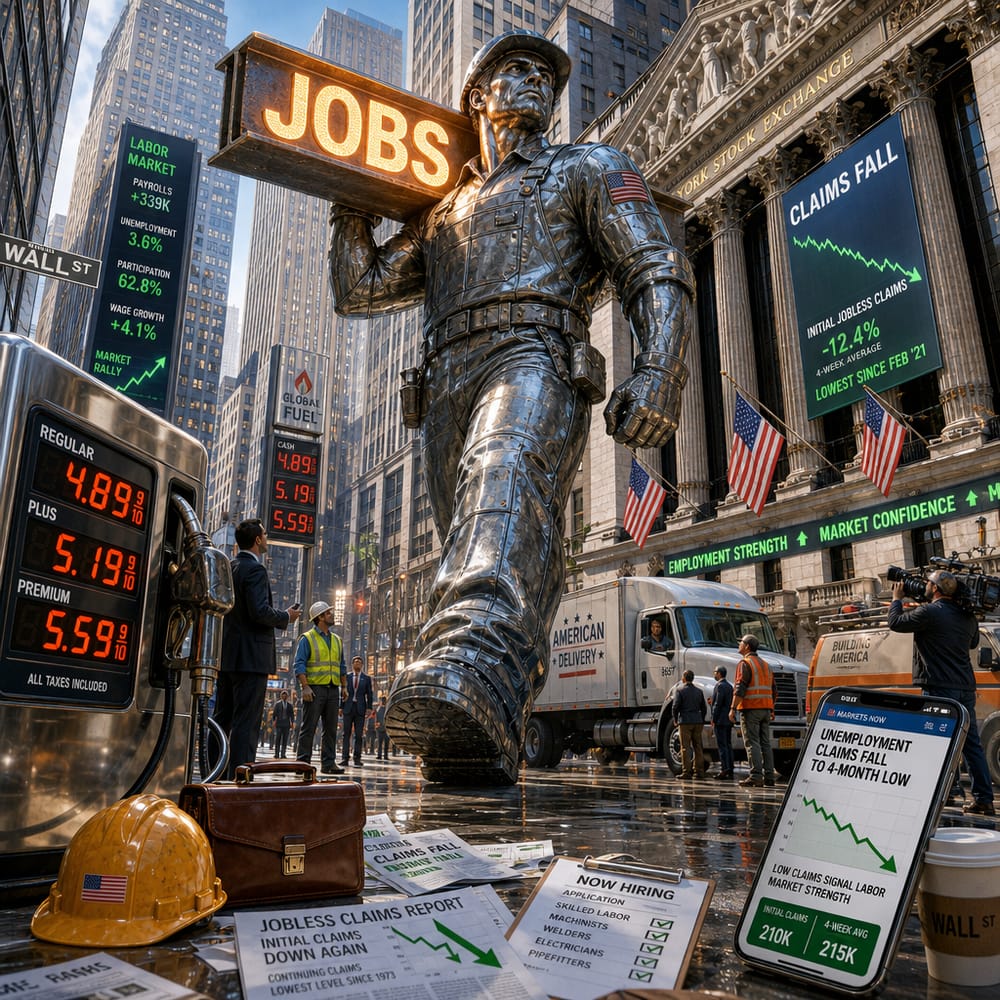
Sometimes, the economic headlines sound like something out of a financial action thriller. This week's data? U.S. jobless claims have taken a surprising nosedive, showing a sturdy labor market that's flexing its muscles despite the price of gasoline creeping up like your cousin at Thanksgiving asking for seconds before you've had firsts. A resilient job market sounds great, but let's break down why this isn't just another yawn-inducing statistic and what it all means for that mysterious top-hatted figure known as the Federal Reserve.
THE JOB MARKET: ROCK HARD OR ROCKY RIDE?
Picture this: while you’re squinting at the gas pump, the U.S. labor market is out there bench-pressing metrics, keeping jobless claims low and making it look easy. There are a few key players in this economic ensemble. First off, businesses are hiring like they just found a clearance sale on talent. Sectors from tech to hospitality are continually seeking fresh faces, buoyed by economic optimism that seems to be running on coffee and wishful thinking.
But wait, there’s more! A surge in demand for goods and services (thanks to consumers finally unchaining themselves from pandemic-induced budget constraints) has companies scrambling to keep pace. Couple that with a relatively limited labor supply – thanks in part to evolving work preferences and demographic shifts – and you've got a job market that’s not just surviving, but thriving.
FEDERAL RESERVE: THE DECISION LOOMING
So, what does this upbeat employment data mean for the Federal Reserve, our nation's financial puppeteer? The Fed’s primary goal is to keep this economy in a delicate Goldilocks zone – not too hot, not too cold. With such a hearty job market, the Fed is likely watching closely, contemplating its next move like a grandmaster planning his next chess move.
A robust labor market can lead to rising wages – which is good news for workers, but it might also stoke inflation. With the memory of recent inflation battles fresh in its mind, the Fed might consider tweaking interest rates to help keep inflation from overheating. But it’s a tightrope walk; too much movement could choke off growth, sending the economy into a tailspin. So, will the Fed slam the brakes or keep the pedal to the metal? That’s the trillion-dollar question.
THE RISKS OF OVERHEATING
Now, let's address the elephant in the room. What happens if this labor market flexes too hard? Yes, there's such a thing as too much of a good thing. When the job market is too strong, businesses might start bumping up wages to nab the best talent, which sounds great—until those wage increases start trickling into the price of your morning coffee, your groceries, and pretty much everything else. This could fan the flames of inflation, making the Fed’s job of maintaining balance about as easy as walking a tightrope in a windstorm.
Plus, if businesses are struggling to find workers, they might start cutting corners elsewhere, perhaps dialing back on investments or scaling down expansion plans. This is the economic equivalent of trying to eat your sandwich faster because you're running out of lunch break.
WHAT TO WATCH FOR
So, what's the takeaway here? For investors, this might well be the canary in the coal mine. A resilient labor market is typically a harbinger of economic growth, but it's also a signal to stay watchful. Keep an eye on how the Fed responds because their moves will ripple across not just the labor market but also housing, investments, and personal finance.
In this high-stakes financial landscape, one thing's for sure: the interplay between the labor market and the Fed's policy decisions could shape the economic terrain for the foreseeable future. It's like a real-world economic thriller, only with fewer explosions but just as much suspense.
So, keep those screens tuned here, where we’ll continue to crack open the financial world’s mysteries with all the flair of your favorite detective drama.
This article is for informational purposes only and is not investment advice. Always do your own research or consult a licensed financial professional before making investment decisions.
© Copyright 2024. All Rights Reserved.
© Copyright 2024. All Rights Reserved.