

Labor Market in Flux: July Job Losses Spotlight Weakening Trend Ahead of September Report
Sunday, August 23, 2026
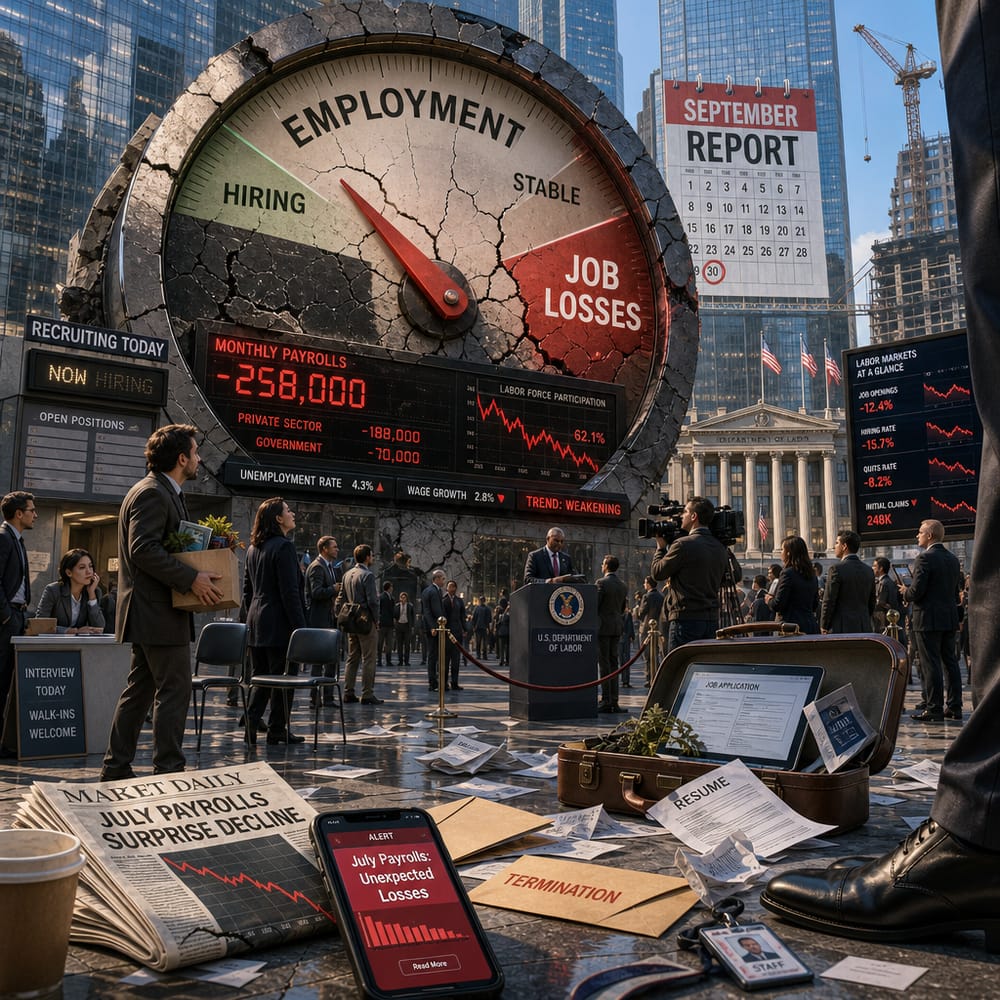
LABOR MARKET IN FLUX: JULY JOB LOSSES SPOTLIGHT WEAKENING TREND AHEAD OF SEPTEMBER REPORT
Imagine waking up to find the job market has decided to do a disappearing act. That's how it felt when July's employment data came out, waving a red flag with unexpected job losses. Like a magician's trick gone wrong, the labor market pulled a vanishing act that left everyone wondering: what happened, and what does it mean for the future? Let's dive into this mystifying world of employment data and see if we can unravel the secrets behind the curtain.
THE SUDDEN DISAPPEARANCE
In July, the job market decided it was time for a change, and not in a good way. We saw a decline in job numbers, catching analysts by surprise. Picture it: the economy had been chugging along like a reliable old train, and then suddenly, the track vanished. It seems a combination of factors played into this Houdini act.
First off, we can't ignore the role of interest rates. With the Federal Reserve raising rates like a stern schoolteacher handing out detention slips, borrowing became pricier. This means businesses had to tighten their belts, which often translates to fewer jobs and less hiring. Add to that the ongoing trade tensions, with tariffs flying back and forth like angry birds, and you've got a recipe for uncertainty. Companies love a stable environment, and like cats, they get skittish when things are up in the air.
THE RIPPLE EFFECT
So, what does this mean for our next employment report? Well, my friend, we might need to brace ourselves for more surprises. A weakening labor market is like a wobbly stool—unsteady and hard to sit on comfortably. If job losses continue, we might see a domino effect leading to lowered consumer confidence and reduced spending. That's the kind of downward spiral no one wants a ticket for.
And here's where the Federal Reserve steps back into the spotlight. You see, employment figures aren't just numbers on a page—they're key indicators the Fed uses to decide on monetary policy. If job losses persist, the Fed might rethink its strategy on interest rates. They could decide to hit the brakes on rate hikes or even reverse course. It's like deciding whether to push the gas or the brake pedal in a car—tricky, especially when the road is foggy.
BROADER ECONOMIC IMPLICATIONS
But it's not just about jobs and interest rates. A weakening labor market could have much broader economic implications. Picture the economy as a vast interconnected web. If one thread weakens, the whole structure feels the strain.
Consumer confidence, as mentioned, could take a hit. When people feel uncertain about their job security, they tend to tighten their wallets. This belt-tightening can slow economic growth, turning the wheels of commerce at a sluggish pace. It's a bit like running in quicksand—not entirely impossible but far from easy.
Companies, too, may feel the pressure. Less hiring could mean fewer innovations and reduced competitiveness. It's hard to lead the pack when you're struggling to stay afloat. This could impact everything from stock performance to industry growth rates.
WHAT NOW?
So what should we, the everyday retail investors, do with all this information? For starters, keep an eye on the upcoming employment report. It's set to drop in September, and you'll want to be ready. Consider it a weather forecast, but for your investments. A stormy labor market might mean it's time to batten down the hatches; a sunnier outlook might suggest smoother sailing ahead.
Diversification remains your best friend. A balanced portfolio is like a well-packed suitcase—it keeps you prepared, come rain or shine. Stay informed, stay nimble, and remember that the market's ups and downs are all part of the grand economic dance.
In the meantime, we'll be here, keeping an eye on the tricks and turns of the labor market, ready to bring you the latest with a dash of wit and a sprinkle of wisdom. After all, in the world of finance, there's never a dull moment.
This article is for informational purposes only and is not investment advice. Always do your own research or consult a licensed financial professional before making investment decisions.
© Copyright 2024. All Rights Reserved.
© Copyright 2024. All Rights Reserved.