

Labor Market Holds Steady—but Weak July Jobs Report Clouds Outlook
Monday, August 17, 2026
Labor Market Holds Steady—but Weak July Jobs Report Clouds Outlook
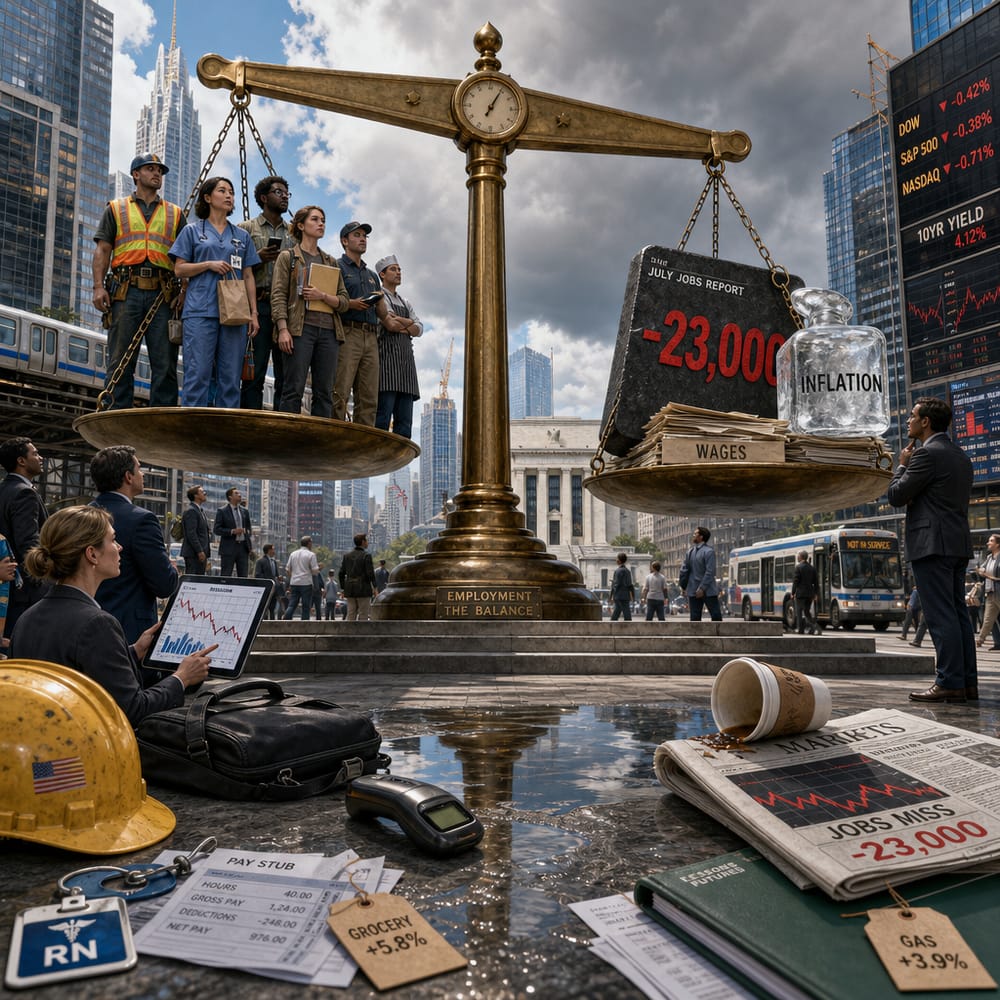
When the U.S. labor market sneezes, the economy catches a cold. And right now, it’s looking like the economy might be reaching for a box of tissues. July’s jobs report threw an unexpected curveball, showing a loss of 23,000 jobs. That’s not just a statistical hiccup; it’s a signal that things might be starting to wobble in the world of work. If you’re someone who prefers solid ground, brace yourself: this could mean a bumpy ride ahead.
So, what exactly happened in July? Picture a car running smoothly on the highway only to suddenly sputter and slow down. The engine light has switched on, but we're not yet sure if it's a minor glitch or a sign of a bigger breakdown. In this case, that ominous light came from a sudden drop in job numbers across several sectors. It wasn't one industry that took the hit but rather a mixed bag, with manufacturing and retail waving the biggest red flags. Rising costs and supply chain snarls didn't help, nudging businesses to clench their wallets tighter, leading to layoffs and hiring freezes.
Now, let's talk wages. While there were wage gains, they were largely gobbled up by inflation faster than a plate of hot fries at a county fair. In simple terms, any extra dollars you see on your paycheck are likely being used to pay for pricier gas and groceries, leaving many workers feeling like they’re running in place on an economic treadmill.
This brings us to the Federal Reserve, the financial wizard behind the curtain that influences interest rates. With job numbers slipping and inflation sticking around like an unwanted house guest, the Fed faces a conundrum. Should they keep rates higher to fight inflation or ease them to stimulate job growth? This is where things get tricky—not unlike choosing between pizza and sushi for dinner; both have their merits, but you can't have both at once.
A weakening labor market has the potential to shift the Fed's calculus. If job losses continue, the Fed might be tempted to hit the brakes on interest rate hikes. Lower rates typically make borrowing cheaper, encouraging businesses to expand and hire, acting as a sort of economic pep talk. But easing rates too soon might invite inflation to crash on your couch for a longer stay. It's a delicate balancing act that would make even the most seasoned tightrope walker sweat.
So, which sectors are feeling the labor market tremors the most? Well, it's a mixed bag. The manufacturing sector, which has been grappling with international trade spats and rising raw material costs, has seen better days. Retail, too, is under pressure, as consumers tighten their belts and opt for essentials over extravagances. On the flip side, industries like healthcare and tech are still humming along, albeit with a watchful eye on their budgets.
For the everyday investor, these developments mean keeping a close watch on the Fed's next moves. Interest rate decisions can ripple through everything from your 401(k) to mortgage rates and even those tantalizingly low offers for auto loans. If you’re invested in sectors sensitive to interest rates—think real estate or financial services—now might be the time to reassess your strategy.
The labor market is a critical thermometer for the broader economy, and right now, it’s reading a bit hotter than comfortable. As we navigate these murky waters, it's crucial to stay informed and prepared. After all, when the labor market changes, it doesn’t just impact Wall Street; it trickles all the way down Main Street.
In short, keep your eyes peeled and your wallets ready for a potential economic shift. The Fed, the industries in flux, and inflation are all pieces of a puzzle that will shape financial decisions in the coming months. And if history tells us anything, it's that the only constant in the markets is change. So buckle up, it looks like we're in for an interesting ride.
This article is for informational purposes only and is not investment advice. Always do your own research or consult a licensed financial professional before making investment decisions.
© Copyright 2024. All Rights Reserved.
© Copyright 2024. All Rights Reserved.