

Labor Market Falters: Job Losses & Revisions
Wednesday, August 26, 2026
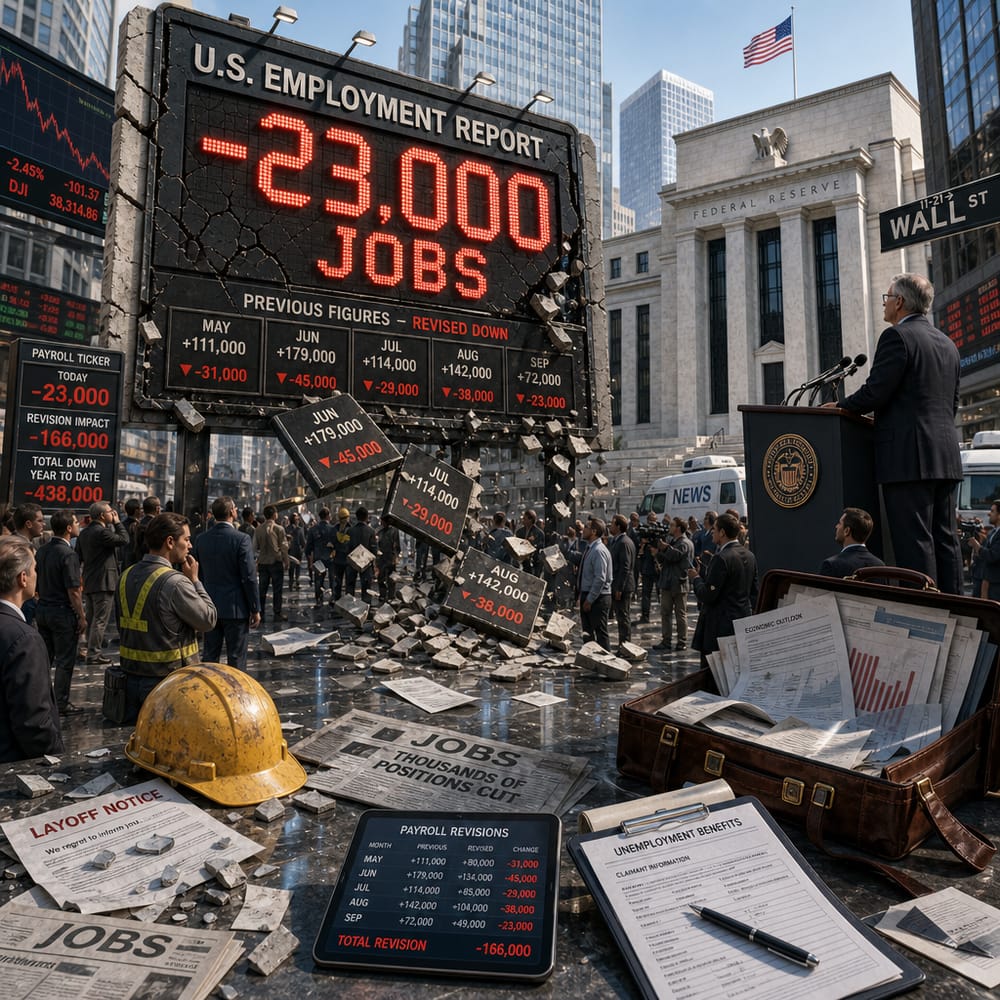
LABOR MARKET FALTERS: JOB LOSSES & REVISIONS
If the labor market were a Broadway show, right now would be the part where the lead performer suffers a sudden cough and the audience collectively holds its breath. July has brought with it an unexpected job loss of 23,000 nonfarm roles, and the bad news doesn't stop there—previous months have seen downward revisions too. Yes, it's as if the labor market hit a pothole right at the peak of its journey. So what does this mean for the average Joe scrolling through job ads and the bigwigs making bank policy decisions?
First off, let's talk about where the job losses have felt like a gut punch. Sectors like manufacturing and retail have taken the brunt. Manufacturing, which was already grappling with supply chain snarls and rising raw material costs, is now shedding jobs like a dog in a Texas summer. Meanwhile, the retail sector, despite its best efforts to recover from pandemic-era disruptions, is feeling the heat as consumer spending cools. It's like trying to dance in quicksand—every move seems to drag them deeper.
Why should you care, you ask? Well, a faltering job market isn't just bad for those holding pink slips. It ripples out, potentially signaling a broader economic slowdown. And when the labor market sneezes, the economy catches a cold. This could send consumer confidence, the unsung hero of economic booms, into a tailspin, affecting everything from your local coffee shop to Wall Street's high-flying stocks.
And speaking of Wall Street, we're also asking: how will the Federal Reserve react? The Fed has been on a rate-raising spree like a caffeine-fueled night owl, all in a bid to tame inflation. But a frail job market might just be the cold shower it needs before it decides to take a pause or even backtrack. The central bank's decisions are a bit like trying to herd cats—complicated and unpredictable—but if the job market keeps limping along, expect rate hikes to slow down. This could influence everything from your mortgage rate to the yield on your savings account.
For all you Fed watchers out there, know this: A weak labor market might mean the Fed sits back on its chair, sips its coffee, and reassesses its stance. In layman's terms, expect them to be more cautious than a cat near water in future policy discussions. If the economy looks like it's running out of steam, the Fed might just ease off the brakes. This potential step-back could provide a little more breathing room for businesses and consumers alike.
So where does this leave you, the observant investor? If you're invested in sectors tied closely to economic cycles—like retail, manufacturing, or even housing—you might want to keep a close eye on developments. A weak labor market and adjustments in Fed policy could be like a double-edge sword for these sectors. On one hand, consumer spending could drop, affecting revenues. On the other, softer Fed policies could lower borrowing costs, providing a bit of a cushion.
But it's not all doom and gloom. Remember those clichés about every cloud having a silver lining? Sometimes, sectors like tech and healthcare, which often dance to their own beat, might find this period of uncertainty a chance to shine. With AI and biotech innovations surging, these industries might not only weather the storm but also come out stronger. So if you're considering reshuffling your portfolio, these sectors could be worth a closer look.
In conclusion, the labor market's current wobble is more than just a blip—it's a flashing yellow light on the economic dashboard. Whether you're a retail investor or an executive in a boardroom, keeping an eye on these developments is crucial. Jobs matter, not just for those clocking in and out every day, but for the entire economy. As the dust settles, the story of what happens next is what will keep economists, investors, and policymakers on their toes.
So stay tuned, because like any good drama, the next act could be full of twists and turns that no one saw coming.
This article is for informational purposes only and is not investment advice. Always do your own research or consult a licensed financial professional before making investment decisions.
© Copyright 2024. All Rights Reserved.
© Copyright 2024. All Rights Reserved.