

Labor Market Data: Headline Risk for Stocks
Sunday, August 30, 2026
LABOR MARKET DATA: HEADLINE RISK FOR STOCKS
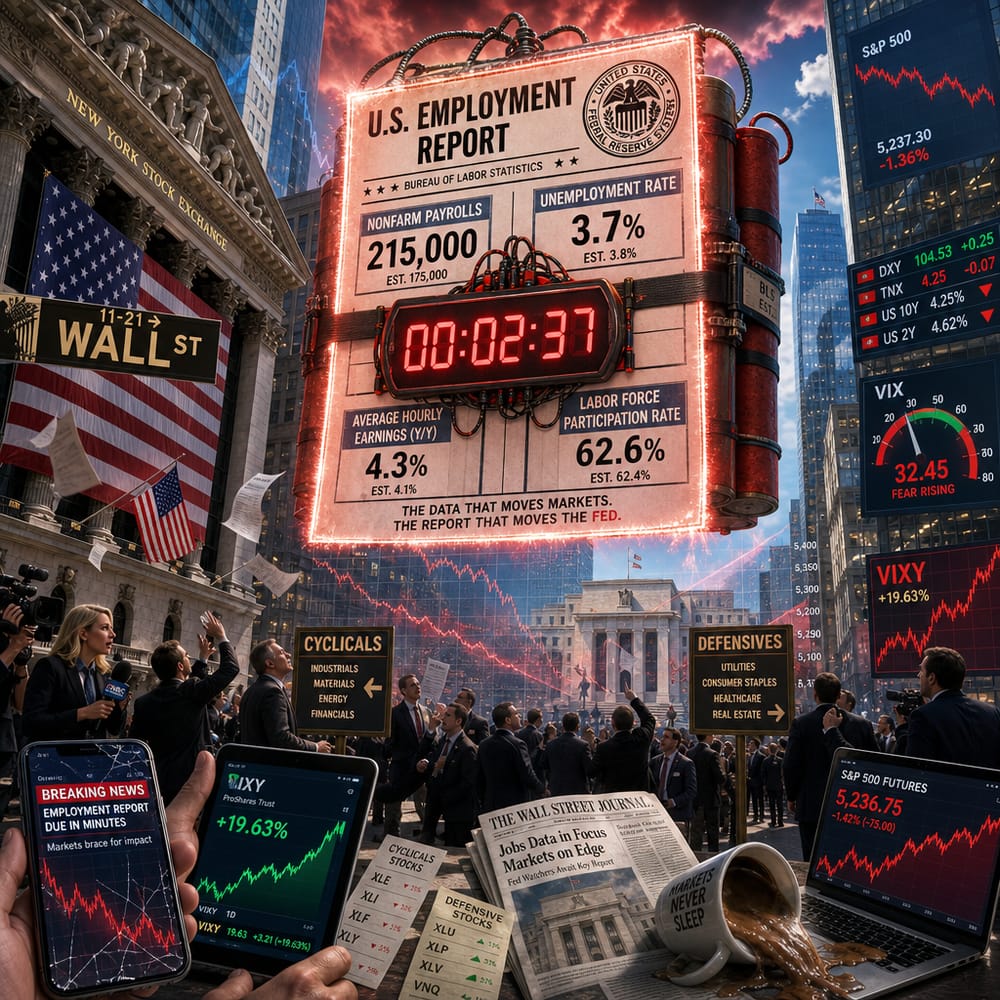
Buckle up, folks — another round of economic tea leaves is about to be read, and it's shaping up to be quite the nail-biter. We're talking jobs, people: the U.S. employment report is about to drop, and it's got the power to shake up the stock market like a cat with a new laser pointer. Why should you care? Because this isn't just about numbers on a page. It's a crystal ball that could determine what the Federal Reserve does next, and we all know the Fed's love for tweaking those interest rates.
So, what's the big deal with this report, anyway? It's simple: the employment numbers will set the stage for the Fed's next move. If the report shows that the job market is booming, the Fed might decide it's time to slam the brakes and raise interest rates to keep inflation in check. On the flip side, if the employment picture isn't so rosy, the Fed could keep rates lower for longer, letting the good times roll a bit longer for borrowers and spenders.
Now, let's imagine the possible scenarios. If the employment report comes in hotter than a summer day in Death Valley, expect the Fed to get a little twitchy about inflation. Rising rates could hit cyclical stocks — think those sensitive to economic swings, like consumer discretionary and industrials. They might face a bit of a rough patch as more expensive borrowing costs could crimp their style. On the defense? Defensive stocks, of course. These guys thrive when the market is under storm clouds, offering dividends and stability. Utilities, healthcare, and consumer staples could be your best buds if the rate hikes make Wall Street nervous.
And here's where it gets spicy. You know that VIX Short-Term Futures ETF (VIXY) we keep hearing about? Think of it like your investment Ouija board, trying to predict the unpredictable: market volatility. If the job numbers surprise us (and when do they ever not?), volatility could spike. This is where savvy investors might see opportunity — the brave souls who love a bit of turbulence in their portfolios.
Let's zoom out for a second. So, how might different sectors react to all this rate expectation shuffle? Well, higher rates generally aren't a friend to growth stocks, especially those tech darlings that have been the market's sweethearts. Their future profits get discounted more heavily when rates rise, making them less attractive. But don't count them out — these stocks often have a knack for bouncing back once the dust settles.
On the flip side, financials might just crack a smile at the thought of rising rates. Banks love a good rate hike, which can widen their net interest margins — that's the difference between what they earn on loans and what they pay on deposits. Cha-ching!
Okay, so how does one navigate this rollercoaster? First, keep an eye on your sector exposure. Diversification is your friend, as always. You wouldn't want to be all-in on high-growth tech if the winds shift, right? Consider a balanced approach, mixing in some of those defensive names that can weather the storm. And let's not forget about cash — having a bit in reserve can give you the flexibility to pick up undervalued stocks when the market overreacts, as it often does.
As for the Fed? They've got a tough gig trying to balance economic growth with inflation fears. But remember, they're not just pulling numbers out of a hat. Their moves are data-driven, so it's always a good idea to stay informed and adjust your strategy accordingly.
So, there you have it. The employment report is about to drop, and it's got the potential to send ripples across the market. Whether you're sipping your morning coffee or scrolling through your phone, stay sharp and be ready to adjust your investment sails as the winds change. Because in the world of stocks, the only constant is change — and that's what makes it so exhilarating.
This article is for informational purposes only and is not investment advice. Always do your own research or consult a licensed financial professional before making investment decisions.
© Copyright 2024. All Rights Reserved.
© Copyright 2024. All Rights Reserved.