

Labor Market Cooling: Labor Sentiment Sour & Jobs Data Mixed
Sunday, August 30, 2026
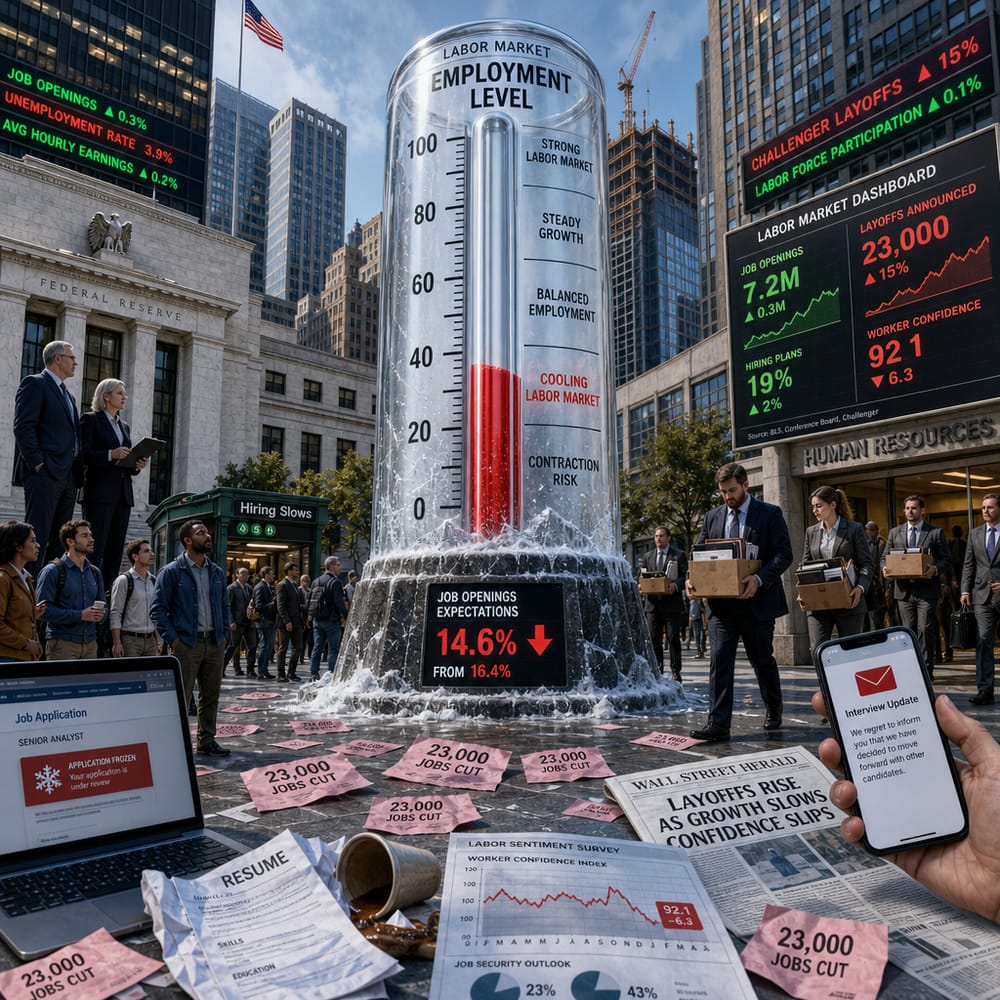
IS THE LABOR MARKET ABOUT TO CHILL? JOB CUTS AND SENTIMENT SHIFTS SAY YES
If you thought the job market was a never-ending party, some new data suggests it might soon be time to call an Uber. Employers are quietly pulling back on new job openings, and the dance floor is looking a little emptier. According to a recent survey, the percentage of respondents expecting more job openings in the near future shrank to 14.6% from 16.4%. And while those numbers might not seem earth-shattering, the vibe shift is real.
Adding to the drama, U.S. employers unexpectedly cut 23,000 jobs in July. It was a surprising twist that left economists scratching their heads like they were watching an M. Night Shyamalan movie. This mix of sentiment and real-world job cuts hints at a cooling labor market, a key metric the Fed uses to gauge inflation dynamics. So, what does it all mean for wage growth, inflation, and the broader economy?
First up, let’s talk wages. The labor market cooling down could mean less upward pressure on wages. That’s a fancy way of saying: fewer raises, folks. When jobs are abundant, workers can demand better pay because employers are competing for talent. But as the market cools, that bargaining power might just melt away.
Why does this matter? Uh, only because wages are a massive piece of the inflation puzzle. If wage growth slows, it might ease inflationary pressures. You see, when wages rise, companies often pass those costs onto you, the consumer, in the form of higher prices. It’s like a fancy cascade of costs. But hold up—does this mean the Fed can finally chill on the rate hikes? Not so fast.
The Fed is deep in its ‘labor-inflation framework,’ trying to tame inflation without sending employment into a tailspin. It’s like walking a tightrope, juggling flaming torches, and drinking a latte—all at once. Slowing wage growth might give the Fed some breathing room, but it’s not the only factor in their decision-making circus. They’re watching unemployment rates, consumer spending, and a laundry list of other economic stats before they make any moves.
Now, let’s talk consumer confidence. If people start to fear for their job security or see fewer job openings, they’re likely to tighten their wallets. Less spending from cautious consumers could put the brakes on economic growth. You don’t need to be an economist to know that less spending is bad news for businesses and, by extension, the stock market. Picture a chain reaction where jittery consumers lead to cautious businesses and an even more cautious Fed.
So, what should the everyday retail investor, like you scrolling this on your phone, make of all this? Keep your eyes peeled on future employment data releases. They’ll give more clues on where the job market and, consequently, the economy might be headed. If the labor market continues to cool, it could impact everything from your stock portfolios to your grocery bills.
Also, remember that this isn’t the 2008 financial crisis. The job market is cooling, not crashing. A slight slowdown might just be the adjustment we need to keep the economy balanced—like adding just the right amount of milk to your coffee so it’s not too hot to handle.
In the grand tapestry of the economy, the labor market is a crucial thread. And right now, it’s going through a bit of a chill. Whether this is just a seasonal change or a sign of a bigger trend remains to be seen. But one thing’s for sure: the days of red-hot labor demand might just be cooling off.
This article is for informational purposes only and is not investment advice. Always do your own research or consult a licensed financial professional before making investment decisions.
© Copyright 2024. All Rights Reserved.
© Copyright 2024. All Rights Reserved.