

Korea Joins FX Intervention With Japan and U.S., Won Strengthens Sharply
Friday, August 21, 2026
Korea Joins FX Intervention With Japan and U.S., Won Strengthens Sharply
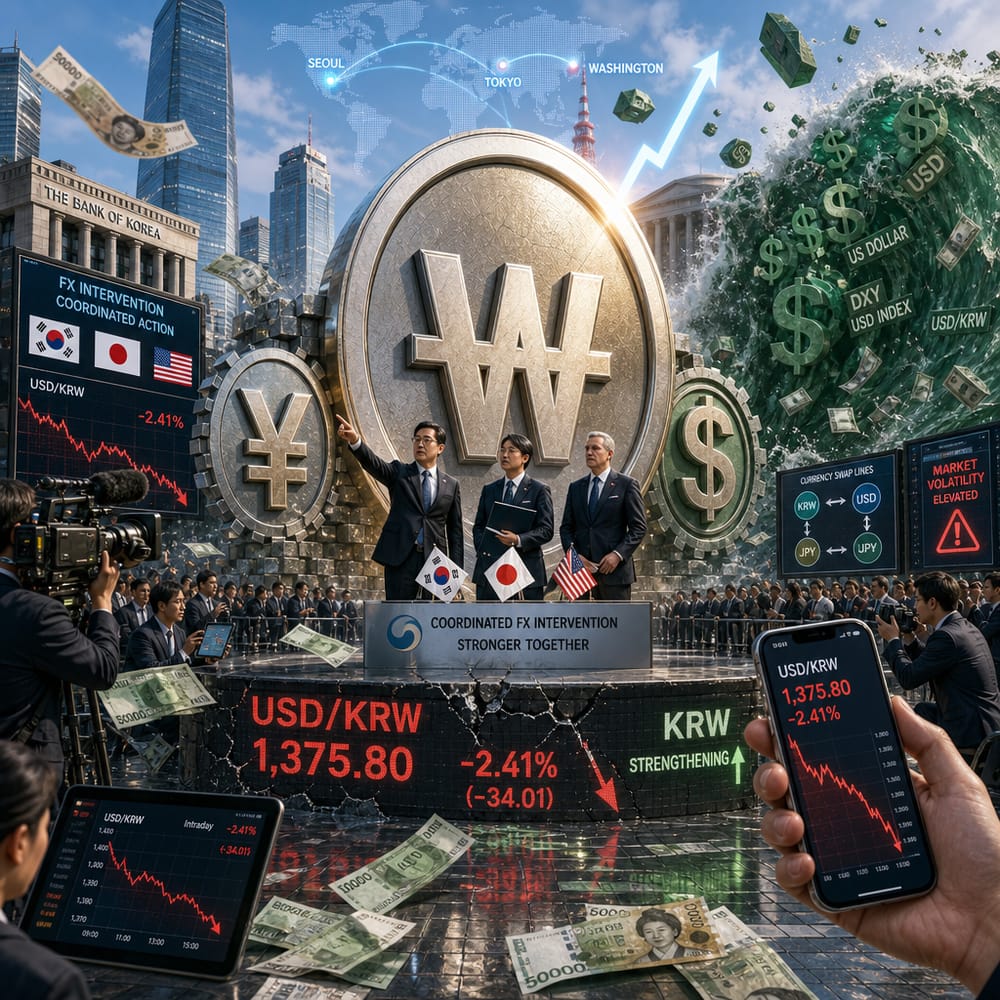
Currency wars just got a little friendlier. When South Korea decided to hop on board with Japan and the U.S. in a rare, coordinated foreign exchange (FX) intervention, the won flexed its muscles and gained some serious ground. But why did Korea make this bold move, and what does it all mean for the region's economic landscape?
THE TRIGGER
So, what prompted South Korea to dive into these turbulent FX waters? Picture this: the global currency market had turned into a chaotic party, with the U.S. dollar playing DJ, cranking up the volume and leaving everyone's ears ringing. This wasn't music to the ears of South Korea, whose won was feeling the pressure. The dollar's rowdy antics, turbocharged by an aggressive U.S. monetary policy, sent jolts through Asian markets. For Korea, this wasn't just about a bruised ego; it was about protecting its export-dependent economy from a currency that was straying wildly off pitch.
By joining forces with Japan and the U.S., South Korea is essentially playing team sports to reel in the greenback's dominance. This alliance isn't just a random gathering of FX pals; it's a strategic maneuver to stabilize regional currencies and restore harmony in the market.
THE IMPACT ON KOREA
Now, let's talk about how this FX intervention might shape South Korea's economic future. With the won riding high on a wave of optimism, the immediate effect is a breather for importers who have been grappling with skyrocketing costs thanks to a previously weaker won. Everything from gadgets to gochujang could see some relief in price tags, and that's good news for consumers.
But wait, there's more. A stronger won might not be music to the ears of every business. Exporters, for instance, thrive on a weaker currency that makes their goods more competitive overseas. Samsung, one of Korea's crown jewels, might need to brace itself, especially as it plots the course for massive shareholder returns. The electronics giant is already in the spotlight, promising a cash-laden bonanza for shareholders after its rival SK Hynix's big buyback splash. For companies like these, a robust won could mean a tighter squeeze on international profits.
THE BIGGER PICTURE
Zooming out a bit, South Korea's actions underscore a pivotal moment of regional cooperation. The FX intervention isn't just about currency stabilization; it's a reminder of the power of collective action in an increasingly fragmented global economy. As Asian markets watch closely, the message is clear: there's strength in numbers, especially when navigating the volatile FX seas.
The implications of this intervention ripple across the broader Asian market. A strengthened won sends a signal that regional players are ready to stand up to the dollar's dominance. This could very well set a precedent for future collaborations, with countries leaning on each other to fend off potential economic challenges.
BOTTOM LINE FOR INVESTORS
For investors, the plot thickens. The USD/KRW currency pair is the one to watch, as the won's newfound strength could mean opportunities for those betting on currency movements. But as always, the FX world is as unpredictable as a cat on a hot tin roof. The key? Stay nimble and keep an eye on how geopolitical dynamics continue to evolve.
South Korea's brave leap into this coordinated FX intervention with Japan and the U.S. isn't just a currency play; it's a strategic narrative in the ever-changing economic theater. The won's strengthened position might shake up the chessboard, but how it plays out largely depends on the next moves of these key players. As the stage is set, the world will be watching — and so should you, dear investor.
This article is for informational purposes only and is not investment advice. Always do your own research or consult a licensed financial professional before making investment decisions.
© Copyright 2024. All Rights Reserved.
© Copyright 2024. All Rights Reserved.