

July U.S. Jobs Data Sharply Undercut Expectations — Markets Eye Fed Patience
Monday, August 10, 2026
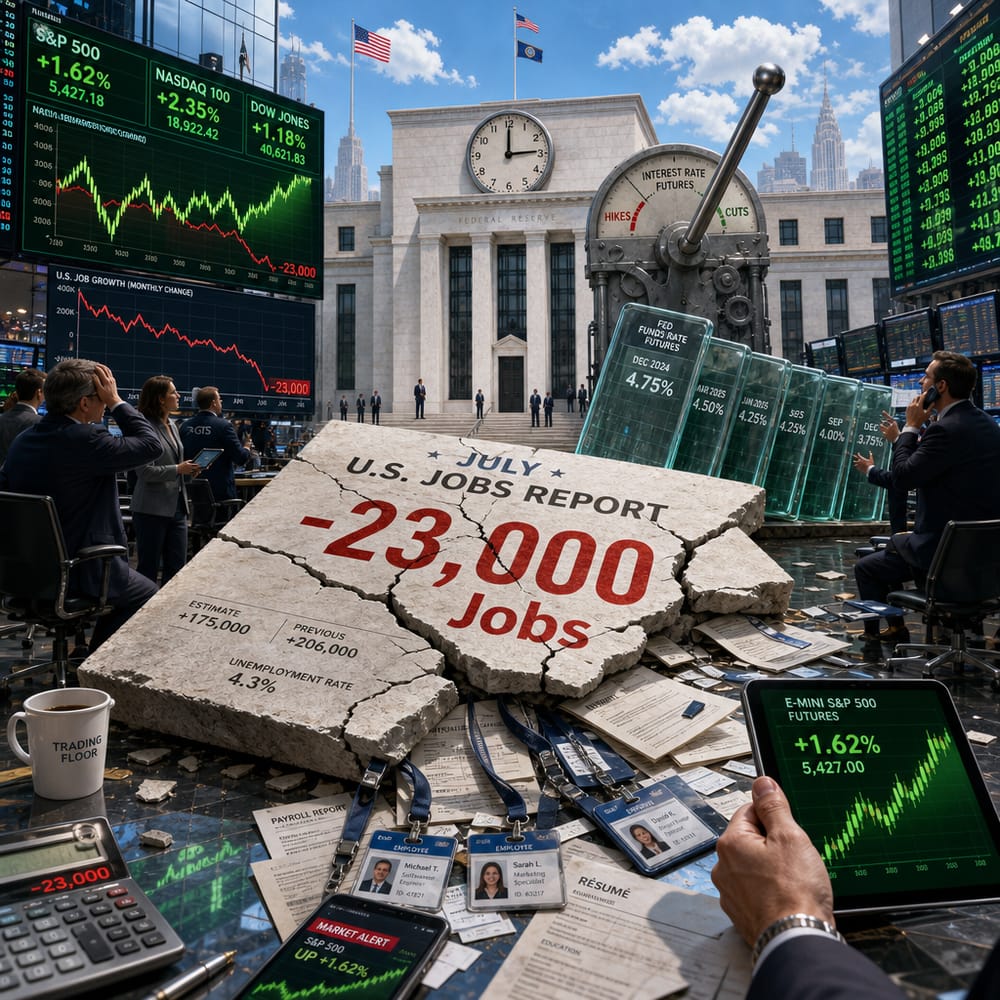
RETAIL INVESTORS REJOICE: SURPRISE JOB SLUMP MEANS FED MAY PUMP THE BRAKES ON RATE HIKES
It seems like the U.S. job market decided to take a little nap in July. We lost 23,000 jobs, despite analysts and economists predicting we'd be adding positions faster than a barista fills espresso orders in Seattle. While this might not be the best news for those hunting for work, the stock market is doing a victory dance. Why? Because investors think this might just convince the Fed to slam the brakes on their interest rate hike plans.
Imagine you're driving down the highway and suddenly decide to pump the brakes. That's essentially what investors are hoping the Federal Reserve will do with interest rates. When job numbers sag, it sends a signal that maybe the economy isn't overheating like a laptop with too many browser tabs open. The Fed, in response, might decide that there's no need to cool things down further with more rate hikes.
WHY DID THE JOB MARKET DECIDE TO TAKE A VACATION?
Good question! Several factors might have contributed to this unexpected contraction. For starters, the labor market can be as unpredictable as a cat with a laser pointer. Some economists suggest that a slowdown in certain sectors like manufacturing and retail could be at play. Others point to the possibility of seasonal hiring swings not playing out as anticipated. Either way, it's a reminder that the job market isn't just one giant monolith; it's a collection of industries that move to their own rhythm.
HOW COULD THIS INFLUENCE THE FED?
Here's where it gets interesting. For months, the Federal Reserve has been tinkering with interest rates like they're trying to perfect a grandmother's secret recipe. They've been hiking rates to combat inflation, but with the job market showing signs of weakness, they might be persuaded to hold off. Lower rates tend to encourage borrowing and investment, which can be a shot of adrenaline to the heart of a sluggish economy.
Investors, always keen to get ahead of the curve, see this as a potential win for stocks. Think of it as the market equivalent of scoring a top-shelf bottle of wine at half price. If the Fed delays further rate hikes, it's essentially a green light for equities to climb higher, allowing investors to sip on those gains.
WHAT SECTORS ARE FEELING THE JOB MARKET'S CHILL?
While the overall job numbers are down, some sectors are feeling the pinch more than others. Retail and manufacturing, for instance, are sectors that have been under pressure. The rapid rise of e-commerce has transformed the retail landscape, leaving traditional brick-and-mortar stores scrambling to adapt. Meanwhile, manufacturing's slump could be tied to broader economic trends, including trade tensions and shifts in global supply chains.
On the flip side, certain sectors might benefit from the Fed's potential pause on rate hikes. Tech stocks, often driven by growth and innovation, could see renewed investor interest. With lower borrowing costs, companies might feel more inclined to invest in new technologies and expand their operations, adding fuel to the fire of stocks like those tied to AI or semiconductors.
THE BIGGER PICTURE
While the job numbers are undoubtedly a surprise, they highlight the tightrope the Federal Reserve must walk. Balancing inflation concerns with the need to support a job market that occasionally feels like it's walking through molasses is no easy task. Investors, however, seem to be betting that the Fed won't risk stalling the economy further with additional rate hikes.
For everyday investors, this could be a moment to reassess portfolios and consider whether now's the time to dive deeper into equities. After all, if the Fed does decide to keep interest rates steady, it could very well extend the market's rally. And who doesn't like seeing a little extra green in their portfolio?
So, as the dust settles and we wait for the next move from the Fed, keep an eye on those market signals. The job report might have seemed like a bump in the road, but for savvy investors, it could be the gateway to new opportunities.
This article is for informational purposes only and is not investment advice. Always do your own research or consult a licensed financial professional before making investment decisions.
© Copyright 2024. All Rights Reserved.
© Copyright 2024. All Rights Reserved.