

July PCE Inflation Sticks—Core Generally Unyielding at 3.7%
Sunday, August 30, 2026
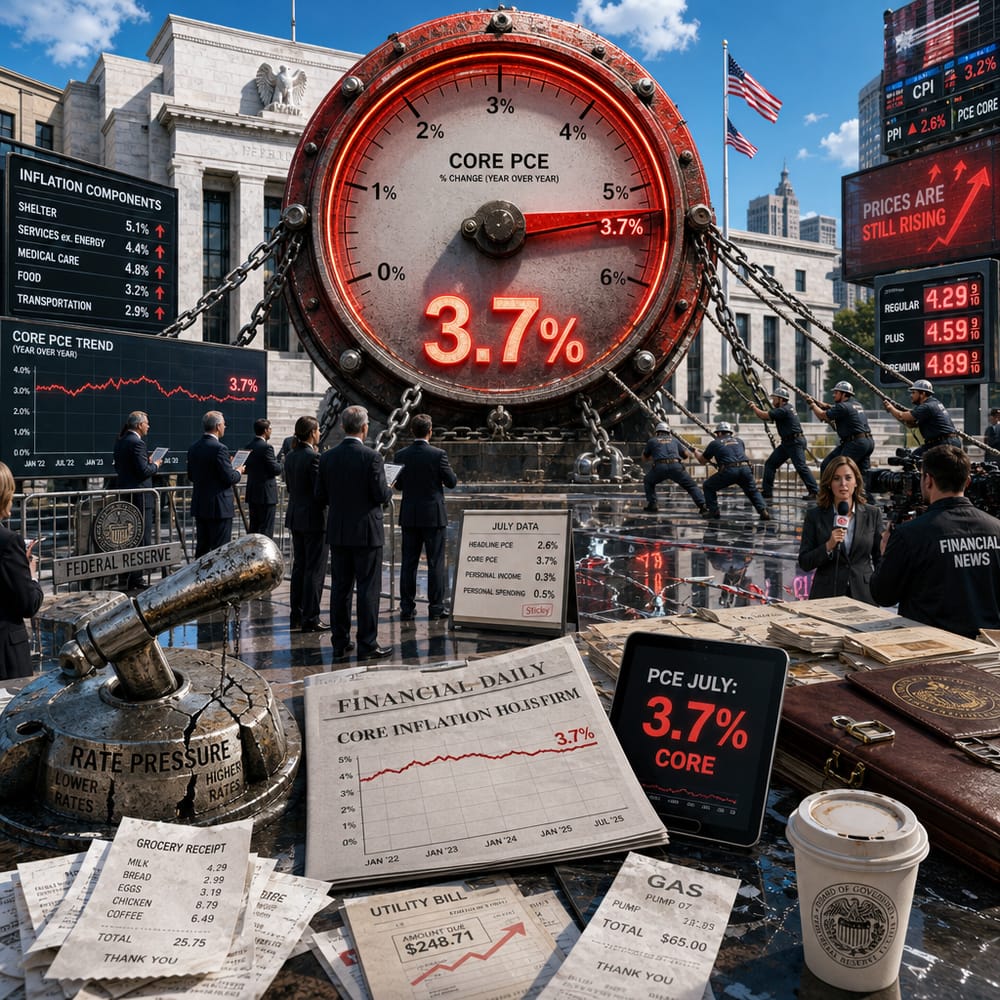
JULY PCE INFLATION STICKS—CORE GENERALLY UNYIELDING AT 3.7%
Hold onto your wallets, folks, because inflation is still playing tough, and it’s not budging for anyone. The latest report on the PCE (Personal Consumption Expenditures) Price Index just dropped, and the numbers are sticking like that gum under your shoe—unchanged at 3.7% year-over-year in July. That's not exactly the news you wanted to hear, especially if you're trying to make sense of where the economy is heading.
Why are we talking about PCE, you ask? Well, this little index is the Federal Reserve's favorite way to gauge inflation. It’s like their go-to playlist in a world of financial noise. The PCE covers a broader scope of expenses compared to its cousin, the CPI (Consumer Price Index), and grabs data from business surveys and consumer sales, giving the Fed a more comprehensive view of price changes.
Here's what matters: Persistent inflation keeps the Fed on high alert, and they’re the ones who pull the strings on interest rates. Right now, the Fed's got their "inflation is concerning" face on, which means they might decide to keep rates higher for longer. So, if you’ve been dreaming of cheaper loans or lower credit card rates, you might want to put a pin in that for now.
How does this sticky PCE affect you and your favorite stocks, you ask? Persistent inflation can make the Federal Reserve less eager to cut rates. Higher rates can put the brakes on economic growth and make it pricier for companies to borrow and expand. In the stock world, that can spell trouble for growth stocks, especially those who thrive on low borrowing costs to fuel their rapid expansion. Companies like tech giants or startups may feel the burn more than sturdy, dividend-paying stalwarts.
Now, let’s talk PCE vs. CPI. The CPI has been the headline act since forever, but it’s old news compared to the PCE, which includes more comprehensive data. While the CPI might shout about rising gas prices, the PCE might whisper about your rising healthcare bills or that sneaky increase in your favorite streaming service fee. In the July numbers, while CPI cooled a bit, PCE didn’t budge. So, while you might feel a slight relief at the pump, your overall financial diet isn’t getting any lower-calorie.
The market implications of this stubborn inflation sticking around like a bad habit? Investors may need to recalibrate their crystal balls. The Fed has been a bit of a mystery lately, with Chairman Kevin Warsh playing his cards close to the vest at Jackson Hole. The less transparent they are, the more markets have to guess, which can lead to volatility. That's the fancy way of saying things might get bumpy.
So, what’s an investor to do in this unyielding inflation landscape? Diversify like a pro. While tech stocks that depend on low rates might face headwinds, sectors like energy and utilities tend to fare better when inflation is high. These companies often benefit from higher prices and can pass some of those costs onto consumers, keeping their revenues afloat. Also, keep an eye on consumer staples—those everyday essentials you can’t live without—because we're all still buying toothpaste and toilet paper, no matter the economic climate.
In this game of inflation chess, the Fed is the grandmaster, and we’re all just trying to anticipate their next move. Pay attention to economic reports and Fed statements; they might not always say a lot, but they can hint at future strategies. If you’re feeling overwhelmed, remember this: Economic cycles are just that—cycles. They’ll turn around eventually.
So, even though the PCE inflation is showing no signs of stepping down, stay informed, stay diversified, and keep that eagle eye on the Fed's next move. Inflation may be unyielding, but so is the resilient investor. Here’s to hoping the next update gives us a bit more to cheer about!
This article is for informational purposes only and is not investment advice. Always do your own research or consult a licensed financial professional before making investment decisions.
© Copyright 2024. All Rights Reserved.
© Copyright 2024. All Rights Reserved.