

July PCE Inflation Holds Steady at 3.7%—Stubborn Price Pressures Challenge Fed Dovish Bets
Saturday, August 29, 2026
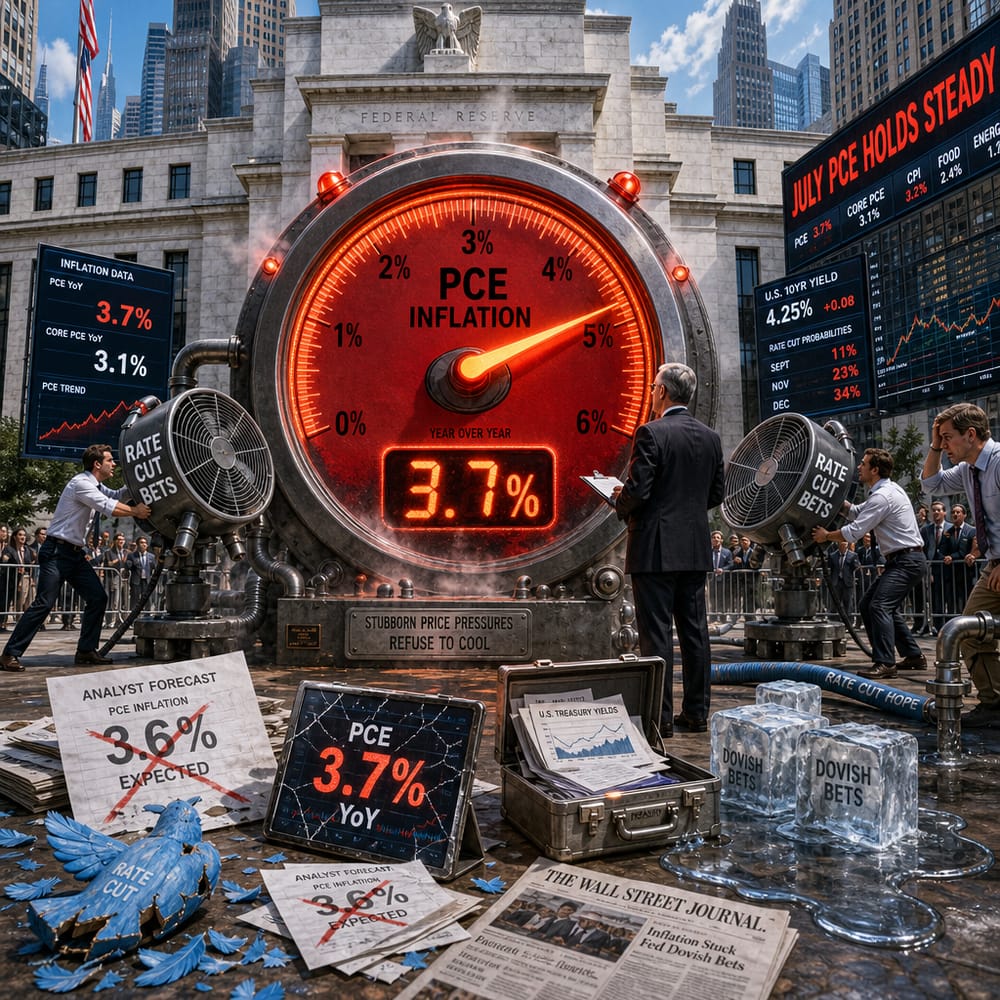
JULY PCE INFLATION HOLDS STEADY AT 3.7%—STUBBORN PRICE PRESSURES CHALLENGE FED DOVISH BETS
In the world of economics, being "off by a smidge" can send ripples through markets like a barista spilling coffee on a white shirt. July's PCE inflation rate was one of those moments. Economists expected a gentle dip to 3.6%, like easing off the gas pedal, but nope, July cruised right along at a steady 3.7%. That’s a big deal because the Federal Reserve has been trying to gently persuade inflation to take a backseat.
So, what's keeping inflation so stubbornly high? Well, friends, it’s a bit like trying to untangle a slinky. A mix of elements is in play here: labor costs sticking like honey, supply chains trying to remember their ABCs, and consumer demand still strutting its stuff. You’ve got wages on the rise as folks demand a fair slice of the pie, and companies, in turn, pass those costs onto us, the consumers. Add in the global supply chain drama – think of it as a never-ending soap opera – and you’ve got a recipe for prices that just won’t chill out.
This relentless inflation isn't just an economist's headache; it’s a big ol’ thorn in the Fed’s side too. The Federal Reserve, our nation’s financial bouncer, has a job to do: keep inflation around 2%. Now, that might sound like a quaint aspiration, but consistently high inflation means the Fed might be forced to raise interest rates more than it would like. Higher rates are the economy's brakes, making borrowing costlier and theoretically cooling things down. But as every good chef knows, you don’t want to overdo it, or you risk killing the flavor.
Fed Chairman Kevin Warsh, in his silent movie routine at Jackson Hole, stressed that addressing inflation is his top priority. But he left everyone guessing about interest rates like it’s a mystery novel. No spoilers here! Investors, meanwhile, are left clutching their crystal balls, trying to divine when and where rates might move. It’s a waiting game, and everyone’s a little on edge.
But how might this affect you, the retail investor with an eye on your portfolio while sipping morning coffee? If the Fed decides it needs to tighten the screws further by raising rates, that could mean bond yields might rise and stocks, especially those in interest-sensitive sectors like technology, might feel the heat. So, while rising rates are forged with the best intentions (cooling inflation), they can also trim the sails of economic growth and market gains.
On the flip side, if the Fed plays it cool and inflation keeps its chill, stocks could ride the wave, and the economic engine keeps churning. But that's no small if, given the current landscape. As we continue to navigate these murky economic waters, it’s crucial to stay informed and maybe even keep a steady hand on that investment wheel.
So, what's the takeaway here? In a world of financial uncertainty, July's stubborn inflation is a wake-up call. It’s a reminder that the economy is as fluid as your favorite iced latte on a hot day. For retail investors, the best strategy is to stay nimble, keep ears to the ground, and perhaps consider a diversified portfolio as a buffer against the unpredictable tides.
Whether you're setting your financial sails for calm or stormy weather, remember: in the economy's alphabet soup, the letter that matters most is "P" for persistence. And inflation, my friend, is not giving up its starring role just yet.
This article is for informational purposes only and is not investment advice. Always do your own research or consult a licensed financial professional before making investment decisions.
© Copyright 2024. All Rights Reserved.
© Copyright 2024. All Rights Reserved.