

July NFP Shock: 23,000 Jobs Lost, Yet Unemployment Holds at 4.1%
Monday, August 24, 2026
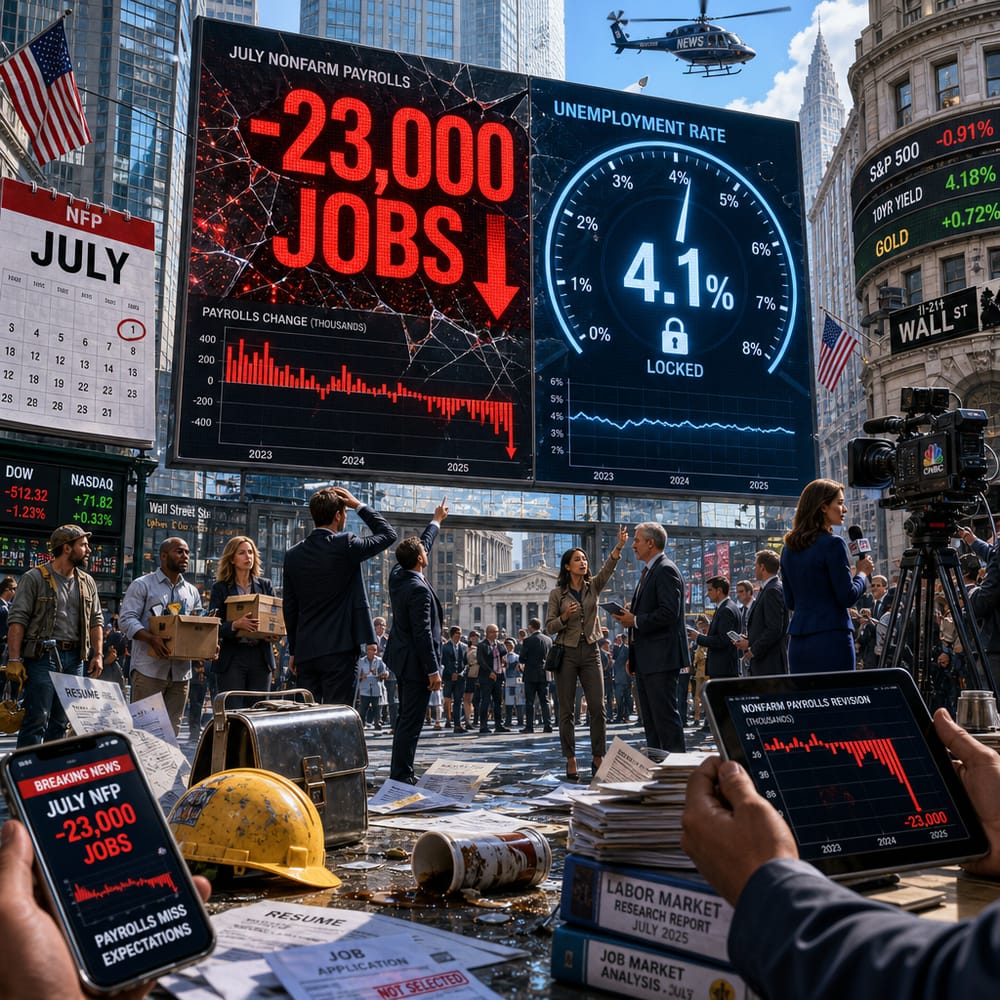
JULY JOBS REPORT: WHEN DOWN IS UP, AND UP IS DOWN
Sometimes the job market feels like a plot twist in an M. Night Shyamalan movie. Just when you think you've got it figured out, bam — surprise! In July, the U.S. economy took a peculiar turn: it shed 23,000 jobs, a plotline not seen since February, yet miraculously, the unemployment rate held steady at a somewhat respectable 4.1%. In the world of economics, that's what we call "interesting," or perhaps, a head-scratcher.
So, what gives? How can we be losing jobs but maintaining the same unemployment rate? And what does this sorcery mean for the future of our economy, our paychecks, and for the investors who hang on to these numbers like their portfolios depend on them — because they kind of do?
THE MYSTERY OF THE MISSING JOBS
If July's unexpected job loss were a crime scene, the suspects would be pretty clear. First up, the manufacturing sector got hit harder than a piñata at a kid's birthday party. The factory floor has been seeing some serious layoff action, thanks in large part to trade tensions and higher tariffs. Not exactly a recipe for hiring sprees. Then there's the retail sector, which continues to grapple with the online shopping revolution and the slow demise of brick-and-mortar stores. Cue the sad violin music.
But hold on, there's more. The construction sector also stumbled, facing a double whammy of rising interest rates and a cooling housing market. And let's not forget the tech sector's ongoing adjustment to a post-pandemic reality, where not every coder can work from a beach in Bali.
CONSUMER CONFIDENCE ON THE LINE
When the job market sneezes, consumer confidence catches a cold. Even if you haven't lost your job, hearing about people losing theirs can make you clutch your wallet a little tighter. Consumer spending drives about 70% of the U.S. economy, so if folks start hoarding cash instead of spending, it could send ripples through everything from car dealerships to your favorite taco truck.
And let’s be real — if you’re worried about job security, those new shoes or the fancy gadget might just stay on the shelf a little longer. When people don’t spend, companies don’t profit, and then we’re stuck in a vicious cycle of economic gloom that even the sunniest of Instagram influencers can’t hashtag away.
POLICY PANIC OR CALM CORRECTION?
Whenever job numbers go wonky, you can practically hear the policymakers' pencils scratching. Enter the Federal Reserve, the institution we love to hate, yet can't live without. If job losses continue, the Fed might decide to tweak interest rates in an effort to juice up the economy. Lower rates can make borrowing cheaper, theoretically encouraging businesses to expand and hire more workers. But given the current national debt has ballooned to an eye-watering $40 trillion, the Fed will need to tread carefully — like navigating a minefield in the dark.
Then there's the political angle. With elections always lurking around the corner, nobody wants to be the Captain of the Titanic. Expect some policy debates about whether to stimulate, stay the course, or cut taxes. Just when exactly did we sign up for this rollercoaster?
LOOKING AHEAD: WHAT TO WATCH
So, what's an investor to do while this economic soap opera unravels? Keep your eyes peeled on key sectors. Tech and healthcare are still relatively strong, with AI and an aging population keeping things buoyant. However, the trade wars are real, and if they escalate, they could drag down everything from steel to semiconductors.
Additionally, pay attention to how consumer sentiment shifts in the coming months. Retail earnings reports, consumer confidence indices, and even housing market data are vital clues. Investors who understand these dynamics can better navigate the choppy waters and potentially find opportunities amid the chaos.
In this topsy-turvy landscape, staying informed will be your best defense. And remember, like any good thriller, the job market might have a few more surprises up its sleeve. So, keep your popcorn handy, your wits about you, and maybe your resume updated — just in case.
This article is for informational purposes only and is not investment advice. Always do your own research or consult a licensed financial professional before making investment decisions.
© Copyright 2024. All Rights Reserved.
© Copyright 2024. All Rights Reserved.