

July Jobs Report Surprises with Net Loss of 23,000 Jobs — Labor Market Softens
Thursday, August 13, 2026
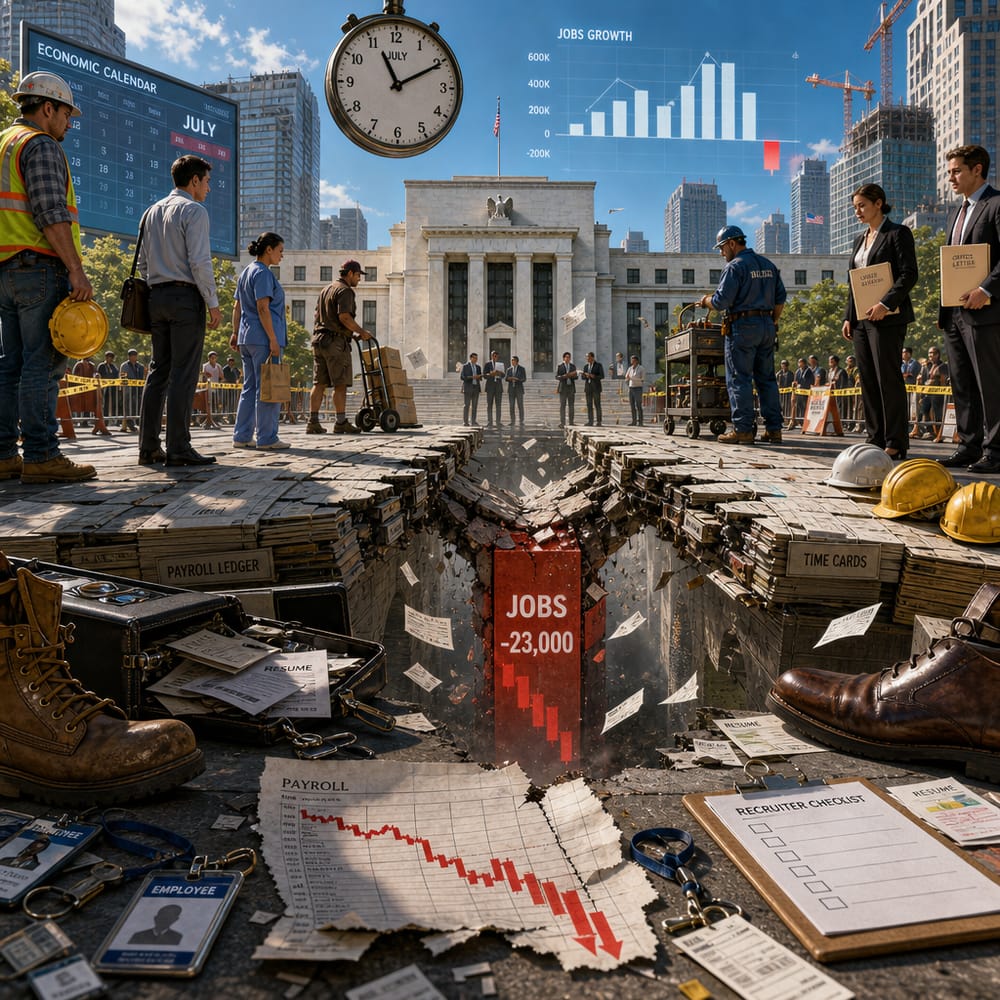
Job losses are like surprise break-ups; they leave everyone wondering what went wrong. The U.S. economy just lost 23,000 jobs in July, marking the first decline since February, and frankly, it’s got investors sweating more than a tourist in Death Valley. This unexpected drop has everyone asking the big questions: Are we headed for a recession? Is consumer spending going to nosedive? And what does this mean for the Federal Reserve's next move?
First, let’s take a stroll down industry lane to see where jobs evaporated like the last donut in the break room. Construction and manufacturing felt the pinch the hardest. Despite a booming housing market earlier this year, construction saw unexpected layoffs, possibly as builders anticipated a slowdown in new projects. Manufacturing, usually the backbone of a stable economy, also shed jobs, partly because of supply chain bottlenecks and waning demand for goods. It’s like your favorite restaurant cutting back its menu because the supply truck is stuck in traffic.
Meanwhile, tech, which has been the darling sector for years, didn’t escape unscathed either. But don’t be too quick to whip out your Kleenex; the sector lost fewer jobs compared to its brick-and-mortar cousins, thanks to the persistent demand for digital solutions and AI innovations. However, the real kicker is what this job loss means for consumer behavior. With fewer paychecks rolling in, economic growth could take a hit. Less disposable income means consumers might sideline those new sneakers or that upgraded smartphone, which could slow down spending across the board.
Now, let’s talk about the Federal Reserve — the economic weatherman who’s been trying to keep inflation in check while ensuring the economy doesn’t catch a cold. The July jobs report has thrown a curveball at the Fed, which was already juggling how to balance interest rates and inflation. It’s like trying to play chess on a rollercoaster; one wrong move and the whole board flips.
The Fed’s usual playbook calls for keeping inflation in check by adjusting interest rates. If they decide to raise rates to temper inflation, it could further dampen economic growth, putting more pressure on the already thinning job market. On the flip side, keeping rates steady might give the economy some breathing room but risks letting inflation run wild. So, what's a central bank to do? Listen closely, because the Fed's next steps may just dictate the economic forecast for the rest of the year.
In this tangled web of economic cues, investors and analysts alike are watching the Fed like a hawk. They’re also keeping a keen eye on consumer spending trends. If spending continues to decline, it could spark a vicious cycle — less spending leads to reduced business revenues, which could lead to more layoffs. Essentially, the economy’s version of a bad hair day that just keeps getting worse.
But it’s not all doom and gloom. Federal Reserve Chair Jerome Powell has a few tricks up his sleeve. The central bank could consider unconventional methods, like adjusting the balance sheet or implementing stimulus measures. The Fed has a history of pulling rabbits out of hats when the economy needs a little magic.
In the meantime, what should everyday investors do? Keep an ear to the ground and an eye on the Fed’s next move. Remember, while this job loss is a jolt, economic cycles are called cycles for a reason. Consider diversifying your portfolio if you haven’t already. When the market is a rollercoaster, a well-rounded investment strategy can be your safety harness.
Stay informed, stay nimble, and maybe keep some extra cash on hand for those bargain buys when markets get jittery. The road ahead might be bumpy, but with a little savvy and a sharp eye, savvy investors can weather the storm. So, buckle up, hold on tight, and keep your investment strategy as flexible as a yoga instructor at a Beatles concert. After all, in the world of finance, surprises are the only guarantee.
This article is for informational purposes only and is not investment advice. Always do your own research or consult a licensed financial professional before making investment decisions.
© Copyright 2024. All Rights Reserved.
© Copyright 2024. All Rights Reserved.