

July Jobs Report Shows Unexpected Losses and Labor Force Fallout
Thursday, August 20, 2026
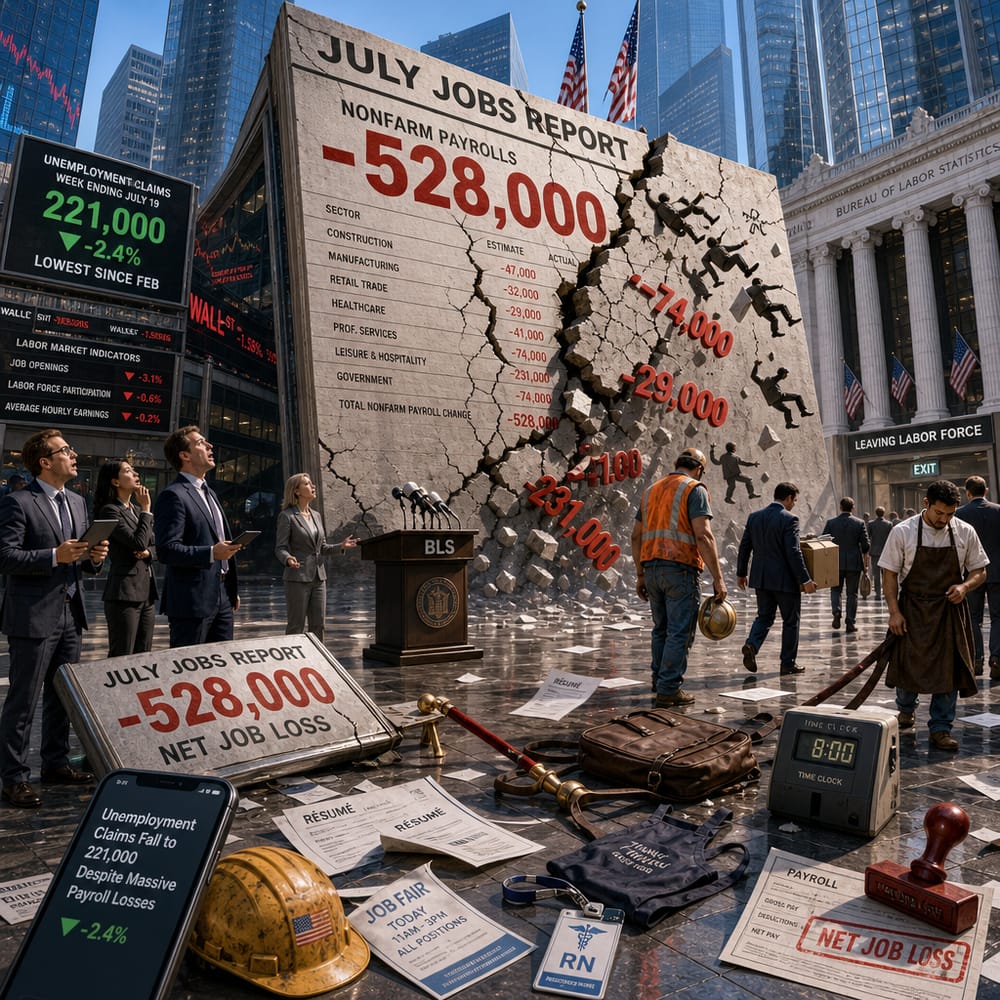
JOBS REPORT SHOCKER: WHEN LESS IS DEFINITELY NOT MORE
Hold onto your hats, folks. The latest jobs report has just dropped, and it’s the economic equivalent of a surprise plot twist in a summer blockbuster. Instead of the usual nail-biting suspense over how many jobs we’ve gained, this time we’re staring down the barrel of a net loss. Yes, you read that right—a net loss of jobs and a mass exodus from the labor force. So, what in the economic fairy tale is going on here?
You’re probably wondering how, in a world where "help wanted" signs are practically wallpaper, we end up with fewer jobs. Let’s break it down. The jobs report, the monthly drumroll of economic data, showed unexpected job losses. To add a bit of extra drama, a significant number of people are throwing in the towel and exiting the labor market altogether.
First, let's talk about the elephant in the room: the job losses. They're real, and they're here. Industries like retail and hospitality, usually the poster children for job booms, are seeing workers take a hike. With big players like Walmart reporting sluggish sales growth, it’s clear that consumer confidence isn’t exactly sky-high right now. Let’s face it: if people aren’t buying, companies aren’t hiring.
Then there’s the other side of the coin—people leaving the labor force like it’s a sinking ship. Factors like long-term pandemic fatigue, childcare issues, and a desire for better work-life balance are pushing people to prioritize personal life over professional grind. That’s right, the great resignation isn’t over; it’s just changing its stripes.
But hold your horses before you go digging up that doomsday bunker. Unemployment claims are actually dropping. It’s a bit like watching a movie where you can't decide if it's a comedy or a tragedy. This drop suggests that while fewer people are entering the workforce, those who are staying are holding onto their jobs. Still, the dual signals of job losses and labor force shrinkage are giving economists a serious case of whiplash.
So, what does all this mean for you and your wallet? Consumer spending—the lifeblood of our economy—might take a hit. When people have fewer jobs and less cash flowing in, they’re less likely to splurge on that new gadget or vacation. And when spending dips, economic growth can feel like it's moving through molasses.
Now, onto the million-dollar question: what can be done to stop this rollercoaster from derailing? Enter stage left: policy measures. The Federal Reserve, with its hands full managing interest rates and inflation, might not leap to action just yet. But don't rule out policy tweaks. Some experts suggest incentives for companies to retain employees and investments in job training programs could help plug the leak.
Treasury Secretary Scott Bessent is currently wrestling with a different beast—the bond market. But maybe, just maybe, the government could whip up a strategy that addresses both the bond conundrum and the labor market woes. After all, the Fed and the Treasury are no strangers to teamwork, even if they occasionally squabble like an old married couple.
As we step into the second half of the year, the stakes are high. The Federal Reserve, the Treasury, and industries across the board will need a carefully coordinated dance to sidestep a potential economic slump. Meanwhile, retail investors will be keeping one eye on their portfolios and the other on economic indicators, hoping to read the market tea leaves.
The job market may be sending us mixed signals, but one thing is clear—it's a plot worth watching. So stay tuned, because this economic thriller is far from over.
This article is for informational purposes only and is not investment advice. Always do your own research or consult a licensed financial professional before making investment decisions.
© Copyright 2024. All Rights Reserved.
© Copyright 2024. All Rights Reserved.