

July Jobs Report Shocks: Employment Falls, Labor Force Shrinks Sharply
Sunday, August 30, 2026
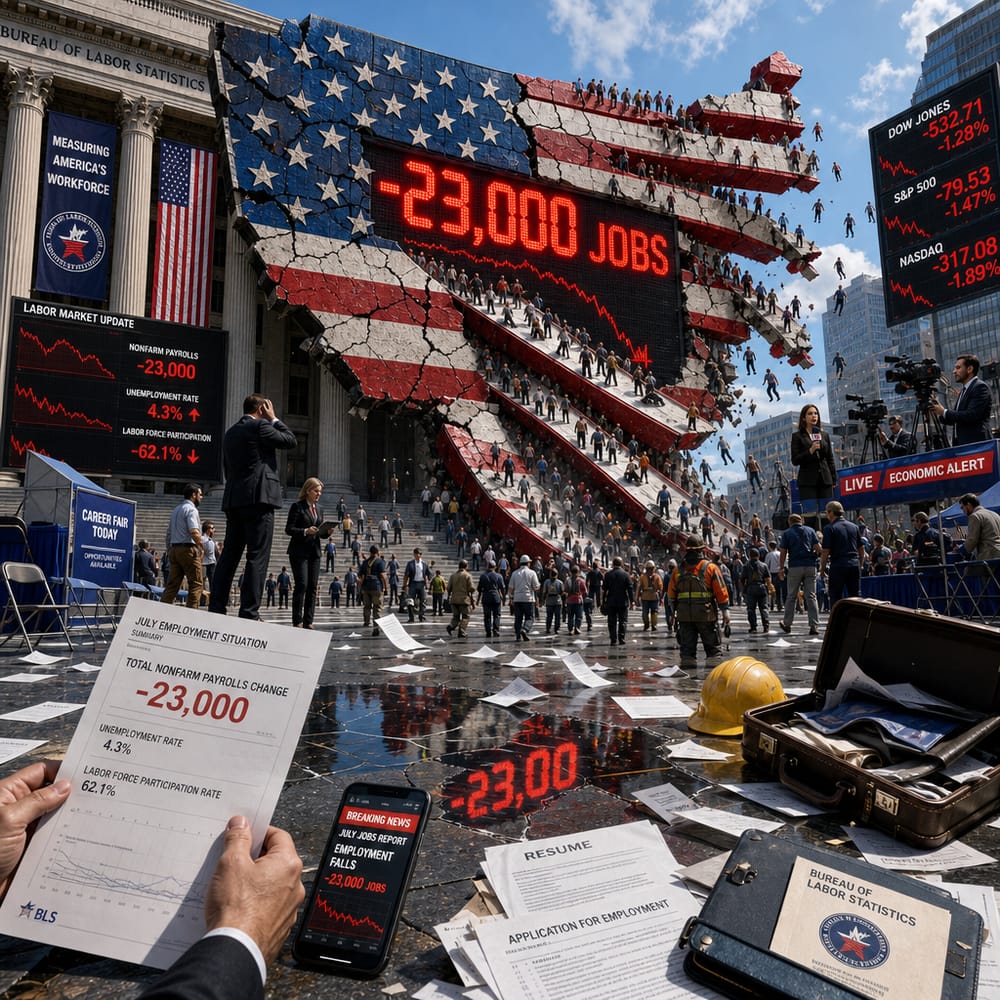
THE TWILIGHT ZONE: JULY'S JOB SLUMP SENDS SHOCKWAVES THROUGH U.S. ECONOMY
July's job report is in, and it’s not just another snoozer about employment numbers. This one's a plot twist straight out of the Twilight Zone: the U.S. economy shed 23,000 jobs. That’s right, folks. For the first time since February, we're going backward, not forward. And if that isn't enough to make you double-check your calendar, the labor force itself has shrunk significantly. Let's dig into what's really going on here and why you should care while sipping your morning coffee.
WHAT'S THE DEAL WITH THE JOB LOSSES?
So, what’s sucking the wind out of the job market sails? In a nutshell, several factors are playing a game of tug-of-war, and not in our favor. For starters, automation and technology are transforming industries faster than you can say "AI takeover." Jobs that humans used to do are now being done by machines, and while that’s great for companies’ bottom lines, it’s not so great for the folks who used to punch the clock.
Moreover, geopolitical tensions—and yes, there's a splash of Trump-esque saber-rattling involved—have made businesses jittery. When companies get nervous, they hold back on hiring. Mix in a cocktail of economic uncertainties and increasing interest rates, and you’ve got a recipe for a cautious approach to growth.
HOW DOES THIS HIT YOUR WALLET?
Here’s why this matters more than your next Netflix binge. When jobs go poof and the labor force contracts, that’s often a canary in the coal mine for consumer confidence. And a less confident consumer doesn’t splurge at the mall or order extra guac at Chipotle. Decreased spending can ripple through the economy, leading to slower growth overall.
If consumers tighten their purse strings, businesses might cut back too, leading to a self-perpetuating cycle of doom and gloom. Think of it as the domino effect, but with your paycheck and peace of mind at stake.
THE LONG GAME: WHAT LIES AHEAD?
Alright, so what’s the long-term play here? The labor market's contraction could herald a broader economic slowdown, which is something you might want to keep an eye on before investing in that summer getaway house. If businesses continue to exercise caution in their hiring practices, we’re likely to see more job cuts as companies aim to streamline operations and boost efficiency.
The Bureau of Labor Statistics might not be your typical page-turner, but their reports will be more critical than ever. Keep tabs on future job reports, as they could influence everything from housing markets to consumer credit rates. The Fed is also watching closely, and if inflation remains concerning—as some have whispered at recent Jackson Hole meetings—interest rate hikes could follow, putting more pressure on borrowing and spending.
Beneath the headlines, there's a deeper narrative unfolding. The dynamics of the workforce are shifting, and how we adapt could spell the difference between economic resilience and stagnation. The current slump may push more people to retrain, reskill, and pivot to new careers. So if you’re feeling restless at your desk, now might be the time to take that coding class or finally learn digital marketing.
IN CLOSING
July’s job report isn’t just a blip on the radar—it’s a signal flare. Whether you’re a retail investor, a concerned citizen, or just someone who likes to know what’s happening in the economic landscape, keep your ears to the ground. This could be the start of a trend or just a single piece in a more extensive puzzle.
In the meantime, stay savvy, stay informed, and maybe hold off on those big purchases. The economy is a living, breathing beast, and right now, it’s showing signs of needing a check-up.
This article is for informational purposes only and is not investment advice. Always do your own research or consult a licensed financial professional before making investment decisions.
© Copyright 2024. All Rights Reserved.
© Copyright 2024. All Rights Reserved.