

July Jobs Report: Employment Falls 23K, But Unemployment Drops—Why It’s Complicated
Wednesday, August 19, 2026
JULY JOBS REPORT: EMPLOYMENT FALLS 23K, BUT UNEMPLOYMENT DROPS—WHY IT'S COMPLICATED
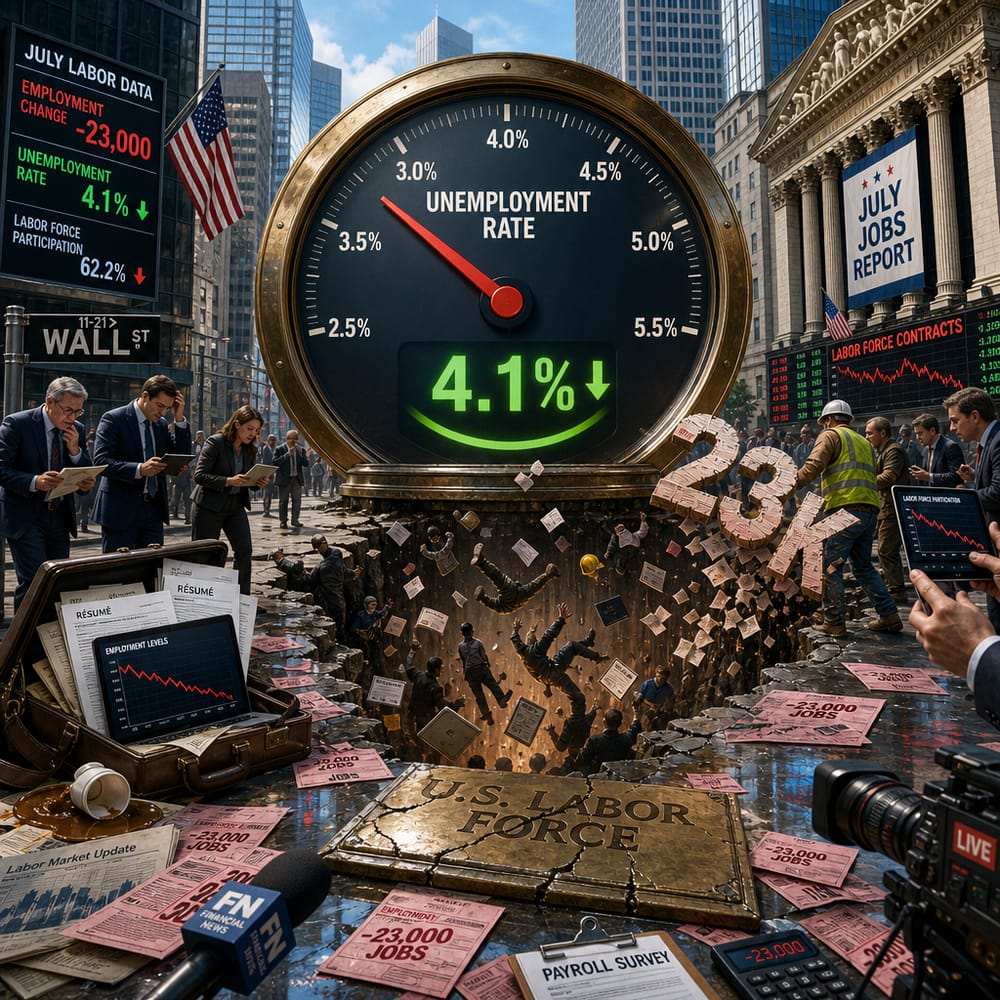
Attention, armchair economists and market mavens – something funky is happening in the labor market and it’s not your dad's disco playlist. The U.S. job market saw an eyebrow-raising loss of 23,000 jobs in July, but hold on to your hats, the unemployment rate actually dropped to 4.1%. Wait, what? Fewer jobs but less unemployment? That's the kind of logic that makes your morning crossword feel like a cakewalk.
So, what's cooking in the cauldron of employment chaos? Well, it all boils down to a shrinking labor force. Picture it as a party where people keep leaving early, but those who stick around claim they’re having a blast. In July, plenty of folks packed their economic bags and strolled away from the labor market. This makes unemployment numbers look better than they are because fewer people are left to count as "unemployed."
Why are people stepping back from the workforce like it’s a trust fall exercise gone wrong? The reasons could range from baby boomers finally cashing in on those retirement plans to younger folks choosing further education or temporary travel gigs over a desk job. Add in childcare challenges and ongoing pandemic aftershocks, and you've got a cocktail of reasons that makes Tiger King seem straightforward.
Now, let’s talk about the big kahuna in the financial world: the Federal Reserve. The Fed has been puzzling over this data like it's a Rubik’s Cube with missing squares. A robust labor market typically greenlights interest rate hikes to keep inflation in check, but if people are dropping out of the workforce, it's like driving through a foggy night – you can't just slam on the gas. The Fed’s rate decisions, which affect everything from the interest on your savings to what you pay for a mortgage, rely heavily on these confusing data points.
With job losses on one hand and a declining unemployment rate on the other, the Fed might hesitate to make any drastic moves with interest rates. They might just play it cool until the data paints a clearer picture or at least until the labor market's next plot twist. It’s like waiting for the next season of a hit TV show – except with more economic repercussions and fewer cliffhangers solved by attractive protagonists.
This quirky labor market data also sends ripples through the broader economy. For starters, businesses watching this labor tango might second-guess expanding or investing in growth. If workers are in short supply, companies might have to up their game with wages, which could put a squeeze on profits. Plus, a smaller labor force can limit economic growth since fewer people with paychecks means less spending on everything from iPhones to impulse buys at Target.
And let's not forget our friends in the stock market. While Moderna and Merck are dancing through a financial high thanks to a promising cancer vaccine, the rest of the market is clutching its pearls, waiting to see how this labor puzzlement will shake out. Investors are keeping a hawk-eye on the Fed, knowing that any rate change could tip the scales across various sectors.
So, what’s next for us, the everyday investors, the scrolling masses looking for financial nuggets of wisdom? Keep your ear to the ground. Watch how the Fed responds and keep an eye on sectors that might feel the labor squeeze more intensely, like hospitality and retail. Remember, while the employment numbers might have more plot twists than a mystery thriller, staying informed is your best sidekick in navigating this economic labyrinth.
As we trudge through this quirky economic narrative, just remember: in the world of finance, what goes down often sets the stage for what comes back up. Stay sharp, stay curious, and as always, keep questioning the status quo.
This article is for informational purposes only and is not investment advice. Always do your own research or consult a licensed financial professional before making investment decisions.
© Copyright 2024. All Rights Reserved.
© Copyright 2024. All Rights Reserved.