

July Jobs Report Cooldown Widens Odds Against Fed Rate Hike in September
Monday, August 10, 2026
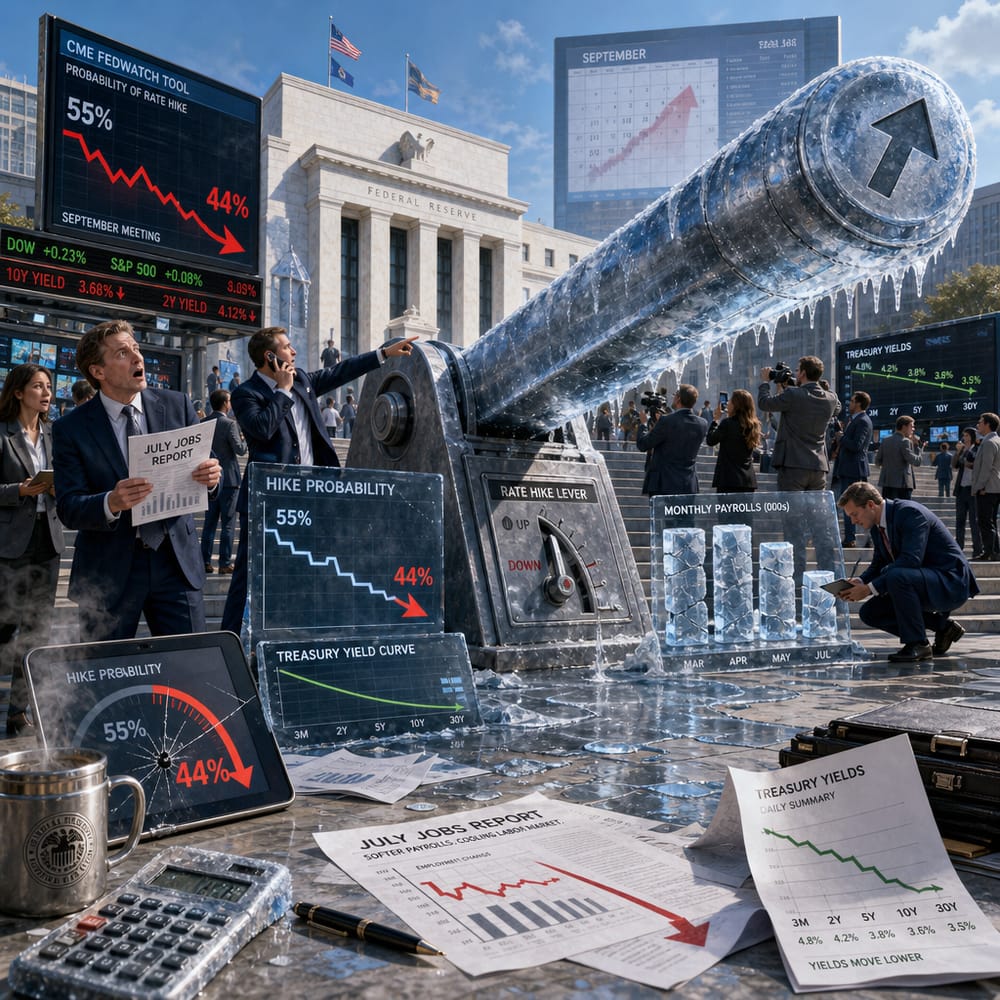
JULY JOBS REPORT COOLDOWN WIDENS ODDS AGAINST FED RATE HIKE IN SEPTEMBER
Hold onto your wallets, folks, because the latest U.S. jobs report is shaking up the rate-hike roulette. Picture this: a weaker-than-expected job market report has landed on the Federal Reserve's desk, and it's making Jerome Powell's decision to slam that interest rate button a whole lot less likely come September. The odds? They're dropping faster than a stock market ticker on a bad day.
CME's FedWatch tool is crunching the numbers, and it's not looking good for rate hike enthusiasts. Just yesterday, there was a 55% chance of a September hike, but after the jobs data hit, those odds have plummeted to a mere 44%. It's as if the economy said, "I'm tired, let me sit this one out."
So, what's the big deal with this jobs report? In plain English, it's softer than a marshmallow in the sun. The number of jobs added was below expectations, signaling that the seemingly invincible U.S. labor market might actually have a weakness or two. And when the job market sneezes, the Fed catches a cold.
The implications? Well, the Fed's been on a rate-hiking spree to combat inflation, but a weaker labor market might just be the wrench in its rate-raising machine. The economy is like a delicate dance: if you push the tempo too much, someone’s bound to trip. And that someone might just be the American consumer, who’s already grappling with inflation-induced sticker shock at the grocery store.
Markets are quick to react when the Fed's rate hike probability dips. Think of it like a financial weather vane. When it points away from rate hikes, bond yields start to shift, stock markets get jittery, and the U.S. dollar takes a wild ride. The whole ecosystem, from Wall Street to Main Street, feels the tremors.
As traders recalibrate their expectations, the bond market becomes the stage for a bit of drama. With lower chances of a Fed rate hike, U.S. Treasury yields tend to ease off. Investors, who were once bracing for higher returns on their bond investments, now find themselves navigating a landscape where those returns might be less attractive. It's a seesaw of economic expectations; when one side tips, everything else shifts.
The drop in rate hike odds has immediate ripple effects. Markets love predictability, and when the Fed’s next move is less certain, investors start hedging their bets. Stocks might see a bit of a roller-coaster ride as rate-sensitive sectors recalibrate. Tech stocks, like those of Nvidia or Intel, might see fluctuations as investors weigh the cost of borrowing against future growth prospects.
For the Fed, the message is clear: tread carefully. With a wobbling labor market, the central bank might opt for a watch-and-wait approach. The risk of slowing down the economy too much with aggressive rate hikes is palpable, and no one wants to be the party pooper at the economic recovery bash.
In the end, the July jobs report is more than just a series of numbers. It's a crucial piece of the puzzle that the Fed uses to decide the trajectory of monetary policy. For retail investors scrolling through their feeds, it's a reminder that in the world of finance, nothing stays the same for long. The market tides are constantly shifting, and staying informed is your best lifeline.
So, as September looms and Janet Yellen's Fed faces another decision-making crossroads, keep your eyes peeled on the economic data pouring in. The jobs report has sent a clear message—it's time to rethink those September rate hike bets. The stakes are high, and the market’s next move is anyone's guess. But one thing's for sure: this financial thriller is far from over.
This article is for informational purposes only and is not investment advice. Always do your own research or consult a licensed financial professional before making investment decisions.
© Copyright 2024. All Rights Reserved.
© Copyright 2024. All Rights Reserved.