

July Jobs Report: 23,000 Jobs Lost, Unemployment Drops—Labor Market Flashing Warning Signals
Saturday, August 15, 2026
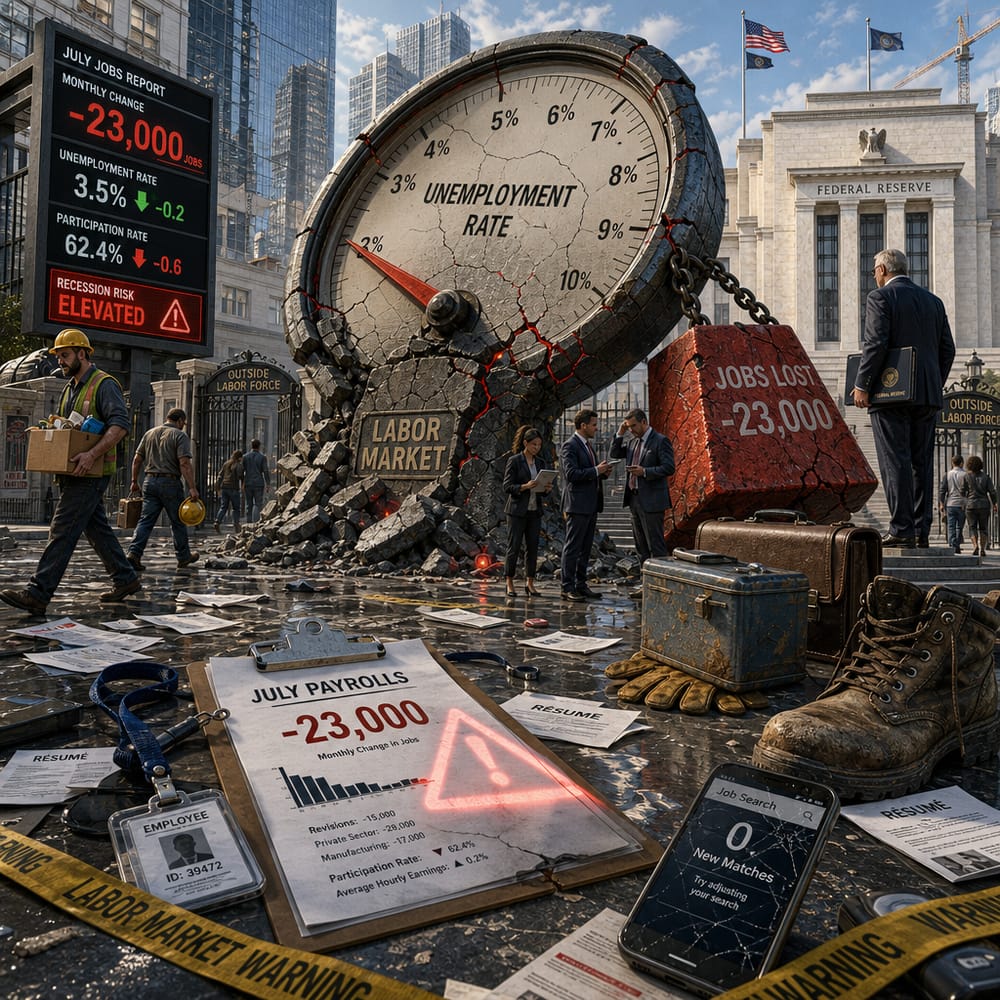
JULY JOBS REPORT: 23,000 JOBS LOST, UNEMPLOYMENT DROPS—LABOR MARKET FLASHING WARNING SIGNALS
Hold on to your hats, folks, because the latest jobs report has rolled in, and it's a head-scratcher. The U.S. economy shed 23,000 jobs in July, yet somehow the unemployment rate has dipped. It’s like losing weight while binge-eating pizza. But before you pop the champagne, let's dissect what's really going on in the labor market.
First, the good, or maybe the perplexing, news: the unemployment rate fell. But don’t thank a surge of new jobs. Instead, the drop is due to fewer people participating in the workforce. Think of it as fewer fish in the pond, not more fish being caught.
Now, why are people leaving the workforce? Some point fingers at an aging population, with seasoned pros hanging up their boots for retirement. Others suggest it's because workers are disheartened by slim pickings for jobs. Whatever the cause, the labor force participation rate is the lowest it's been in years, and that’s worth a raised eyebrow.
Job losses have hit a variety of sectors. Manufacturing and retail have been particularly hard-hit, and while some might say this is par for the course in a tech-driven world, it’s not all about the robots taking over just yet. Even with technology’s rise, these industries traditionally employ a large chunk of the workforce. So, seeing them struggle sends a shiver down the economic spine.
What does all this mean for the Federal Reserve, the monetary wizard behind the curtain? Well, if job losses and people fleeing the workforce continue, the Fed might be in a pickle. They’ve been flirting with interest rate hikes, but a weak labor market could make them think twice before slapping us with higher borrowing costs. The Fed's mantra has been stable inflation and maximum employment. But when employment’s looking rocky, their calculus could shift.
Let’s be clear: the drop in unemployment isn’t the rosy picture it appears to be. It's more like a Monet painting—pretty from afar but messy up close. The decrease in labor force participation points to underlying economic angst. Fewer jobs, combined with fewer people looking for work, can signal that economic growth is losing its mojo.
Zooming out, the broader implications for the labor market aren’t glittering either. Consumer spending, the oxygen of the U.S. economy, could take a hit if people feel insecure about their job prospects. And let’s not forget, uncertain job markets can lead to a jittery stock market. Investors love stability like cats love sunshine. Take that away, and they’re likely to get skittish.
So, what’s the takeaway for retail investors out there, scrolling through this rollercoaster of economic twists? Keep an eye on the Fed's next moves. Their decisions could sway everything from mortgage rates to stock valuations. And if you're invested in sectors like manufacturing or retail, it might be time to reassess your portfolio. Diversification is the name of the game in unpredictable waters.
The July jobs report is more than a set of numbers; it’s a wake-up call. The economy is sending mixed signals, and it’s crucial to tune in. Whether you're an investor, an employer, or someone just trying to keep the lights on, understanding these trends can arm you with the foresight to navigate whatever comes next.
In the end, the labor market might just need a little TLC—a blend of policy tweaks and confidence boosters to get people back into the workforce and the economy humming again. Until then, keep your eyes peeled and your investments agile. Economic narratives are like a choose-your-own-adventure book, and the next chapter might just surprise us all.
This article is for informational purposes only and is not investment advice. Always do your own research or consult a licensed financial professional before making investment decisions.
© Copyright 2024. All Rights Reserved.
© Copyright 2024. All Rights Reserved.