

July Jobs Decline & Fed Rate Outlook
Wednesday, August 19, 2026
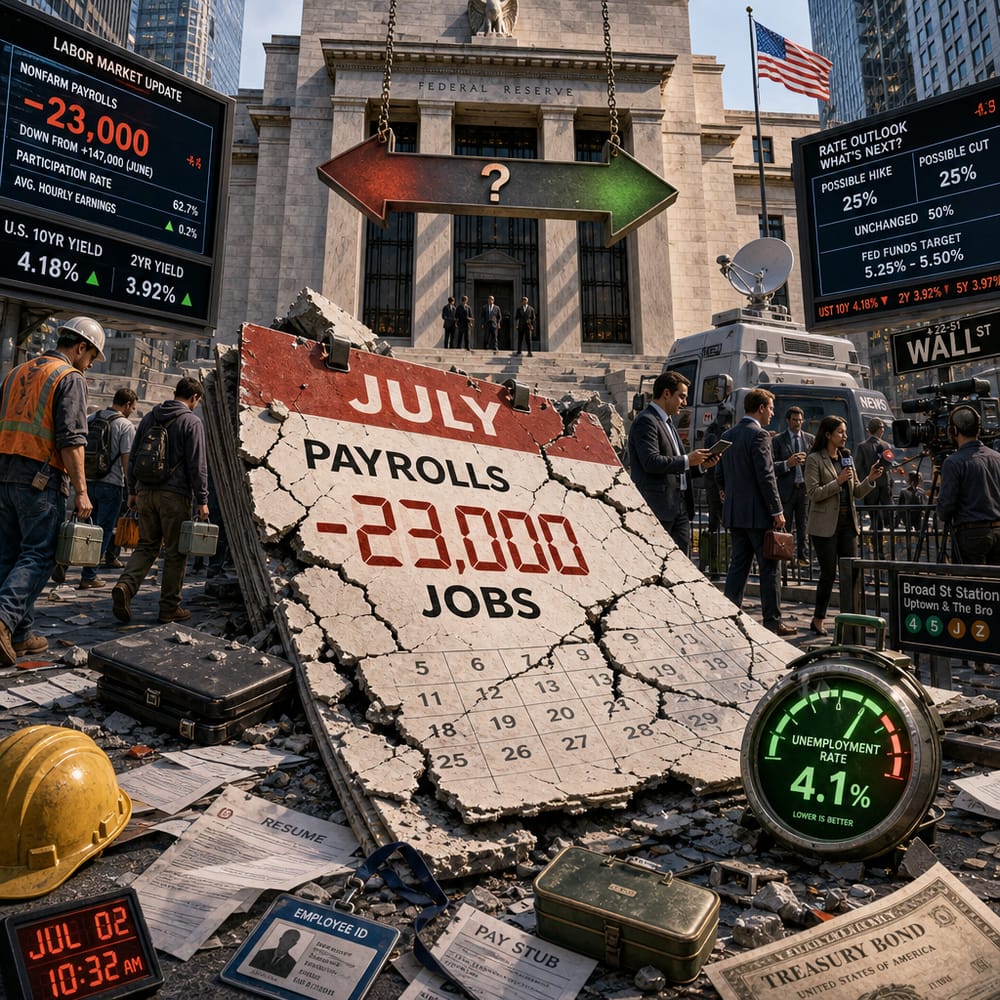
JOBS REPORT SHOCKER: THE CURIOUS CASE OF JULY'S MISSING JOBS
Pop quiz, hotshot: What do you get when the U.S. economy gains speed, but its job creation hits a red light? An employment report that has us scratching our heads and rethinking our rate hike bets. This July, the U.S. economy went all David Copperfield and made 23,000 jobs disappear. Meanwhile, the unemployment rate took a dip to 4.1%. So, what's going on with our job market magic act?
SECTOR BREAKDOWN: WHO'S FEELING THE BURN?
Let's dive into the nitty-gritty. Not every sector is drama-ridden, but some are definitely on the struggle bus. The usual suspects—manufacturing, retail, and construction—took the brunt of the job losses. Manufacturing, in particular, seems to be suffering from a deja-vu moment, reminiscent of its pandemic hit days. Retail's woes aren't exactly a shocker either; high diesel prices and cautious consumer spending have rocked it like a hurricane.
Then there's construction, which, despite a previously optimistic outlook, seems to be caught in a tug-of-war with rising interest rates and sinking homebuyer confidence. Those lovely home improvement projects aren't looking so hot anymore, and by the looks of it, neither is the hiring in this sector.
MONETARY POLICY: WHAT'S A FED TO DO?
Cue the Federal Reserve walking on eggshells. The job market's hiccup is the kind of thing that makes Fed officials reach for the antacids. July's job losses may just be the perfect excuse for the Fed to sit on its hands in September instead of reaching for that rate hike button.
With the labor market not as robust as it seemed, the Fed might lean on the "let’s wait and see" mantra. Why crank up interest rates if the economy's playing a balancing act on a tightrope? It’s like adding extra spice to an already fiery dish—unnecessary and potentially disastrous.
INFLUENCE ON SEPTEMBER MEETING: THE BIG QUESTION
Looking ahead to September's Fed meeting, the stakes are as high as a cat on a hot tin roof. The Fed’s been playing a game of inflation whack-a-mole, and job creation was its trusty hammer. But now, with job growth slowing, that hammer's looking a bit flimsy.
The labor market is a major cog in the Fed's decision-making machine. With weak job growth, the argument for an interest rate hike loses some steam. The Fed's mandate is to keep the economy's engine purring without overheating or stalling, and right now, the dashboard lights are flashing all sorts of mixed signals.
A LOOK AT THE BIGGER PICTURE
Let's not forget, while jobs have taken a hit, the overall economic outlook isn't quite hitting a panic button. The tech industry's still riding high on waves of AI and custom chip deals. Consider Marvell's recent win with Google, a $12.2 billion bet on the future of silicon brains—no job cuts in sight there.
And then there’s healthcare and biotechnology, sectors that are positively glowing. Moderna and Merck's cancer vaccine success story is the kind of news that keeps the biotech stocks buzzing. But, reality check—these sectors aren't exactly labor-intensive, so don't expect them to singlehandedly solve our job market woes.
THE TAKEAWAY
So, what's a retail investor to do amid this job report bedlam? Keep a keen eye on how things unfold and remember that even the most confounding economic reports are a part of the larger, ever-evolving market mosaic. The Fed's next moves will likely be cautious, giving retail investors more time to consider their strategies.
In summary, while July's job numbers are a head-scratcher, they're a vital reminder of the economy's intricate dance. It's a tango of shifting labor markets, fluctuating consumer demands, and federal policies that could change on a dime. And for those with a keen eye and a steady hand, plenty of opportunities might just be waiting in the wings.
This article is for informational purposes only and is not investment advice. Always do your own research or consult a licensed financial professional before making investment decisions.
© Copyright 2024. All Rights Reserved.
© Copyright 2024. All Rights Reserved.