

July Job Losses and Downward GDP Revisions
Thursday, August 20, 2026
CALL IT A CHILL IN THE AIR: JOBS, GDP, AND THE ECONOMIC CHILLS THEY BRING
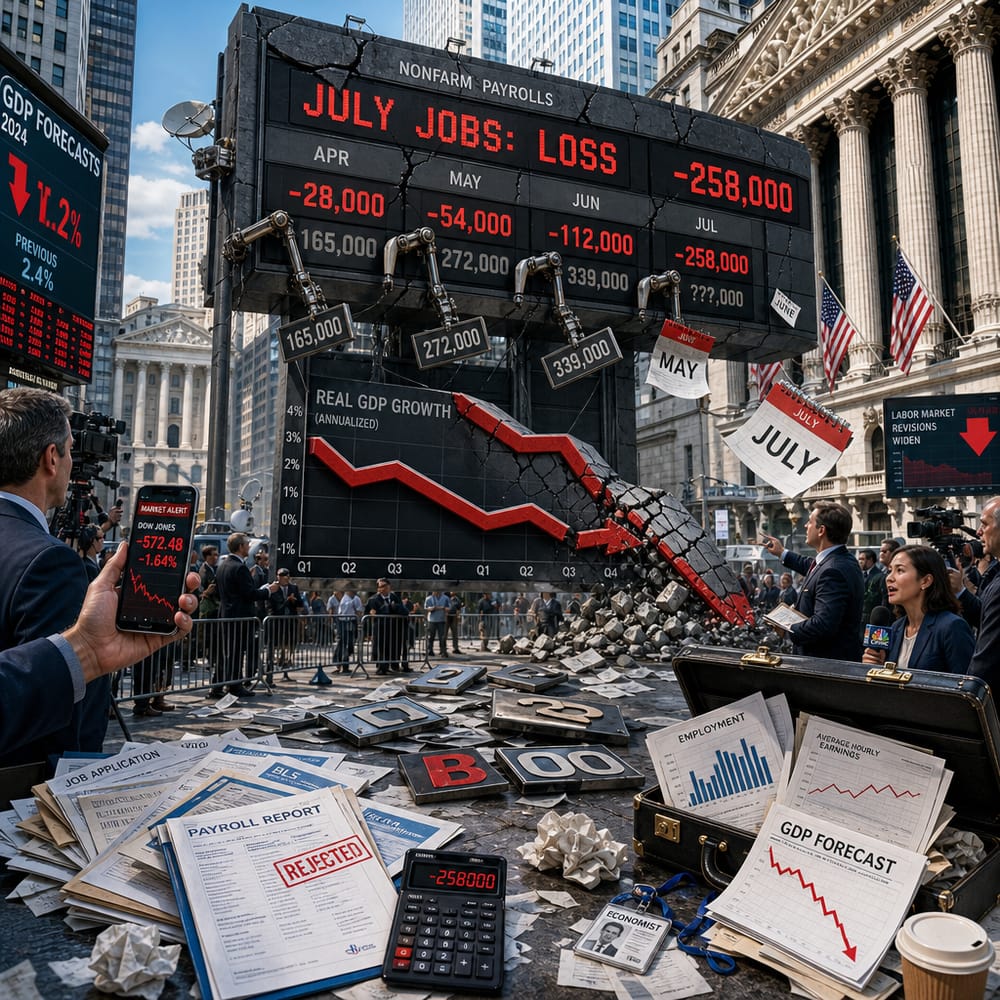
Alright folks, grab your oversized mugs of worry because things just got a little too frosty in the land of economic optimism. The U.S. job market, the sturdy oak we're all hoping will hold steady, just shed some leaves — and by leaves, I mean jobs. Meanwhile, the GDP (Gross Domestic Product, that beloved yardstick for economic health) has been revised downward, sending economists and market jitterbugs into a delightful tizzy.
SO, WHAT'S GOING ON?
In July, the U.S. job market didn't just slow its roll; it decided to take a breather. We saw a decline in jobs, which might seem like a minor setback until you add in the significant revisions for previous months. That sound you hear? It's the collective gulp of analysts recalibrating their rosy economic forecasts. Previous months that once looked like a job creation bonanza now appear more like a job market mirage.
THE CAUSE BEHIND THE PAUSE
Why the slowdown, you ask? Let's dive in. Increased borrowing costs, thanks to the Fed's interest rate hikes, could be one suspect. When money isn't as cheap to borrow, businesses tighten their belts, pausing on hiring sprees like a teenager with a new credit card finally realizing they have to pay it back. Add to that the supply chain hiccups that just won't quit, and you've got a recipe for a job market on pause.
GDP REVISIONS: THE PLOT THICKENS
As if fewer jobs weren't enough to make you clutch your pearls, GDP forecasts took a hit too. The GDP isn't just a number; it's the economic report card. And right now, the grades are suggesting we're not on the honor roll. Revised GDP figures point to a sluggish growth rate, the kind that makes you wish you could give it a shot of espresso.
IMPLICATIONS FOR ECONOMIC POLICY
Now, this isn't just fodder for economists to mull over during their coffee breaks. It has real implications for economic policy. The Federal Reserve, which has been strolling confidently down the path of interest rate hikes, may find itself tiptoeing a bit more cautiously if this trend continues. Job losses and a slowing GDP could make the Fed reconsider its aggressive stance on tightening monetary policy.
WHAT'S AT STAKE?
The health of the labor market is like the canary in the coal mine of economic vitality. If job losses continue and GDP growth remains as energetic as a sloth on a hot day, we might see a shift in policy-making. The government could pivot to more stimulus measures or reevaluate its fiscal policies to prevent the economy from stalling further.
MARKETS AND MINDSETS
For retail investors, this isn't just about numbers; it's about confidence. Job losses and revised GDP figures can make markets jittery, and jittery markets often result in skittish investors. Stocks could wobble as investors reassess their portfolios, trying to predict the next move in this economic chess game. The recent yo-yo in Treasury yields further illustrates this point — as confidence in economic stability wavers, so do the financial markets.
THE ROAD AHEAD
So, what's next? Keep an eye on upcoming job reports and GDP announcements. They will be crucial in shaping the Federal Reserve's decisions and, by extension, the market conditions. Will we see a rebound, or does the chill in the air suggest a more prolonged period of economic uncertainty? Only time, and perhaps a few more job reports, will tell.
In the meantime, stay sharp, stay informed, and maybe invest in a good pair of economic mittens because things might get chillier before they warm up again. It's all part of the thrilling, sometimes nerve-wracking ride we call market investing.
This article is for informational purposes only and is not investment advice. Always do your own research or consult a licensed financial professional before making investment decisions.
© Copyright 2024. All Rights Reserved.
© Copyright 2024. All Rights Reserved.