

July Job Loss Widens Debate: 23,000 Jobs Lost as Unemployment Dip Signals Changing Labor Dynamics
Monday, August 10, 2026
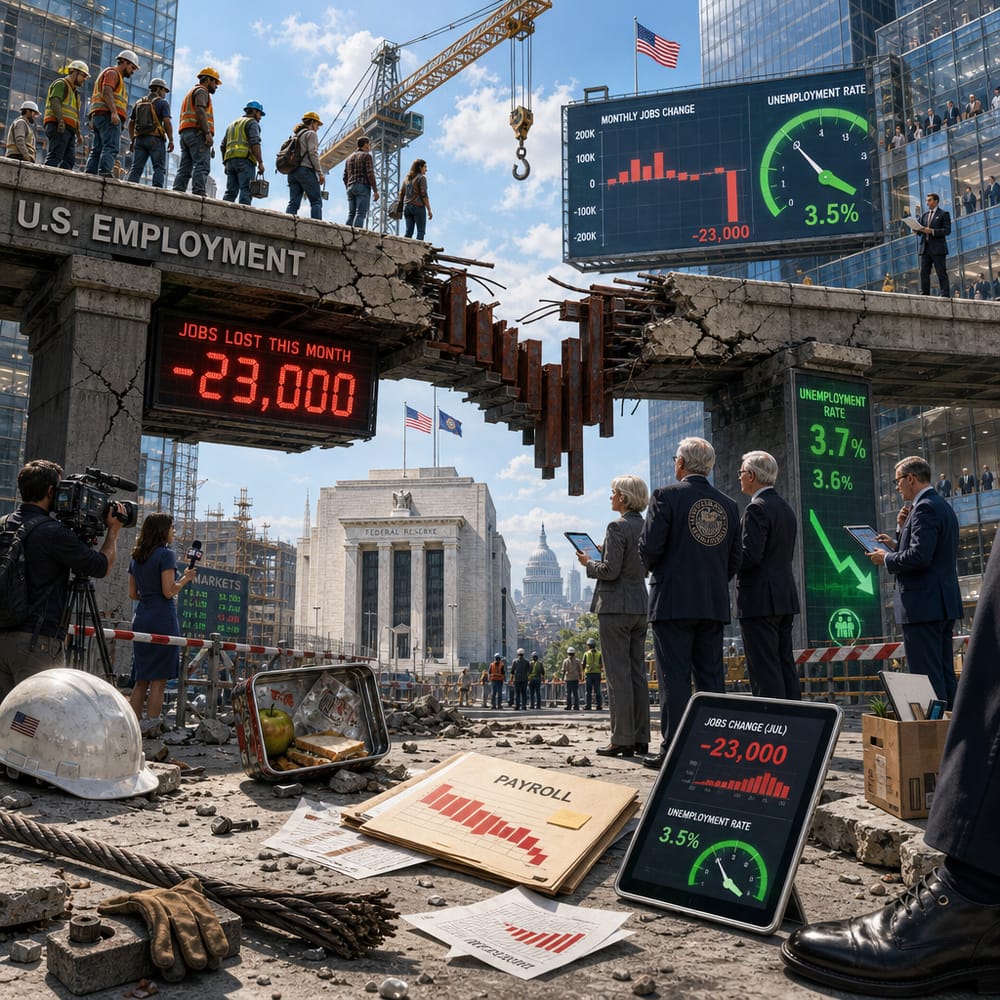
JULY JOB LOSS WIDENS DEBATE: 23,000 JOBS LOST AS UNEMPLOYMENT DIP SIGNALS CHANGING LABOR DYNAMICS
Think of the U.S. job market as a giant treadmill: most of the time it's stable, people hopping on and off at a steady pace. But in July, that treadmill hit a glitch, unexpectedly shedding 23,000 jobs while the unemployment rate decided to play hide and seek, dipping further down. This bizarre twist has economists scratching their heads and everyday investors wondering what it means for their wallets and the Federal Reserve's next move.
The labor market's mixed signals are like ordering a decaf latte and getting a double espresso: a jolt you didn't see coming. So, what's brewing beneath this frothy surface? Let's stir the pot and dig in.
THE MYSTERY OF THE MISSING JOBS
First things first, why the job evaporation act in July? A couple of suspects come to mind. Seasonal adjustments often play tricks—we call it the summer slump when industries like education or tourism dial down their hiring. But there's more to this plot.
Companies across various sectors, from tech to retail, have been singing a downsizing tune to cut costs and brace for an economic slowdown. Tech giants are coming off the high of a digital boom, now trimming to fight inflation's sting. Meanwhile, smaller players are just trying to keep their lights on, like trimming the fat off a tight budget steak.
But the real kicker? Worker burnout and a shift in job preferences. Many folks are saying, "No thanks," to traditional roles, seeking flexibility and purpose over a 9-to-5 grind. They’re jumping off the treadmill, maybe trying a new yoga pose called "gig economy."
THE UNEMPLOYMENT RATE CONUNDRUM
Now, let’s talk about the unemployment rate—the Houdini of economic indicators. It dropped despite job losses. How? Picture this: fewer people looking for jobs means fewer people unemployed. Yep, that’s how math works, but what does this mean for the economy?
A shrinking workforce could be a sign that people are discouraged and leaving the job hunt altogether. It's like a game of musical chairs where some players decide to sit it out entirely. And that, my friends, has the Fed biting its nails.
THE FED'S CRYSTAL BALL GETS FOGGY
The Federal Reserve has been keeping a keen eye on the job market to gauge the economy's heartbeat. In a world where inflation is the unwanted guest crashing the party, the Fed relies on employment numbers to decide interest rate hikes. Traditionally, a low unemployment rate signals a strong economy, but throw in the job loss curveball, and things get complicated.
Discouraged workers leaving the workforce creates a false sense of security—like looking at a half-full tank and thinking you’re good for a road trip. It deceives the Fed into thinking the economy's doing better than it is, which could lead to premature policy changes.
LONG-TERM EFFECTS
So, what's the long-term impact of this shrinking labor force? For starters, fewer workers mean fewer contributions to economic growth. It’s like having fewer chefs in the kitchen, slowing the dinner rush. Productivity could stall, and with it, wages might stagnate.
A reduced labor pool also means companies have to work harder to attract talent. This isn't all doom and gloom—those remaining in the workforce might find themselves in demand, commanding better pay and conditions. But for businesses, it’s a high-wire act balancing costs with productivity.
THE TAKEAWAY FOR INVESTORS
How do retail investors navigate this wonky market situation? Keep an eye on companies that are innovating in workforce management. Tech firms embracing remote work, businesses investing in employee well-being, and sectors less reliant on large labor forces might be your best bets.
The Fed’s policy decisions will continue to be a moving target, influenced by this labor market enigma. Keep your ear to the ground for interest rate changes and inflation data. An adaptable portfolio, like a good pair of running shoes, might be your best ally.
In our ever-evolving economic landscape, understanding these dynamics gives you an edge. The job market might feel like a rollercoaster now, but if you're strapped in with the right knowledge, you can enjoy the ride, bumps and all.
This article is for informational purposes only and is not investment advice. Always do your own research or consult a licensed financial professional before making investment decisions.
© Copyright 2024. All Rights Reserved.
© Copyright 2024. All Rights Reserved.