

July Job Loss Surprise
Monday, August 17, 2026
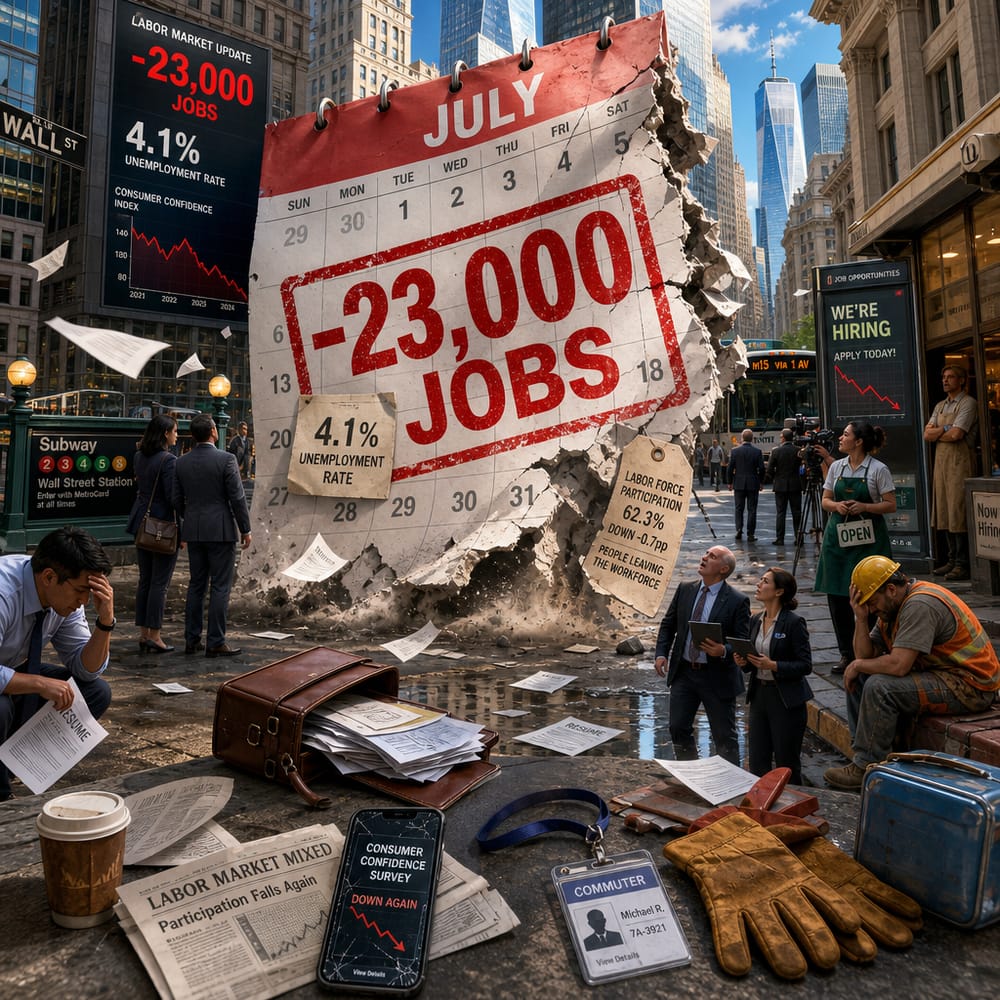
JULY JOB LOSS SURPRISE
If you thought July was all about sunshine and ice cream, think again. The U.S. economy decided to throw a surprise party and forgot to send invites. For the first time since February, the nation lost 23,000 jobs, leaving economists and market watchers blinking in disbelief. While everyone was busy with beach towels and barbecues, the job market quietly dipped its toes into a pool of confusion.
Just when you think the plot couldn't thicken, the unemployment rate decided it wanted in on the action and unexpectedly dropped to 4.1%. But before you start celebrating, know this: the dip is due more to folks slipping out of the workforce than a flurry of new job offers. It's a classic case of "less people looking means less people counted." Talk about a mixed message — it's like losing your wallet but finding a $10 bill in your pocket.
SO, WHERE DID THE JOBS GO?
Let's start with the biggest culprits. The manufacturing sector decided to take a mini-vacation, shedding jobs like last season's fashion. Meanwhile, retail and hospitality, industries that typically thrive on summer’s heat, seemed to have hit the snooze button. If you notice fewer staff at your local diner or a prolonged wait for your online order, now you know why.
WHY SHOULD YOU CARE?
Here's the tea: unexpected job losses have the power to shake consumer confidence like a snow globe in a hurricane. Picture this — if people start worrying about job security, they might tighten their purse strings. And if consumer spending takes a hit, economic growth could slow down. It's a domino effect no one wants, with the last tile being a potential dive in market optimism.
But don't start panic-selling just yet. Some sectors, notably tech, are holding their ground, helping to keep the economy from completely losing its balance. Consider it a wobbly but still spinning top.
THE FED'S NEXT MOVE
Ah, the Federal Reserve, the institution that makes decisions like it's playing chess in a lightning storm. So, what does this mean for them? Will they keep hiking interest rates, or take a breather? With job losses on one hand and a lowering unemployment rate on the other, the Fed has a mixed bag of goodies to sort through.
Typically, the Fed might raise interest rates to curb inflation if the labor market is too hot. However, this latest job report is like a cold shower that could prompt caution. They might decide to pause rate hikes to avoid adding more strain to an already fragile setup. Bottom line: keep your eyes peeled for Fed meetings — they could be as dramatic as a reality TV finale.
THE BIG PICTURE
The labor market's latest curveball is a sign that the economic momentum might not be as strong as we hoped. It's a bit like running a marathon and realizing halfway that your pace is off. Analysts will be watching closely for any signs of a trend. After all, one data point is like a single shoe — it doesn't make a pair.
For the everyday investor, this is a cue to stay informed and adaptive. Diversification remains your best friend in times of uncertainty. Keep an eye on market trends, sector performances, and, of course, Fed announcements to navigate these choppy waters.
In the end, remember that markets, much like life, are full of surprises. They're unpredictable, and sometimes they'll throw a curveball when you least expect it. So, hold onto your hats — or rather, your wallets — and let's see what the next month has in store.
This article is for informational purposes only and is not investment advice. Always do your own research or consult a licensed financial professional before making investment decisions.
© Copyright 2024. All Rights Reserved.
© Copyright 2024. All Rights Reserved.